
This first appeared in Lit Hub’s Craft of Writing newsletter—sign up here.
I am drawn to art that feels as though it originated in a different realm, art that seems detached from current trends, prompting me to wonder how the artist conceived it and pieced it together.
When I encounter a work like this—and I relish it when it feels like a challenge—I often think of the French otolaryngologist Dr. Alfred Tomatis and his theory that the voice cannot produce sounds that the ear cannot hear.
Tomatis’s idea underscores how hard it is for any creator to birth something genuinely new. As a human maker, I sometimes feel as if I’m stuck inside a closed system, capable only of producing work within the bounds of what I’ve already encountered.
As a writer, I continually seek what I call dead zones—areas where I’m unknowingly clinging to unexamined notions. Finding these isn’t easy, but one approach I’ve found useful is exploring another art form. For me, that medium has been theater.
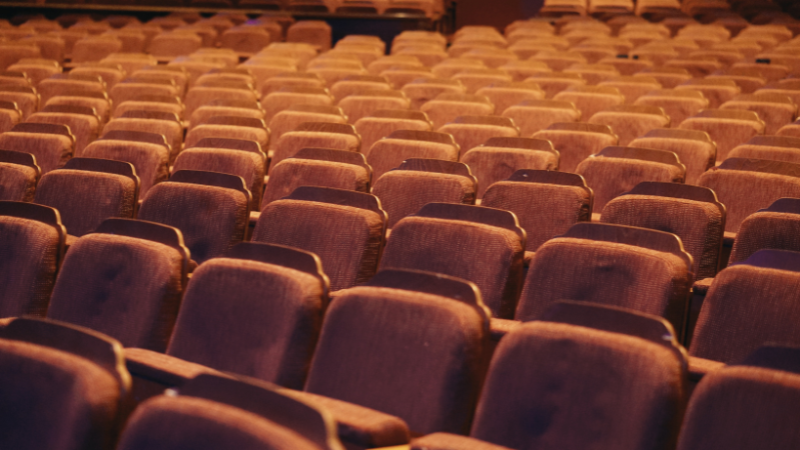
At first I attended performances simply as a fan. But today I view regular theatergoing as a crucial component of my writing practice. For one thing, it’s efficient. While drafting a novel might take days or weeks, I can sit in a theater seat and witness someone else’s fully realized ideas about plot, character, dialogue, and setting in under three hours.
Additionally, I appreciate the theatergoing ritual—I enjoy sitting in the darkness, among a roomful of people watching other people. If I’m not engaged by what’s happening onstage, I even like observing the audience. As the saying goes, an audience doesn’t lie. It can be a valuable source of real-time responses to a story as it unfolds, useful for a narrative maker.
What most strengthens my study of theater, though, is remaining open and curious. I’m not aiming to become a theater expert; I want to stay a student. Acknowledging this goal helps me bring the same curiosity back to my reading, where I’m more likely to feel cranky and restless.
I believe my theatergoing also helps me pose more interesting questions. Is a novel a kind of performance? (I think yes). What type of performance? (I haven’t nailed that down yet). Merely contemplating these ideas, I suspect, has made me braver when building the world for my new novel, Cloud Six.
Theatergoing nudges me toward lateral thinking. When something on stage sparks inspiration, I push myself to imagine how that idea could be remade in language. And when a production moves me, it broadens my sense of what my own work can achieve. In those moments, I feel genuinely rewarded, as if I’m sensing a sound just beyond my hearing.
I may have definite preferences in what I read, but for performances I’ll try almost anything. This year’s theatergoing has spanned the gamut—from avant‑garde works that left me stunned (Victory Over the Sun by Nature Theater of Oklahoma and Tanz by Florentina Holzinger) to a race-centered comedy I adored (Race: The Movie: The Play by Bret Raybould & Cristian Duran) to a one‑person clown piece that charmed me (The Passion of Mr. Cardboard by Miles Calderon).
Obviously, my dedication to theater would be less feasible if I weren’t so fortunately placed. I reside in New York City, on a block that, remarkably, hosts three off‑off‑Broadway theaters (alongside a Parisian Tea Room and a falafel cart that doubles as a mosque, but that’s another tale).
If you live somewhere without a thriving theater scene, that’s fine. The point is simply to study something you love that isn’t writing.
Besides, on some level, everything is theater. Everything except writing, that is.
____________________________________
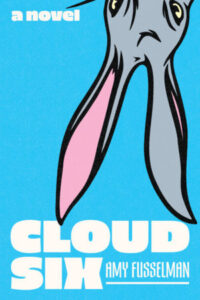
Cloud Six by Amy Fusselman is available through Catapult.