
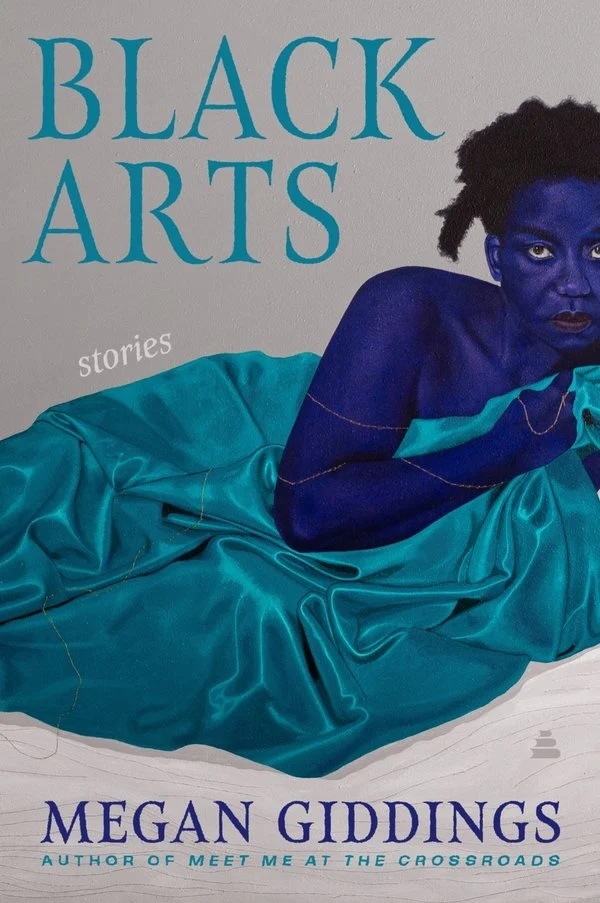
After Lorrie Moore and Kiese Laymon.
You enrolled in this program for financial reasons and because you had never been mentored by a Black person—regardless of gender—in the arts of writing or reading. You learned arithmetic and Black Studies and the safest ways to summon life and energy in another person from other Black people, but none of them taught you how to tell a story.
There exists a family legend about the moment you learned to read: four years old, beads in your hair after coming back from Mom-Mom’s, and you muttered something like, “Good morning. I hate Mondays. Lasagna,” which your parents realized you were reading aloud from a comic to yourself. Reading arrived like a sudden burst of fruit carried by invisible winds.
You longed for a lineage. Sometimes, forging one doesn’t require generations multiplying. In the arts, it can be built, at least in a single brisk exchange or idea passed around a table in two hours and forty-five minutes on a rainy Tuesday afternoon.
I want to tell you that you’ll get through this year. But did you?
The first time you all gathered as a class that term, your most insufferable white classmate handed in a story about himself but gave it a cooler name—something like “Alistair” or “Parker.” Last year, you had read a notorious essay about women and likability that he had found offensive. You personally found the piece a little dull in the obvious, “of course” way essays can feel when they address something you’ve endured. The only marginalia you’d bothered to scrawl was Girl, you are preaching to the choir. Yet this classmate somehow became so incensed by the author’s phrasing and her treatment of men that he cried in class. You’d seen him lingering after hours at the cheapest Guinness in the happy hour, crying still, face blotched red, tapping away on his phone. All his stories centered on young, misunderstood white men staring at water and imagining misdeeds they never actually performed on the page. You and your friends sometimes nicknamed him Mr. Flashbacks. Sometimes, you called him Mr. Future NBA in Fiction.
You listened as your Black professor told him that his descriptions were “miraculous.” She spoke of Carver and the delicate exchange between emotion and reality, and she asked whether water could be ancestral. Her hair was thick and natural, revealing the care she took to pull its curls apart. Her glasses slid down her nose. You were always a sponge for detail. She wore a suit with a T-shirt underneath bearing a portrait of a legendary Black author and the word “free” in all caps. Most of your class nodded along in near perfect unison. “This,” your professor intoned in a serious, gentle voice, “is what literature should be. This is reality.”
And that should have rung the first warning bell. Your sense of literature always favored a saturated world where people wrestle with the uncanny. Once, you wrote a piece about a woman who had been sexually assaulted off-stage and who spends the entire story turning into a tree, until in the end the man who assaulted her enters, chops her into bricks, and fashions a shabby chair. The workshop you were in labeled it as polemic, cruel, and weird.
And you read a book by a white writer in which strange things happened in a lyrical way—girls turning into puppets or cake or being murdered and resurrected as their killer’s Vitamix—and this was meant to teach you something about feminism, something you’d recognized from years in the academy. Deep down, you understood that society treats women as objects. Yet you spent the ninety minutes allotted for discussion doodling, since almost everyone else seemed moved by it. There was a phrase you loathed, but it felt fitting in the moment: why yuck someone’s yum? And it felt as if hearing a book marginally adjacent to the kind of work you might do being taken seriously was a relief.
You wrote a story with a central character modeled on a girl you despised who wins the lottery and then is suddenly attacked by a pack of dogs on the beach for the ticket. They use the money to fund an animal shelter. She plans to use the cash to travel to Paris, shop, and rename herself Yvonne. Most of the workshop peers didn’t bother to reply to that one. Your only ally in the class wrote a letter filled with puns like, “I woofed the moment when the gang of dogs appeared.”
To be honest, you didn’t think these stories were any good either. There were nights when you lay awake staring at the ceiling, wondering when you would improve. But at least you weren’t writing about writers, you told yourself, and you pulled the blankets closer. Sometimes you drifted off. Sometimes you lay awake as you remembered how your parents’ house was being foreclosed on, how weekends you returned home to decide what to give away, and watched as your dad burned old school tests in the backyard. It was mortifying to tell your parents that your obsession with make-believe, with style, with phony people, could keep you up at night. You told them you were enjoying yourself.
That term you were composing a story that, at its core, was you arguing with yourself about never wanting to die and sometimes feeling an overwhelming urge to simply be finished with this world. The summer before had seen Black men, Black children, and Black women murdered for the slightest real or imagined offense. A toy gun in a park, an argument with the wrong person in public, shoplifting a soda, running a red light, not telling the truth. You would read the articles and think back to the time when you and your father were pulled over. They removed your dad from the car. One officer stayed with you, always slurring questions, asking about drugs and prostitution, and whether you would perform oral sex; the only thing you knew how to do was remain still and call him sir, which you could tell pleased him. Your therapist called it PTSD, but you refused to accept it. Your father lived. You lived. Yet here you were writing a haunted-house tale in which every corner of your mind and throat could feel the weight of the summer’s headlines and the tweet that began with Rest in Power.
Sometimes, I feel like we died that night too—that we too were dragged from a vehicle, beaten, and dumped into a ditch. Our father died as well. Some benevolent angel might not have been able to stop our deaths, but later prayed that heaven would become a place where we never died. She couldn’t erase what had happened, but she could help us keep moving. Can you truly have heaven if you perish under the worst of conditions? Perhaps heaven rests on a forgiving amnesia, in which you inhale clouds and sweet grass and exhale every wrong until the wrongness inside you thins into a mist.
In your workshop piece, a Black girl enters a haunted house. On the first floor, she is chased by white workers dressed as the wolfman and Ghost Face and other killers. On the second floor, real monsters mingle among them. On the top floor, she encounters an ancient evil wearing a costly business suit. He kills her. She paid ten dollars to die.
When you brought the story to workshop, most of your white classmates were silent, and so was your professor. She allowed the talented writers of color around you to discuss their ideas of reality and unreality, what qualifies as haunted-house literature, and whether the United States itself is a haunted house of racial reckoning. The questions could feel profound or utterly foolish depending on where you sat at the table. You were grateful for the insights, but your gaze kept drifting to her, to the way she wouldn’t quite meet your eyes, to how she kept closely wrapping her fingers around a strand of her hair. You sensed there was something she wanted to say, you felt.
But you took notes and later could barely decipher what you had written, because thoughts came in a torrent and you had often written in a stream-of-consciousness style, producing lines like: is-it-too-much-that-all-the-workers-of-the-haunted-house-are white-and-i’m-so-hungry-why-did-i-forget-a-snack. You walked away glad that some people treated your writing with seriousness, yet sad because you felt lonely in the way creativity can make you feel; your ambitions and your craft remained on two separate tracks.
After class, you wandered for a long while and recalled a family tale. Your Mom-Mom possessed a natural talent for piano; she never trained formally but could pick out any melody by ear and figure out the notes within minutes. And it was true. Once, you watched as she moved from Moonlight Sonata to Hot in Herre again to the sonata and then into a radiant rendition of How Will I Know. “Everything has notes,” she would say. “Sometimes I hear the wind rustling through the trees or the sound of your voice when you complain.” And that’s exactly what she did. You could hear the longing for McDonald’s escaping from the piano’s black-and-white keys.
“May I tell you a secret?” your Mom-Mom asked. It was never really a question.
She told you that when she was seventeen, all her closest friends had been in the church choir, but she had been cut. It was the first real heartbreak of her life. And though you’d felt some envy toward your grandmother, you’d come to believe that anyone older than you must have suffered more. Racism, limited technology, bad food, everyone dying of strange illnesses, only the wealthy getting fries. Yet your parents had moved to a comfortable suburb and you attended good schools, so you felt you had little ground to complain. And your grandmother knew how hard things were for you. Even years later, walking down the street with headphones on, you’d roll your eyes at the memory. Mom-Mom confessed feeling lonely and ashamed that for weeks all she could think about was possessing a talent. The rejection had sent her into a spiral, wondering whether there was anything she could truly do well.
Not particularly kind, unable to bake, able to dance only in a group to blend in, an adequate driver, only fair at school, a tendency to disturb the garden, and sometimes having trouble telling greens from blues. A boy told her she kissed badly. Mom-Mom set out into the world unsure of what to do. Maybe the plan was to brood. Maybe there was something else. You recall a hesitant look on her face. As an adult, you recognize that same look in yourself when you ponder the things gnawing at your brain and undermining your self-respect.
“I met a man out in the fields,” Mom-Mom said.
“He stood taller than any man you’d meet, his skin a soft green under the morning light and navy in the half-dark. His voice was gentle and sweet. I’d never heard anyone sound like that. It made me trust him instantly.” He took Mom-Mom’s hand and walked with her into the tall grass, listening to every worry she voiced. Every word felt precious, and she could tell he treated them with seriousness. The world around them hummed with fireflies and the scent of rhododendrons.
He told her that every person carried a note of the universe’s song. People liked to pretend they were unique, but each person was simply a note on a fiddle. She loved that idea; you’d heard her say those words so often that you began to suspect a hidden nest of poetry within her heart. She called that man God. He held her head in his hands, breathed on her, and made her promise to trust that his will was true. Her voice would stay beautiful forever. All she had to give in return was a promise, a performance or two.
You were merely a child. And as an adult, you’ve learned to tolerate belief in things that don’t clearly hurt others. If a friend wants to believe that the power of thought cures pneumonia more than antibiotics, fine—so long as she doesn’t have kids or practice medicine. But you told your grandmother what your heart held: it sounded like a bargain with the devil. You’d receive your heart’s desires without effort. Someone mysterious claimed to know that his will was true. Perhaps that’s how you learned wisdom, because even as a child her eyes filled with tears. It was one of life’s deepest hurts that you could affect someone you loved so much without meaning to.
As you walked, you replayed the note your professor had left you: One day, when you get over the monsters and all the ostentatious weirdness, you may write a book of real merit. You need to learn how to talk about race in an honest way. You flipped the page to see if it was a joke or a glitch, hoping for more. But that was all she gave.
Then you went home and pulled down her most famous novel from the shelf; you’d bought it when you entered the program. The blurbs on the cover hailed it as a tour de force of racial reckoning. “A modern Nella Larsen!” proclaimed an anonymous reviewer. A Black woman travels to Africa and seems annoyed that every Black person in Senegal, Tanzania, and South Africa does not recognize her as kin because she is light-skinned. She surveys every African child—poor kids in markets, rich kids in restaurants—and believes they’d all have better lives in the United States, but that judgment sits inside the novel’s exploration of infertility and loneliness, so it feels like a plea not to judge. People are described with hues of chocolate, cinnamon, wood, blue-black, obsidian. Everyone appears hostile, but the woman in the story is freshly dealing with a breakup, so dear reader, cut her some slack. She’s thirty-seven and the world weighs heavy; a bright light catches a single line on her forehead. When she returns to the U.S., alone and bearing resentments toward everyone in the world, an election rages. A white politician who genuinely claimed Black Americans should return to Africa wins. The book ends with the protagonist sipping a beer and wondering where in the world she could go next. Maybe Brazil.
You felt as if you’d chugged an energy drink by the end of it. There was something so rancid, so performative about what literature ought to be that you needed to walk it off or resign yourself to a curse. So you headed to the park, then to the distant one across town. Very few cars roared past. The tires sounded like whispered wishes from a tired man. It was thrilling to care this deeply about literature. It was lamentably nerdy to care this much about literature. The sidewalks grew more cracked and uneven the farther from town you walked, until they vanished, and you found yourself standing at the edge of a long field, realizing how far your thoughts had driven you.
In the summer, a farmers’ market set up in that field. You’d once taken a flyer at the market arguing that corn was as much a contributor to global warming as cows. Corn stalks sweating their way toward sweetness could push the air hotter and more humid. You realized, as you settled beneath the night sky, that you’d never checked that claim. Venus rising, a sky dark with a new moon, and a cool breeze soothing you.
“I’ve been waiting for you,” a voice said. A man, towering beyond plausibility, appeared in the four a.m. gloom, his skin a deep navy. His hands were heavy with silver rings. Faces and symbols were carved into them.
You felt, with a sudden heartbeat, as though you’d died again. You traced back possibilities: had you stepped in front of a car? Had you harmed yourself? Had someone found you, a lone, distracted woman in the night, and decided you would be an easy, unforgettable target? There was a moment you asked your therapist if you suffered from Cotard’s syndrome; she asked if you saw yourself as a corpse, if you truly believed you were beyond harm. You’d answered that, yes, every day hurts a little.
He urged you to unload everything that weighed on you. You confessed a memory of a poem you’d read five years earlier about two lovers who fucked exceptionally well, so much so that one believed he was the sky and the other felt like the cloud within the sky, heavy and crackling with lightning, and you admitted that you’d never write anything that could hurt someone so beautifully as that poem did. You confessed that reading is what you truly love; writing didn’t even feel that meaningful. He waited for you to ask about fame, money, universal acclaim. You spoke of an interview you’d read with a famous writer who claimed that the most meaningful times were those early nights before becoming a full-fledged Writer, when she wrote solely to please herself. He kept reaching for your hand, but you resisted and kept talking. You admitted you’d loved many people, but this effort to write a book was your first real romance. He claimed that if you gave him something, he could give you more than you’d ever imagined wanting. All you would need to do was promise to offer him something in return. I knew your grandmother, he said. You can trust me.
His eyes gleamed with silver in that moment. It made you yearn to compose a poem. You pictured yourself at your desk, trying to bend the gleam you’d seen against starlight to the metal of the small pocketknife you kept in your pocket, the nib of the fine fountain pen your grandmother had given you as a last gift. She never sang or played outside of her kitchen and her church. Her voice was always beautiful to you.
I keep thinking about what would have happened if I had said yes and taken his hand. A warm palm, smooth nails, the hard metal of his rings gripping mine for eternity. He would have whispered an idea into your mouth that would have earned a million dollars, expensive shoes, and a dull television interview to follow, and you would have known it was never truly yours. Your parents might still own your childhood home, your father’s garden still thriving. In the bookstore, your former classmate and your former teacher would have books in the front window. Both would be about characters who feel things beside the sea, both labeled “modern classics” in big white letters. And I would still have my desk.
__________________________________
Excerpted from BLACK ARTS by Megan Giddings. Reprinted with the permission of the publisher, Amistad, an imprint of HarperCollins. Copyrighted © 2026 by Megan Giddings.