
Across the waning years of antiquity, highland lands in the northern reaches of the Iberian Peninsula bore witness to a different kind of extraction. Pliny the Elder, a Roman administrator who wore the robes of a philosopher and a naturalist, observed how mining tore the landscape apart. He noted that the impact went far beyond the feat of any giant, remarking on the abundance of mines—gold, silver, copper, iron, and lead—where slopes were assaulted with iron wedges and hammers, and mountains were bored through with tunnels and caverns. Those toiling underground rarely saw daylight for extended periods, and many never emerged from the subterranean labyrinths. In the end, once the rock had been hollowed out, the miners would purposefully trigger collapses, pulling out roof supports or flooding passages to complete their work.
Pliny wrote about how the rock’s own weight could drive the shattered mountain into ruin, producing a roar that stretched beyond the human imagination and unleashing a forceful gust of air. Nature lay in ruins before the conquerors’ eyes. He named this method Ruina Montium: the downfall of mountains. The labor was unimaginably arduous; the rock’s stubborn durability held out only to be surpassed by what he called “the most stubborn thing of all, the hunger for gold.”
For years Pliny had watched the expansion of his empire’s exploitation with growing unease. “We trace out all the veins of the earth,” he wrote, “we pierce her inner depths, and seek treasures even within the abodes of the Manes,” the spirits of the departed dwelling beneath the surface. The footprints of Roman mining have endured in memory and in the geological record. In a relatively short span, the empire mined and smelted copper on such a scale that its toxic emissions reached the Arctic atmosphere, later turning up in snow atop Greenland’s ice sheet, where ice-core scientists in the 1990s found pollutant levels that would not be surpassed until the late twentieth century. One of the Empire’s largest copper mines, Wadi Fanyan in present-day Jordan, transformed an entire landscape into a barren expanse that continues to taint the surrounding environment to this day, with high levels of metal contamination still appearing in the tissues of living plants and animals nearby.
Yet there were, he acknowledged, some uncertainties remaining—in particular over the speed at which the world’s oceans could absorb CO₂.
Pliny discerned in the scale of these workings the signs of a looming calamity. This “hunger for gold,” for wealth, and for status (the “most stubborn thing of all”) had already grown too powerful for civilization to restrain. “It is what lies hidden from our sight,” he warned, objects “sunk far beneath” the surface of our world, “that drive us toward ruin, that lead us to the very depths of hell. As our minds wander, let us ponder, across all ages, as these operations unfold, when will the end come for thus exhausting the earth, and to what point will avarice eventually penetrate?”
What’s the timescale on exhaustion? How far will the hunger for wealth go? Extraction is ancient. We can trace it back millions of years to our earliest forebears who chipped flints from rock faces and shaped them into blades and tools. Yet mass extraction driven by unchecked greed? Extraction propelled by a global financial system that demands perpetual growth, even toward infinity? That is a newer phenomenon—one that the “veins of the earth”— which, if they replenish at all, replenish on timescales that dwarf human civilization—may not be able to sustain.
Pliny’s Rome gave us Ruina Montium. Today, however, we confront the possibility that the fusion of modern systems of economics, governance, and extraction has evolved into Ruina Planetae: a whole planet standing on the brink of “ruin at the hands of its conquerors.” Before us. How did we arrive at this point? And can we—indeed, can we even—avoid this fate?
In August 1979, precisely one year after my own birth amid an oil-fueled boom in Shetland, a colossal oil tanker—the Esso Atlantic—was docked in a refinery yard on a more tropical shore, Aruba in the Caribbean, to be outfitted with a cutting-edge climate-monitoring laboratory.
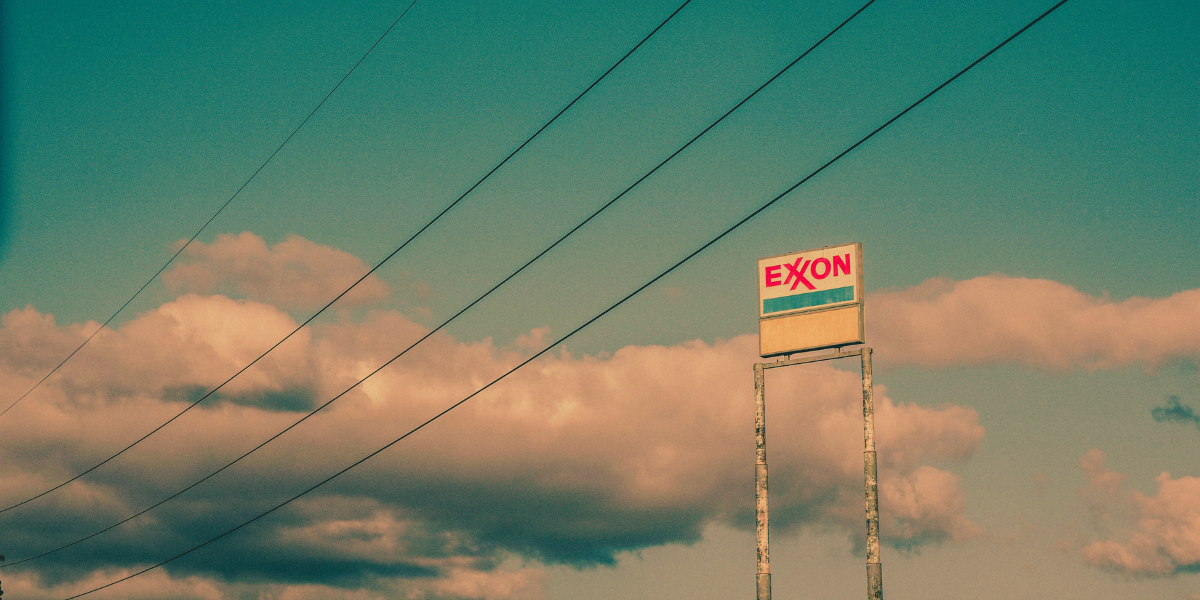
The behemoth vessel belonged to Exxon. Two years earlier, in 1977, James Black, a senior scientist at the company, had delivered a briefing to Exxon’s Management Committee—including the chairman, the president, and the senior vice presidents—explaining that there was a broad scientific consensus that human activity was warming the globe through carbon dioxide released by burning fossil fuels, to a degree that could threaten humanity’s future.
Over the next year Black refined his talk for broader internal circulation. He included figures suggesting that doubling atmospheric CO₂ could raise average global temperatures by about 2 to 3 degrees Celsius, potentially up to 10 degrees at the poles. “Some nations might gain, but others would lose out through diminished or ruined agricultural output,” he warned. “Humans have a window of five to ten years in which tough energy decisions may become critical.” Yet he admitted there were uncertainties—especially regarding the oceans’ capacity to absorb CO₂.
This was precisely where the floating lab aboard the Esso Atlantic came into play. Exxon’s science division fitted the tanker with tailor-made instruments to monitor both oceanic and atmospheric CO₂. While shuttling between the Gulf of Mexico and the Persian Gulf, the ship simultaneously gathered air and water samples—central to a three-year, $1 million research program that blended empirical data with advanced climate models. As Harold Weinberg, an Exxon research manager, wrote in an internal memo: what could be more fitting than “that the world’s leading energy company and leading oil producer take the lead in trying to determine whether a long-term CO₂ problem exists, and if so, what countermeasures would be appropriate”? He added that the project was “aimed at benefiting mankind.”
Yet in the years that followed, Exxon’s messaging—internal and, in particular, external—changed.
Exxon’s scientists believed they stood at a pivotal moment—for the company and, more broadly, for the planet. “Our aim,” stated the scientific manager of the Esso Atlantic project, Henry Shaw, “was to map the carbon cycle, to understand where the world’s carbon production would end up, and to forecast how the system would respond in the future.” If the data from the Esso Atlantic showed that the deep oceans absorbed CO₂ readily, it could justify delaying decisions about oil and gas production and any energy transition for generations. If, however, the oceans’ uptake was limited, the researchers would deliver the “bad news” to the corporation.
That bad news arrived in numerous reports, internal memos, and data sets, including graphs charting historical and current atmospheric CO₂ alongside global temperatures, projecting sharp rises in the near term. These models, grounded in readings from the Esso Atlantic, have proven strikingly accurate in mirroring real-world changes in carbon dioxide and temperature across the ensuing four decades.
In 1982 a corporate document from the company’s environmental affairs department—circulated widely within Exxon management but labeled not for external distribution—stated clearly that averting global warming “would require substantial reductions in fossil fuel use,” otherwise “potentially catastrophic events” would begin to occur. Internal correspondence revealed debates about the timing and severity of these events—a 1981 exchange between two Exxon climate researchers debated how catastrophic impacts would be by 2030, with one arguing they would be minor and the other warning they could devastate “a substantial portion of the world’s population.” While the scientists acknowledged gaps in their understanding of climate dynamics, there was broad agreement that the Earth was warming rapidly and that Exxon’s business interests were a primary driver.
Yet in the years that followed, Exxon’s narrative—both inside and outside the company—shifted. Among the abundant climate data the firm had generated, one term came to dominate: uncertainty. By 1988, internal memos signaled a switch toward a public-relations approach that sought to “emphasize the uncertainty in the scientific conclusions regarding the potential enhanced greenhouse effect.” That same year marked the founding of the Intergovernmental Panel on Climate Change (IPCC), the United Nations body charged with independently assessing climate science. When the IPCC published its first report in 1990, it affirmed that continued burning of fossil fuels would inexorably lead to warming and urged reductions of 60 to 80 percent in emissions to stabilize CO₂ levels.
During the final session to approve the report’s policymakers’ summary, Exxon’s chief climate researcher, Brian Flannery—participating as a representative of the International Petroleum Industries’ Environmental Conservation Association—argued that such reductions were far too drastic “in light of all the uncertainties about the behavior of carbon in the climate system.” (Five years earlier, Flannery had coauthored a U.S. Department of Energy paper forecasting global warming of up to 6°C by the century’s end unless greenhouse gas emissions were curbed. It marked a notable shift in his stance.)
If the models are “lousy,” it might spell the end of the company. If they are not, it could spell the end of the planet, or at least humanity’s place on it.
The IPCC’s assessment warned that the planet faced an existential threat if current trends persisted. Exxon, by contrast, effectively concluded that the danger to its own business—and to fossil fuels as a whole—would be existential if it did not continue with business as usual. In 1989 Exxon helped establish the Global Climate Coalition (GCC), a coalition of major energy players—including the American Petroleum Institute, the National Coal Association, and the U.S. Chamber of Commerce—that spent the next decade opposing government efforts to curb emissions. In 1992 the GCC’s executive director wrote to the New York Times, highlighting “considerable debate” over whether burning fossil fuels was triggering a dangerous global warming trend; the Coalition later produced a half-hour film called The Greening of Planet Earth, which claimed rising CO₂ would enhance crop yields and alleviate world hunger.
Exxon’s new chief executive, Lee Raymond, leaned into uncertainty in his public rhetoric. In 1996 he told the Economic Club of Detroit that “the scientific evidence is inconclusive about whether human activity is significantly influencing the global climate.” Speaking at the World Petroleum Congress in Beijing in 1997—months before the Kyoto Protocol—he claimed that “we need to understand the issue better, and fortunately, we have time…It is unlikely that temperatures in the middle of the next century will be meaningfully affected whether policies are adopted now or two decades from now.”
For more than a decade the company funded advertorials in major newspapers with headlines such as UNSETTLED SCIENCE, WITH CLIMATE CHANGE WHAT WE DON’T KNOW CAN HURT US, and CLIMATE CHANGE: A DEGREE OF UNCERTAINTY. An advertisement in the Washington Post in 2000 faulted independent researchers for placing “a political cart before the scientific horse” and relying on “unreliable models” not yet able to predict Earth’s climate. This riled the U.S. government’s chief scientist on global warming, Michael MacCracken, who wrote directly to Exxon’s board and to their chief executive, Lee Raymond.
MacCracken’s great-grandfather had served as the company founder’s chief legal counsel and had declined to take stock to keep his advice free from financial influence. “What I imagine he would say,” MacCracken wrote about his ancestor, “is that you are on the wrong side of history, and you need to change your position.” He added that opposing the main scientific findings was “shocking for such a venerable and scientific organization.” His assessment was stark: “to oppose the future and bury your head in the sand is not a credible stance.”
Nevertheless, more than a decade and a half later, Exxon’s new chief executive, Rex Tillerson, continued to advocate for caution at the 2015 annual shareholders’ meeting. He argued it was wiser to wait until the science was unassailably clear, because if the company acted prematurely and discovered that its models were inaccurate, the consequences could be dire. “What if the models are wrong?” he asked—presenting it as a binary choice: if the models were faulty, the firm might perish; if they were accurate, the planet—and humanity’s future—could perish. He suggested, implicitly, that shareholders would prefer the safer path.
Exxon was not unique in its early recognition of CO₂’s effects and in later tendencies to minimize or deny the veracity of its own science. Studies of corporate archives reveal parallel awareness within Total and Shell during the 1970s, and within Ford and General Motors; similar knowledge surfaced in the U.S. coal industry in the 1960s, and in the American Petroleum Institute as far back as the 1950s.
So, here is one answer to Pliny’s query. This is the moment when avarice reaches a point where it severs ties with the natural world to such an extent that economic interests float free from reality. It is the moment when the world’s largest energy companies take the lead not in understanding the consequences of their operations, but in arguing that consequences do not exist. It is the language of denial in economic and political terms. It is a world in which truth is molded to fit what money dictates.
__________________________________
From The Vanishing Earth. Adapted with the publisher’s permission, Bloomsbury. © 2026 by James Crawford