
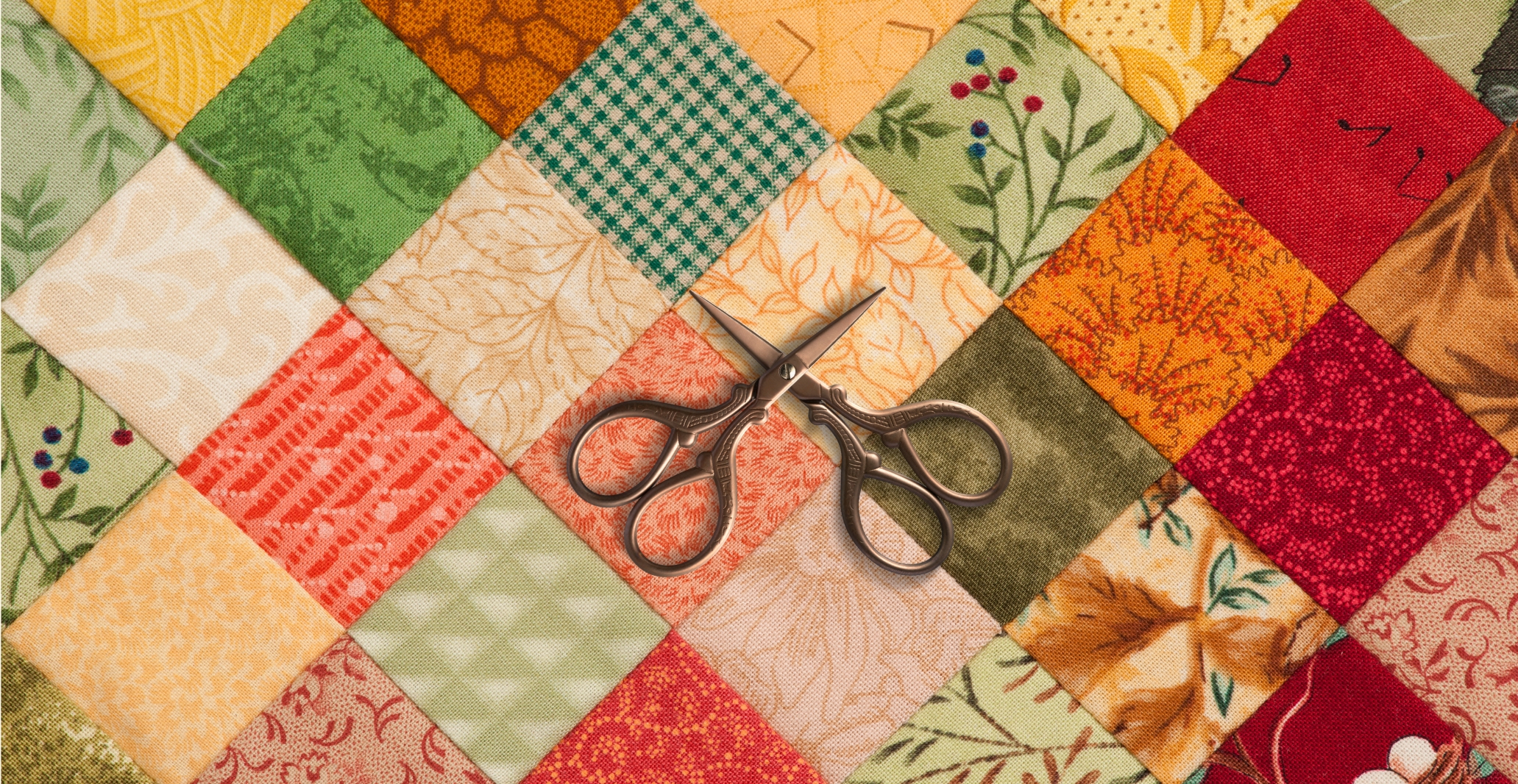
On the surface, joining a calligraphy circle or taking part in a quilting group might appear to epitomize apolitical leisure. A handful of people convene in a library meeting room or a church hall for a potluck and to practice elegant handwriting flourishes or to master stitching seams in a hand-knit sweater—what could seem more trivial when weighed against the vast, tangled problems our world faces?
Yet, as our democratic institutions face tests, stepping away from screens and showing up—physically, mentally, and spiritually—in these gatherings may be among the most quietly radical acts we can undertake today. Coming together with others, off the grid of our usual work circles or family and friend networks, around a shared pastime signals that freedom is not only about rights and laws; freedom also means the ability to assemble, to create, and to find joy.
To take up a nib or a needle in public is to resist isolation, to insist on connection. It is to plant a flag of freedom in the soil of our everyday lives.
Identifying and pursuing our own pleasures and hobbies helps us remember that we are more than workers and consumers. When we step outside the privacy of our homes and connect with others through these shared activities, we meet people we might otherwise never encounter: an engineer standing beside a poet, a teenager with blue hair beside a retiree with purple hair, a fire chief alongside a wedding calligrapher.
In these spaces, we are rehearsing democracy. We trade tips; we share supplies; we admire each other’s efforts; we stumble; and we stumble again. Trust grows not through argument but through making things together.
Calligraphy, quilting, knitting, watercolor painting, pottery—these are not merely hobbies but avenues through which we gather to practice a broader civic life. They remind us that our hands are capable of shaping the world, not only scrolling through screens. They remind us that culture does not arrive fully formed on devices but is crafted here and now, within communities of care.
To take up a nib or a needle in public is to resist isolation, to insist on connection. It is to plant a flag of freedom in the soil of our everyday lives.
In an era when artificial intelligence can produce paragraphs in seconds, the slow work of identifying our cherished hobbies and showing up to do them with others—perhaps people we have never met—matters more than ever. Gathering in public spaces to learn, cultivate, or join existing guilds offers lessons in patience and attention, as well as in forging meaningful relationships.
Freedom means the presence of choice, the playfulness we allow ourselves, and the full range of our imaginations. If we wish future generations to inherit not only our technological breakthroughs but also our shared humanity, we must keep gathering outside the sanctity of our homes in these circles born from a shared love of ink, thread, paint, fabric, stencil, and clay.
To live in truth here, now, today is to resist the forces that would prefer to isolate, dull, and commodify us.
In his enduring essay The Power of the Powerless, Václav Havel urged people living under totalitarian rule to “live in truth”—to conduct their lives as if the regime did not have the final say over who they were. In environments where the state controls education, commerce, property, and speech, even small acts of defiance carry weight. By the late 1980s, this quiet resistance had permeated Central Europe. When the writer Anne Applebaum visited Poland in 1987, she recalls staying with friends who, by law, were required to report her presence to the police. “We don’t do that,” they said. “We don’t believe the police have the right to know who stays in our home.” Because thousands made the same choice, the rule eventually buckled under the pressure of noncompliance.
But Havel’s vision extended beyond private acts of disobedience. He urged the formation of circles of people—musical ensembles, literary gatherings, sports clubs, beer-brewing societies—to meet outside their homes and nurture what he called the “independent life of society.” He believed we needed spaces where we could breathe freely. In many cases, such communities became schools for innovation and courage: clandestine printing presses, underground educational ventures, and the free trade unions that gave rise to a broader movement for freedom.
What Havel advocated then remains relevant for us today. To live in truth here, now, today is to resist forces that would seek to isolate, numb, and commodify us. To live in truth means refusing to be defined solely by what we consume, click, or produce for profit. And to live in truth is to make things together: to gather in circles of craft, gardening, storytelling, stitching, and painting; to unite around a shared passion for cross-stitching or pottery or calligraphy and to build communities where our imagination is not dictated by those in power but grows like seedlings from the soil of our shared lives.
When we come together as makers, we begin to practice freedom. When we show up in spaces beyond our homes where we can be creative and honest, what we create with our hands becomes a form of resistance to despair. Living in truth requires us to keep showing up publicly for one another. To find or form a guild or creative circle:
– Check local libraries, community centers, or arts councils. These spaces often maintain bulletin boards or lists of creative meetups.
– Visit art-supply stores, indie bookstores, and cooperatives. The staff will frequently know of existing groups.
– Search Meetup, Eventbrite, and Facebook groups for your region or town using keywords such as artist collective, guild, creative group, makerspace, open studio, etc.
– Attend gallery openings or local craft fairs and start conversations—creative networks are often informal and spread by word of mouth.
If you can’t quite locate what you’re seeking, bring it into being yourself. Give your group a name and announce it via social posts and flyers at some of the places mentioned above. Start small, and meet consistently, knowing that even a trio to five steady members can grow something powerful over time.
__________________________________
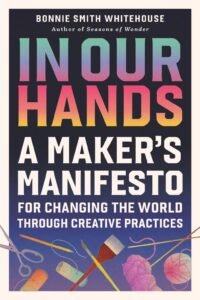
Excerpted from In Our Hands: A Maker’s Manifesto for Changing the World Through Creative Practices by Bonnie Smith Whitehouse. Copyright © 2026. Available from Running Press, an imprint of Hachette Book Group, Inc.
