
Extra, extra. You’ve seen the headlines. Men—particularly straight men—have stopped reading fiction. This year witnessed the rise and fall of the so-called lit-bro persona. And while history, crime, and self-help books still appeal to a certain slice of readers, the latest NEA survey shows that only about a quarter of men picked up a work of fiction in 2025.
Theories about the origins of this “crisis” cover a wide range, with many blaming the supply side. Several New York Times opinion writers have argued that straight men aren’t reading because there aren’t protagonists they can relate to.
Others, like Robert Rubsam in Vulture, have pointed to numerous titles featuring straight men, but often presented in a way that isn’t flattering. Tony Tulathimutte’s Rejection, for instance, portrays “the male psyche as a pulsing wound of self-conscious neurosis.” Despite its blockbuster success, publishers have struggled to reproduce that cultural moment.
As Sophie Lee noted in an essay for Cultured yesterday, the literary world remains unsure about what the next generation of [straight…] men wants from a novel in 2026. Especially if what they crave isn’t recognition—wounding as that can be.
Lee suggests practical considerations. Is it “adrenaline” they seek? Or “direction, new pickup lines?”
There’s a case to be made that the guys want all three.
*
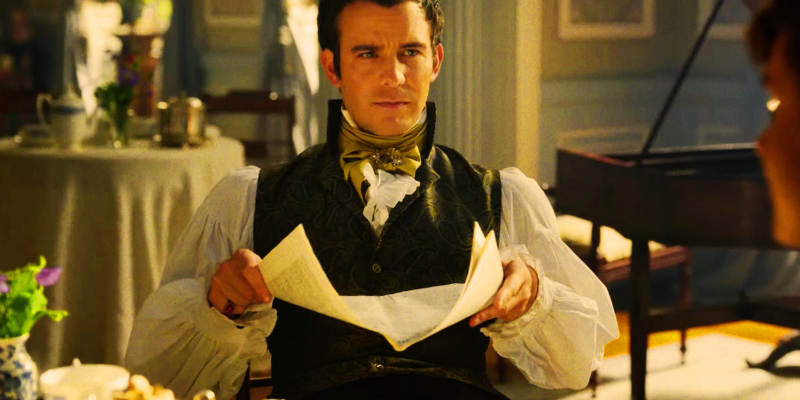
In a Guardian exposé last week, The Guardian’s Amandas Ongs explored the hidden lives of straight men who read romance novels. A seemingly growing cohort, these readers may have found their way into romance after enjoying other genres, or out of a love for a tight formula. Others, fresh from Bridgerton binges, point to the same appeal as the broader fanbase: they love love.
While romance is essentially keeping the entire publishing industry afloat at this moment, the genre has historically been pitched to women and queer readers. Accordingly, some straight men feel shame about their interest.
Many of Ongs’s interviewees aren’t fully out about their hobby. They gather not in public spaces but on a Discord channel called Romance for Men. Most confessed to their fandom on the condition of anonymity, because they “worried about being misunderstood or mocked.”
This touches on a central issue, re: What We Talk About When We Talk About the Male Literacy Crisis—readers clearly feel pressured to signal their tastes with their shelves. Perhaps because the objectification of books has us equating TBR piles with personal values. Or, even more whimsically, confusing the compelling protagonist with the relatable one.
Curiously, romance readers often gravitate toward a title for reasons other than relatability. Straight women queuing for Heated Rivalry and Heartstopper share a pattern with any reader waiting for the Court of Thorns and Roses series, simply given all those books feature werewolves. For many of today’s most successful romance franchises, escapism is part of the appeal.
Ongs argues that this distancing is central to the genre’s radical potential. Romance, she writes, is offering a new “kind of liberation” to the straight man by “allowing [him] to feel deeply, imagine being desired, and accept parts of [himself] that conventional masculinity has little room for.”
Matt Starr, co-founder of the ultra-hip Dream Baby Press, might sign onto this mission. Or at least, he views literary fiction as a vehicle for liberation as well. About the missing male readership, he told Cultured, “I really want to make the world more romantic. There’s not a lot of sensuality left.”
*
What do straight men want to feel, while reading? I’d wager it’s the same as everyone else wants to feel: a sense of freedom, energy, arousal, and, yes, sensuality. In an era of incels, gooners, and authoritarian bigwigs, the conventional mirror fiction for that demographic may not actually deliver those feelings. So a touch of genre experimentation might be appropriate.
Anyway, unless you’re Bret Doofus Stephens, you’ll grasp that a truly good book should transcend straightforward expectations about identity and affiliation. Because escapism and relatability are not at odds with each other.
This is surprisingly easy for some men to forget. In his anxious 2024 op-ed on the male literacy crisis, creative writing professor David J. Morris argued for a more inclusive literary culture even as he admitted that the fault wasn’t in the supply.
“Young men should be reading Sally Rooney and Elena Ferrante,” he wrote. Not inadvertently, he named two of the more romantic writers we have.
Some of the trick to getting more men to read, then as now, lies in removing judgment from the equation. For there is a romantic literary world. It’s the one where no reader is ashamed to desire.