
What history would later label World War I began under an illusion of speed and precision, a supposed short and sharp clash in which German forces would seize Paris within a few weeks. The First Battle of the Marne, fought in early September 1914, checked the German onslaught just northeast of the French capital, but at the cost of more than a half‑million lives. Barbara Tuchman’s assessment in The Guns of August is that the Battle of the Marne becomes decisive not for deciding who would ultimately prevail, but for dooming the war to continue. The conflict trapped nations in a sequence of inconclusive battles from which there was, and has been, no easy exit. A whole order of the nineteenth century—their brilliance, their shared naïveté—vanished, and with it the sense that the future could be predictable. In the words of the Belgian socialist poet Émile Verhaeren, no one would ever be quite as he once had been.
To illuminate just how luminous and utterly absorbing that late‑century world had been, Tuchman followed The Guns of August with The Proud Tower: A Portrait of the World Before the War, 1890–1914, published in 1966. By vividly reviving the quarter‑century that preceded the catastrophe, she provides, perhaps more than in The Guns of August, a sense of the scale of destruction that history would unleash, even if the prose itself is less direct in its tone than the earlier work.
The contrasts with our own era are striking, yet the parallels provoke a jolt of recognition.
There existed an elite aristocracy whose self‑assurance, credentials, and privileges helped steer Europe toward catastrophe. There was also a stark contrast in living conditions—the almost unimaginable poverty endured by workers in mines, textile mills, and steel plants, with dangerous, demeaning jobs and scant prospects—giving rise to both radical anarchists and organized socialists. Anti‑Semitism surged as the old social and political order faltered, and the Dreyfus affair in France—an instance of a Jewish army officer being unjustly accused—exposed the ferocity and zeal unleashed by a century turning its gears in new directions. All of this moved alongside the restless, almost uncontainable energy of a technological era that never ceased churning out astonishing new gadgets and weapons.
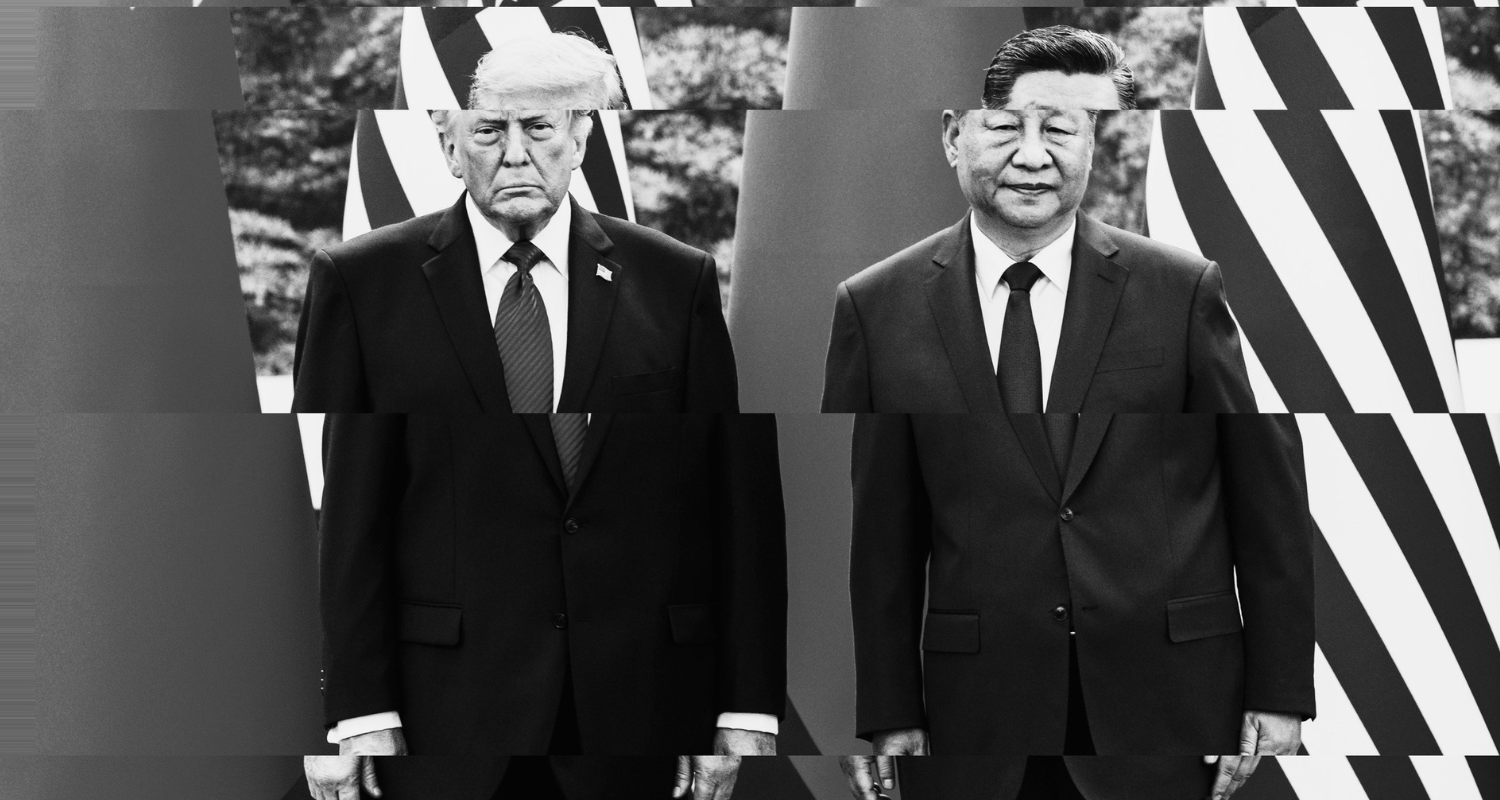
No conflict in the world today has the capacity, if miscalculated, of bringing ruin upon us all, like the one between the United States and China.
In Britain, awareness of Germany’s threat grew more acute. Reginald Brett, Lord Esher, wrote to a friend in 1908 that Europe faced “a competitor formidable in numbers, intellect, and education like none we have confronted before.” The situation today with China bears a striking echo of that warning.
“The proud tower,” Tuchman writes, “built up through Europe’s grand age was an edifice of grandeur and passion, of riches and beauty… its inhabitants lived with more self‑reliance, more confidence, more hope; they enjoyed greater magnificence, extravagance, and elegance; more carefree ease, more gaiety, and more companionship.” Yet alongside this splendor stood the working‑class poverty and the injustice that shadowed it. The era, imperfect as it was, contained a lamentable quality: a sense that the past had already slipped away and could never be fully recaptured or revived.
The image Tuchman cites for her title—drawn from a line in Edgar Allan Poe’s poem The City in the Sea (1845)—evokes a cityscape where “Death looks gigantically down” from a lofty, proud tower.
We must heed the warning with seriousness, for the dangers of miscalculation are as real today as they were then. No conflict in our era carries the potential to ruin the world so completely as a misread confrontation between the United States and China.
*
“We have now crossed over into a period in which events in Asia will largely determine the course of events everywhere in the world,” Owen Lattimore stated in 1945. That prediction has, to a remarkable degree, proven prescient. As policy analysts Robert D. Blackwill and Richard Fontaine observe, Asia is home to around 60 percent of humanity, anchors three of the globe’s five largest economies, accounts for nearly half of world output, drives the majority of global growth, and is the seat of more than half of the world’s largest military forces, defense budgets, and nuclear states. China, in particular, dominates the region and is described by strategist Elbridge A. Colby as an entity so expansive that any system accommodating it will experience profound consequences. A “decent peace” that preserves American prosperity and security does not simply arise out of nowhere, Colby notes, and this may seem obvious but it is not.
Historical patterns show that war is a recurring feature of human affairs, while peace often merely marks an uneasy interlude between conflicts. The United States can weather the wars in Iraq and Afghanistan and move on, at least in Western terms; life for much of the West can resume. A war with China would not permit such easy continuity. Stapleton Roy once warned that the Asian equivalent of the Cuban Missile Crisis might still be on the horizon, and Evan Medeiros has suggested that it could be more intricate and prone to miscalculation than the original standoff.
Indeed, the issues and perceptions that divide the United States and China will persist into the foreseeable future. “For we stand at each other’s antipodes,” as the Belgian‑Australian critic Simon Leys observed. Consider: China regards the South China Sea and its vicinity as familiar waters—an extension of its continental domain—much as the United States once treated the Caribbean as a natural sphere of influence after expanding across its own temperate zone in the late nineteenth century. The United States, for its part, has long seen itself as an Asian power, tracing back to Commodore Perry’s 1853 opening of Japan to trade, through the Philippine theater of the Spanish‑American War, World War II in the Pacific, Korea, and Vietnam, despite the mixed outcomes of those latter conflicts. In the cyber age, conflicts can be sparked with a mere click, intensifying the friction between the two nations. While China’s leadership has become more centralized under Xi Jinping, a Leninist autocracy operating with zero tolerance for compromise, the bilateral relationship has grown increasingly entangled in a zero‑sum ideological frame that complicates cooperation.
Trade adds another layer. Under the banner of defining China as a chief threat to American workers, Donald Trump’s administration not only escalated military preparations against Beijing but also opened a broad trade conflict. The Obama years pursued a broader regional free‑trade objective, yet failed to secure it; Trump pushed back with powerful tariffs and controls. The Biden administration, entering office in 2021, continued and intensified these restrictions, while strengthening alliances across Asia through a lattice of agreements—ranging from the sale of nuclear‑powered submarines to Australia to mending long‑standing frictions between Tokyo and Seoul—to confront China’s ascent.
We should always try to stretch our imagination, since the great events to come in China may be unimaginable until they actually happen.
Thus, far from being a temporary anomaly, Trump’s two terms—despite the gloss of talks and pomp of summits—have ushered in a renewed era of American unpredictability toward China. It is unlikely that the approach of Nixon and Kissinger—careful diplomacy that sought strategic détente—will easily reemerge. Even the prospect of a green‑tech breakthrough that might foster cooperation between the two nations has not quelled the trend toward a protectionist, industrial policy oriented against China, a trend likely to endure into a cleaner, post‑industrial era.
Yet surrendering or softening one’s posture is not a viable option. Deterrence remains essential. “There is a persistent myth,” notes Yale historian Odd Arne Westad, “that alliance networks dragged nations into 1914’s war; in truth, Germany’s reckless hope that Britain would not come to the defense of its allies helped make war almost inevitable.” The United States faces a similar dilemma with Taiwan and the broader region.
Miscalculations are baked into the structure of these dealings. This book has long traced the pattern of misjudging both the Chinese Communist ascent and their initial willingness to consider a working relationship with the United States. Such missteps contributed to the Korean and Vietnam conflicts, and the lesson remains that getting China right has never been straightforward. It is aided, however, by the tempered perspective of those who helped open relations with Beijing in the past. Nixon and Kissinger’s Shanghai‑period diplomacy, which helped stabilize a fraught Cold War, showed that strategic patience can buy time for change to occur—either within adversaries or within the broader geopolitical framework. We cannot afford to build a proud, solitary tower without considering the possibility that quiet transformations may unfold elsewhere, and we must avoid rushing toward a repeat of a World War I scenario.
In this light, the United States and its partners should not place all their bets on a single kind of confrontation. The Pentagon’s ongoing focus on war‑planning—encompassing missiles, submarines, ships, aircraft, ground forces, and cyber tools—reflects a real concern about a possible clash with China over Taiwan and the South China Sea. China has long been the “pacing threat” for American defense planners. While conflicts in the Middle East or Europe demand attention, the emphasis is unmistakably on China, with the risk that such planning could push the two countries closer to a conflict that could ripple through markets and alter everyday life just as in 1914. Even now, fear and distrust of Communist China remains one of the few issues that both major parties and the armed services can agree on. The comparison with the Soviet era is stark: dealing with leaders like Brezhnev, Andropov, or Gorbachev proved easier in some respects than navigating the uncertainties of today’s Russia under Putin. And there is no guarantee that following Xi Jinping’s era will bring calmer times; a chaotic or highly nationalist regime could arise, and China’s rapid nuclear modernization adds to the stakes. Given centuries of dynastic cycles, some worry that communism in China might be another such dynasty, urging caution and a renewed effort to find ways to coexist without reducing the relationship to a binary ideological split. Trade, Taiwan, and other frictions still divide the two nations, and these fissures demand careful, pragmatic handling rather than ideological escalation.
The prospect of a second Cold War—this time between the United States and China—may signal the closing chapter of a bipolar order, as humanity moves toward a multipolar, even multiplanetary future in which international relations become more intricate and cannot be reduced to a stark confrontation between two states. The aim, therefore, is to endure this phase of tension. That was the hope of many who study China closely; it remains the most challenging course now, given China’s rapid militarization of the Western Pacific and the repeated demonstrations that a limited clash could explode into a broader war with catastrophic human and economic costs. Understanding China’s cultural and historical context has never been more critical, because a superficially connected world often hides deep, irreconcilable differences. The notion that global interdependence erases cultural distinctions is misguided and incomplete.
We should also keep our minds expansive, recognizing that future developments in China could be unforeseeable until they actually unfold. Rumors circulated in the summer of 2025 about Xi Jinping being sidelined in a quiet internal reversal; those rumors proved baseless, yet they remind us that uncertainty remains. Our group of observers and advisers—those who speak about China with more immediacy than most—are not mystics, but they are closer to the truth than the rest of us are likely to be.
______________________________
From China Whisperers: The Voices That Have Shaped America’s Views of Its Chief Geopolitical Rival by Robert D. Kaplan. Copyright © 2026. Available from Scribner, an imprint of Simon & Schuster.
