

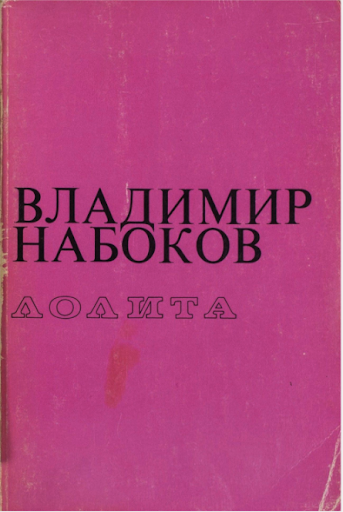
Brooklyn, late 2010s. I finally came across it. There it sits, tucked at the bottom of a dollar bin: Vladimir Nabokov’s debut, Mashenka. A magenta cover, stark black lettering. I lift it by the edges, careful, as though years of neglect beneath stacks of People magazines from the 1970s hadn’t happened to it.
I escort the volume to the register. The clerk opens a plastic bag, taps away at his computer. I present my card, itching to step outside and study it properly—the carriage-and-horseman logo, Nabokov’s pince-nez portrait inside, the delicate pre-Revolutionary spelling. The clerk keeps clicking. He frowns. The machine thrums, he gnashes his teeth, while my heart sinks to my feet. Finally, he says,
“This cannot be sold.”
I remember the cadence, the way those words landed—as if they followed a universal law.
“I found it in the dollar bin.” I say. “It was right there,” I point, as if merely locating the bin would bolster my plea.
The cashier nods, already tucking the book under the counter.
“I was about to buy it,” I insist, knowing, by now, that nothing will alter the verdict, still too furious to walk away.
They would publish literature that wasn’t meant to exist. This longing is built into its name.
“It is collector edition,” he shakes his head. “Rare publishing.”
I want to respond, I know, I want to say, That’s why I’m buying it. That’s why I’ve searched the earth for it. I want to lay out the facts, the dates: 1971—Ardis’s founding, 1972—Brodsky’s immigration, 1974—first Nabokov editions—to persuade him that I deserve to own the book, that my devotion and commitment justify my purchase. I’m ashamed to be indignant; I know the shop isn’t obliged to sell me anything. And yet I am indignant all the same.
“Cannot be sold.”
Ann Arbor, MI, 1969. A Nabokov scholar and a Bulgakov scholar walk into a bar—a love story for the ages. By the time they founded Ardis two years later, he was thirty-two and a full professor, already three scholarly books deep in just a year—two on Gogol, one on Nabokov. She, twenty-seven, was an assistant professor of Russian herself.
Ellendea and Carl Proffer both arrived at Russian studies by winding paths, almost by accident. Carl was affable, tall but unobtrusive, beloved in their modest department. Ellendea carried herself with poise and assurance: in interviews she spoke flawless, unaccented Russian—the kind a foreigner can actually pull off.
A year before launching Ardis, the couple spent six months in the Soviet Union, meeting poets, novelists, playwrights, and widows of legendary writers. They encountered artists who built a living as miners, night watchmen, boiler-room stokers by day, and by night stitched their poems and plays onto fragile pages with string from the market’s kielbasa. The Proffers hauled dozens of these manuscripts back to Michigan.
“By the end of the visit Carl turned to me and said that we should start a little magazine,” Ellendea recalls in her memoir. It would publish the vanished Soviet writers barred by censorship and the contemporary ones who never received a chance. In 1971, Ardis issued its first book: a pocket-size facsimile of Osip Mandelstam’s Stone, reproduced from the 1913 edition.
While leafing through a typographic pamphlet by Soviet graphic artist Farsovsky, Ellendea spotted a drawing of an old carriage and horseman. She thought of Pushkin’s remark about translators as “the post horses of Enlightenment.”
“This is our logo,” she told Carl.
They would publish literature that wasn’t meant to exist. This longing is built into its name. Ardis is a nod to Nabokov’s Ada or Ardor, where it denotes the family’s country estate, a kind of pastoral dream. In Greek, the term signifies the tip of an arrow.
All books were printed from their bedroom, in editions of only a few hundred. I like to imagine what it meant for two American professors to start publishing Russian books at their kitchen table, right in the middle of the Cold War. How much bravery that required. From its inception, Ardis defined itself as apolitical, devoted solely to literature—though, of course, politics eventually found its way to them, despite their best efforts. In the early years they published a handful of Mandelstam’s poems and Bulgakov’s plays that had never seen the stage.
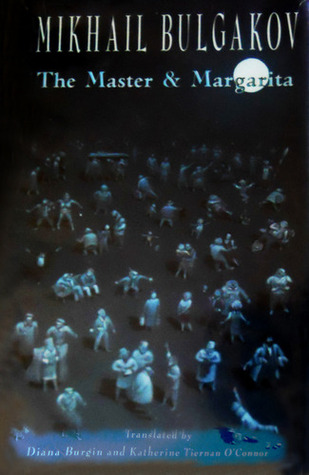
Later came the English translations, often done by the Proffers themselves, including the first unabridged rendering of Bulgakov’s Master and Margarita (earlier Ardis editions had relied on the censored Soviet text). Later still came facsimiles of Nabokov’s novels—like the one I’d hunted down in that dollar bin—each title in a distinct color with a generous, straightforward type, their covers becoming iconic to readers on both sides of the Atlantic.
Then came the originals. Joseph Brodsky’s earliest poetry collections, volumes of criticism, Sasha Sokolov’s debut novel A School for Fools, which Nabokov himself praised as “an enchanting, tragic, touching book.”
The Proffers met Joseph Brodsky during one of their yearly trips to the Soviet Union, in his now-legendary Leningrad apartment—one room and a half in a communal dwelling he shared with his parents. He was as charming as he was pompous, gracious yet abrupt, generous yet exasperating. In her memoir, Ellendea recalls the first night they met Brodsky; he was in his room speaking on the phone with a friend. In Russian, he quipped, sizing them up to see if they understood more than the formal register.
Ardis lives on less through its corporate afterlife and more through the people still hunting it down.
The Proffers were in Brodsky’s room again in 1972, just months after starting Ardis, when the Soviet authorities summoned the poet and, in the lead-up to Nixon’s visit, expelled him from the country. A model city of the Soviet Union, much like Plato’s Republic, had no room for “parasitical” poets. Carl promised Brodsky an on-the-spot poet-in-residence post at Michigan. Thus began the century’s most famous literary migration: Venice, Vienna, London, then years on the Proffers’ sofa in Ann Arbor, later New York, and eventually, with coats in tow, Stockholm, where he would receive the Nobel Prize.
The Proffers kept traveling to the Soviet Union every year, always returning with suitcases full of manuscripts. Ellendea recalls the rule from those early days: “no blood on the final copy.” Since their Varityper machine offered only five Cyrillic typefaces, Ellendea often had to carve individual letters from Farsovsky’s graphic-design pamphlet by hand, one by one, and glue them down. Corrections required a razor blade to scrape out a letter, which meant cut fingertips and spilled blood. With no budget for a designer, the iconic Ardis covers were entirely Ellendea’s doing.
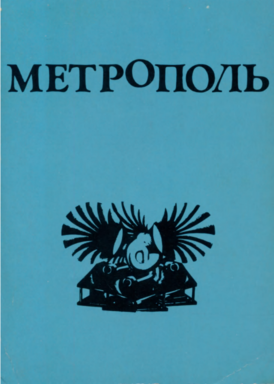
The suitcase-to-printer pipeline continued for eight more years, with the Proffers faithfully making their annual pilgrimage to the Soviet Union, until 1979, when they published Metropol, an uncensored smuggled anthology of Soviet poets, and the Kremlin finally banned them. Carl would never return to Moscow again, dying of colon cancer three years later, at forty-six.
Every arc ends, but endings arrive sooner for small publishers. Ellendea continued steering Ardis for another eighteen years—first on her own, then with a second husband, Ross Teasley—but most of the editions collectors now chase, the “rare publishing” that defined the run, came from those thirteen years the Proffers steered the imprint together.
Put simply, most of Ardis’s life has been its aftermath—the collectors, the old Russian men and me, chasing after the handful of surviving copies. I’ve seen Ardis paperbacks behind glass in Wilmington, Delaware; I’ve spotted them in Macon, Georgia, and Northfield, Vermont.
In 2002 an independent house, Overlook Press, acquired the rights to a select few Ardis titles in English. Ellendea had already sold her own Ardis collection in the nineties.
Despite Overlook Press’s efforts, Ardis persists less through corporate afterlife and more through the people still scouring for it. I encounter it daily in my inbox: another eBay listing for an Ardis paperback—usually one of Nabokov’s novels (swinging into the high three figures), occasionally a Brodsky title (low-to-mid four figures), or overlooked poems by less famous authors who evade the mainstream Ardis legends. For those of us who can’t spend an entire salary on a paperback, the only hope lies in a chance encounter. I remain hopeful that someday, in a used bookstore in Fairview, Ohio, or Lewisburg, West Virginia, I’ll stumble upon a Nabokov Mashenka that I’m actually allowed to buy.
______________________________

Seagulls by Nina Chayka is available from Black Lawrence Press.
