The first time I realized I was going to die I was cutting out an obituary for a project for my 6th grade class. I was working on the living room floor, as my father slouched nearby on the brown couch, reading. My eyes suddenly focused in on the age of the dead person in the newspaper—I can’t remember it now—and then something clicked. “This person died,” I told my dad, startled. “I’m going to die someday, too.” I then felt a surge of panic, of a kind I would become accustomed to in the years to come. My dad looked up from his book and said: “Yes, but not tonight.”
I started crying about Max Ritvo’s terminal cancer before I even met him. I never told him this because it was too embarrassing. We’d begun emailing in the late spring of 2014 since we’d been assigned to teach together, along with KB Thors, in a summer program for high school students at Columbia University. His emails were these enthusiastic bursts of ideas (always original and often impractical) about how to get our future students excited about creative writing. He was full of exclamation points, encouragement, and XOXOs. We planned a meeting to discuss our syllabi and it was decided KB and I would call Max together (from Brooklyn) since he was in Los Angeles visiting family. “Max is terminally ill,” KB said before we called. “It’s something he talks about a lot, so I thought you should know beforehand.”
Laughing at death and dying would have been preposterous to me before knowing Max.
I’ve always been teary about death. My friends and family know that I am “sensitive” on this topic, but in the days after learning about Max’s diagnosis I could tell that I was perplexing even them with my tears about Max, a person I’d never met. I’d be waiting for the train or out to dinner and suddenly think of Max—how he was sick and knew he was dying—and my eyes would go watery. I thought about how funny he was. On the phone, he joked that he was actually in New York, not LA, but too anxious to meet us. How could he attempt humor when he knew he was dying? I thought about how he got up each day and lived his life and did things, such as preparing to teach a summer class for high school students. I scoured the Internet and learned he was a talented poet, essayist, and comedian.
In his 2016 interview with Mary Harris for the WNYC podcast Only Human during what he dubbed his “farewell tour,” Max articulates some of his ideas about the relationship between humor and death. “Death is like a prank that your body plays on life,” he says and then tries to persuade Harris of the “physical comedy of it [death]” with talk of explosive bodily functions and rigor mortis. Similarly, he tells Kaveh Akbar in a transcribed interview for Divedapper that humor is not a “deflection” and is in fact “a kind of wisdom.”
Laughing at death and dying would have been preposterous to me before knowing Max. After my beloved aunt had died years before, the idea of letting humor in, even laughing at a funny joke on TV, seemed an offense to my grief. But for Max humor was a way to experience each moment as profoundly as possible. “When you laugh at something horrible,” Max tells Harris, “you are just illuminating a side of it that was already there . . . it makes it deeper.” I believe him, at least in theory.
What right did I have to complain about my fear of dying when his was so imminent?
Once I knew Max, really knew him, he became a different person. He couldn’t be a static, dying 23-year-old when he was also the person who’d cover for me and make my photocopies at Columbia when I was running late. We got to know each other quickly, perhaps in the way that only someone with limited time knows to. We exchanged rapid-fire text messages. He introduced me to emojis before everyone was doing it. He encouraged me to write essays and convinced me that I had the chutzpah to get a tattoo (he had many, all of birds). He told me about the chapbook he’d written and I told him about the novel I’d been working on for too long. We talked about our romantic histories, our families, our therapists, and our gender non-conformity. Everything was endlessly interesting when I was talking to him and it always felt like we didn’t have enough time.
I had my first panic attack when I was 14, convinced my throat was closing up. I remember my mother pointing a flashlight down my throat and proclaiming it open, my parents trying to calm me as I hurriedly put on my socks and shoes, saying I had to get to the hospital. I looked fine, they thought, and seemed to be talking normally, if fearfully. But I was and am a convincing performer of panic, both for myself and for those around me, and so we soon packed ourselves into a cab headed for Mount Sinai. This first ER visit set in motion many more such attacks in the years and decades to come. My go-to fear in any panic-inducing scenario—new physical discomfort, pending medical test, poorly swallowed water, trying a new food—is always that I am dying. In this way life has been something to cling to, instead of to fully live.
I don’t think I ever told Max explicitly about my panic disorder. What right did I have to complain about my fear of dying when his was so imminent? I did mention once my fear of flying and then a period when I was having trouble swallowing. In turn, he told me the story of how he almost died putting an entire frozen burrito in his mouth in his middle school classroom. The idea of him choking visibly upset me, but he reassured me that it was okay, he had survived.
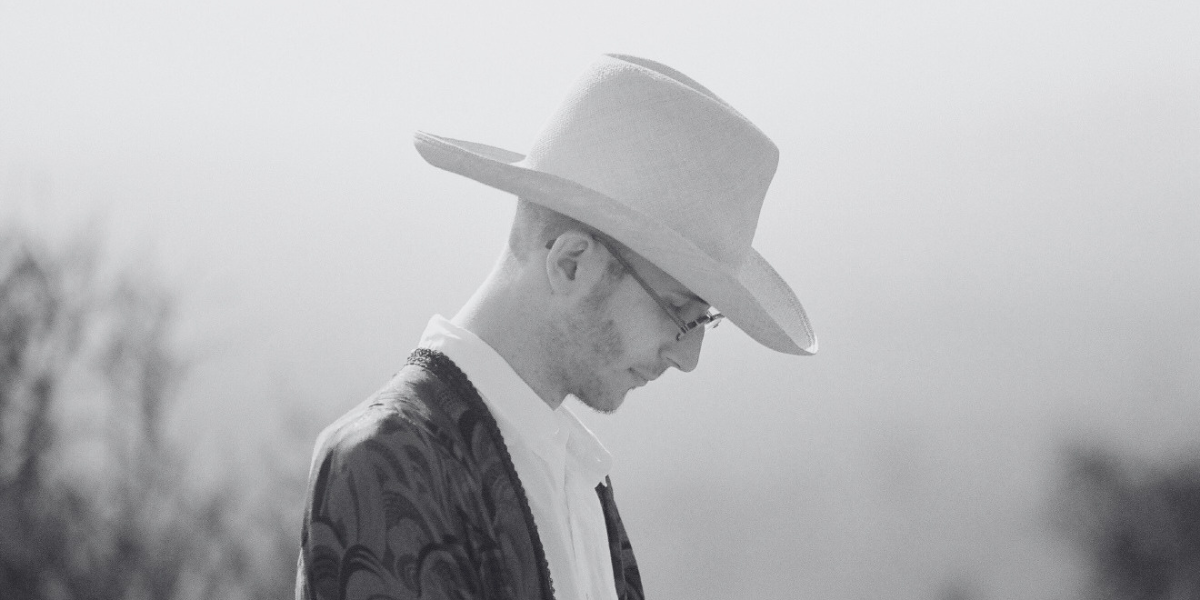
I think of Max often, frozen in time, of course: at 23, 24, and eventually at 25 just before he died. I see his angular face, both handsome and beautiful, his lithe frame that was only at the edge of too thin when we first met. Sometimes something he once said to me will break through the surface of my present life—parenting, teaching, writing, cooking dinner—and I’ll smile, or reflect, or feel sad.
For a lot of people, myself included, Max was our teacher about death and dying. He was wise beyond this subject, but on this he was a time traveler who’d been living up close to death in a way that almost none of his friends had. (He’d gotten his first cancer diagnosis at 16 and it recurred in his senior year of college.) His present was the present we all had as artists, writers, young (or in my case youngish) people trying to find their way—because he was trying to find his way, too. But then he also had a foot in the world of our parents or grandparents, and the reality that things would end soon. In this way, he was going places we wouldn’t yet go and could report back about our future.
Looking back, I wasn’t ready for so much he had to say when he was alive. While I read all of his writing and listened to all of his interviews as soon as they came out, a part of me turned away from the moments that felt too scary or painful. I told myself though that I could always come back to his ideas when I was ready, and perhaps his approach to life and death would someday become my own. This is why I never finished this essay back in 2016. It’s why I’m trying to finish it now.
In an interview with writer Kaveh Akbar conducted a few months before his death, Max elucidates some of his end-of-life thinking:
Everybody dies with loose ends. You can be ninety, you can be twenty-five. These are my particular loose ends . . . It’s been immensely liberating to realize so much of joy is made worse by trying to make it stay. And so much of suffering is made worse by trying to make suffering go away. When you’re just comfortable allowing whatever sensations are there to be there, allowing the paths whatever their paths, that is healing.
I am still grappling with so much of what Max had to say. Death has always been something I’ve promised myself I’d try to contend with someday. One of his many achievements is that Max made an uncomfortable subject more visible—through levity, through gravity, and through beauty. I may not have the answers, but I do know that revisiting all of Max’s work hurts and also helps. Considering the inconsiderable feels like progress, if not quite peace. So, now I’m 42 and still learning from a 25-year-old.
In some ways, the ten years that he’s been gone have passed faster than the two that I knew him for. Did he stop time? Did my time with him make me feel more present, more alive? Does middle-age just make life go faster?
My oldest child, born exactly a week before Max’s death, is about to turn ten. I think constantly in blocks of time these days—this was her at five, and suddenly it’s ten, and then in another ten years (only double the time we’ve already had together) she’ll be 20 and a completely different person. I’m always doing the math. How old will I be when she’s 18? How old will my 90-year-old father be? How old would Max be now? When will I do all the things my younger self hoped for me to do?
Maybe thinking about death isn’t so bad after all. Maybe there’s something there to be gained. Maybe it’s how I live a fuller life.
In his 2015 interview with Mary Harris for Only Human, Max declares himself a “partisan of the present” and admits to resenting “the reset button that everyone seems to be able to press.” He doesn’t have a future, or at least a certain one, and he finds all the goal setting to be “disrespecting the present.” Max taught many of us by his example to be here instead of elsewhere as long as we were here. In a podcast interview with Dr. Drew a few weeks before his death, Max shares a thought experiment along these lines:
There’s an immeasurable amount of beauty in front of you at all times. Even just looking out the window, you can connect the way the window is blowing through the trees with the sound of someone’s voice in another room. And make this little holy moment for yourself, this little spiritual realization of a kind of balance or play in your physical environment and that will heal you. Do that. Spend your time doing that.
These days I do take walks around the block or just within a room and observe everything I can. Although it’s often less about creating a “holy moment” and more about orienting myself away from panic. But maybe there’s a kind of holiness in that too. Max is certainly not the only person to suggest “mindfulness,” but for me his version of it has been the most persuasive, poetic, and alive.
As the years pass, I keep coming back to Max’s interviews, along with a number of his poems, because of how personal they feel, as though Max is speaking to me. I lap up his wisdom as he advises us in his 2016 podcast with Dr. Drew to “take it easy on yourself . . . You’re doing the best that you can.” And then again when he argues, rather hilariously, that everyone he’s ever met, “even the really shitty ones,” could benefit from “a dose of self-forgiveness and self-acceptance.” I want to take his advice. But then a part of me, even in writing this essay, is looking for his approval. Would he like this essay? Is it worthy of him?
I continue to be in the middle—hopefully still closer to the beginning than the end. Whereas Max reached the end 10 years ago, even if he was also at the beginning. So, there is now a generational schism between us. I get to keep maturing, getting older, maybe wiser, and he stays put. I’ve had several dreams though where he and I meet late at night in a busy park to sit down in the dirt and talk. I think I am the younger version of myself who knew Max in real life for these dreams, although it’s hard to tell. While he and I always speak with great urgency during our nighttime rendezvous, I can never remember what we say. I want to say hi to him. Hi from who I am now.
I have a lovely portrait of Max painted by his wife Victoria that hangs in my home, but often I walk by it without getting too involved. It seems I have to be in the right mood, a sturdy mood, to go there. But on my good days I feel less afraid, more irreverent, more able to consider the inconsiderable. Maybe thinking about death isn’t so bad after all. Maybe there’s something there to be gained. Maybe it’s how I live a fuller life.