

When I step into a room filled with writers, I’m often struck by the impression that I don’t belong. I’m an immigrant, the first in my family to attend college; my father worked as a welder. Our home language included strong curses—second only to English and Greek—and my grandmother’s preferred word rhymed with “swat.” I don’t carry a traditional literary inheritance—the people I knew with professional degrees were teachers. I attended a public university, began my career teaching high school in Newark, NJ, and was fortunate to access a funded MFA program. Yet that lingering sense of being an impostor never fully dissipated.
There was a moment, as I prepared for a job interview with an English department, when I watched a broadcast of Lives of the Rich and Famous; I barely knew what a Medievalist entailed at the time, and I doubted I could endure a luncheon with the search committee (and the Medievalist) without doing some heavy preparation. Still, even after a rough writing day, I tell myself: you are not your grandfather, who earned a fourth-grade education while pruning grapevines; you are not your sisters who rise at 6 a.m. to serve coffee. You are a white American with the privilege to write.
Within the literary world, many voices come from households that are mostly white, with established professional lines—affluence, influential connections, cultural access. Yet countless writers, immigrant and non-immigrant alike, wrestle with the question of belonging and strive to build a career in the arts as first-generation creators. The path isn’t visible; it’s threaded with doubt. Simultaneously, it stands as a creative act of self-determination.
For this roundtable, I invited writers Sara Nović, Chet’la Sebree, and Maria Adelman—each with new books out—to share their origins, survival tactics, and the creative courage required to navigate literature as an immigrant of words.
*
D/Annie Liontas: I’ve found that the experiences of first-gen writers are frequently hard to read within publishing and the literary field. How has access treated you? What obstacles have you faced?
Maria Adelman: My path diverged a bit from yours. There were moments in my youth when money was tight, but by middle school my parents had stable “American” jobs—my father drove a truck and my mother, who had gone to college, was a kindergarten teacher.
I spent so long feeling so small that I’ve adopted a largely reverse strategy now, which leads to a different kind of masking—overcompensation.
When I reached Cornell, I was surprised to discover that my classmates’ parents didn’t share the same occupations as mine. They came from families of professors, CEOs, and hotel magnates. In that first week, I phoned my dad to ask if we were poor. I felt I had been thrust into another universe—and it wasn’t merely financial; it was social class and the tone and fluency with which people spoke or wrote that I couldn’t imitate. They carried a quiet certainty that the ground would always rise to meet them. Meanwhile, my peers insisted, almost with alarm, that they were middle-class.
Chet’la Sebree: I joined the University of Richmond under circumstances similar to yours at Cornell. Although my mother was a lawyer and my father held a security-management role, they had just moved into those positions while I was in middle and high school, and we were paying off years of debt. I entered UR on a full scholarship and ended up on a partially funded study abroad program in Italy where I overdrafted my account twice and where a classmate charged a lavish 14-person multi-course dinner to his father’s AMEX while we were in Rome. It often felt like I wasn’t even trying to keep pace, but rather simply avoiding sinking further.
Sara Nović: I felt the same pressure during college as a first-gen student. We typically think of class as mere money, and yet there’s a deeper dimension—the “socio-” in socio-economic. My father grew up above his parents’ bar in New Jersey. Swearing was part of our daily life. I hadn’t read the books or watched the films or sampled the foods that everyone else seemed to know, and I didn’t understand the cultural references. When schools try to help us “catch up” academically, they often overlook a larger issue: not only do we lack the material, we often don’t even know which questions to ask or where to seek resources. It took me time to realize I could access Disability Services, for example, because asking for help often felt like admitting defeat, and because I wasn’t familiar with how college systems were organized.
CS: The first moment when writing appeared as a viable path was when I landed my first full-time teaching job as a tenure-track professor. This doesn’t imply that I view it as the pinnacle of success—it’s just that I finally had some financial stability. The year prior, I contemplated leaving writing behind, but my father urged me to persist a bit longer, and here we are: a recently tenured professor balancing teaching in a low-res setting with the hustle of writing gigs and other work.
MA: A tenure-track post has long been a steady route for writers seeking stability. It worries me that more and more tenure-track positions are being replaced by adjunct labor. Much of journalism now pays poorly and is fragmented. How will people who don’t come from wealth manage to sustain themselves while pursuing creative work in this evolving landscape?
D/AL: Regarding masking—how and why do we do it? Who is present when we’re trying to prove we belong?
MA: A scene from my book The Adjunct features my protagonist at a party at a prestigious college where undergrads discuss Freud. The irony is that she read Freud’s Introductory Lectures on Psychoanalysis only because she found it in a box of free books at a gas station. But she can’t find a way to contribute to the conversation. The party-goers have actually absorbed Freud’s ideas without having read him, so they sound smart to her, and she fears speaking would reveal her ignorance.
For a long time I answered the call to silence when I felt out of my depth. Now I lean into a candid earnestness that can feel fresh or endearing. Still, I often retreat from environments where I sense I don’t fit. I don’t work at a university; I don’t lead workshops; I don’t attend big conferences like AWP. None of this helps when I must present a book for promotion years later.
SN: I can relate to the quiet approach. I grew up masking as a deaf person and attempting to appear “normal,” and now I sometimes use my deafness as a kind of escape hatch—an accepted rationale for stepping back when I feel alien in a setting.
CS: I probably swing in the opposite direction. As a Black woman who has navigated many white-dominated spaces, I’ve spent years proving I belong and proving I deserve a place in certain rooms. I’ve felt so diminished that I now tend toward an overcompensation that can signal my confidence—and in some ways that can exhaust others, too.
D/AL: How does being an outlier affect your work on and off the page? How does it fuel your creativity?
MA: I relish this question. I consumed a lot of literature as a child, but I didn’t have a sense of how the industry operates. On the page, I didn’t try to blend in. My unique voice became my strength as a writer. I couldn’t have written my debut novel, How to Be Eaten, if I had been trying to fit a conventional genre or follow a standard narrative arc. It’s a wild, speculative, literary horror—unhinged, and exactly what I wanted to create.
D/AL: Indeed—being the first to break through allows you to decide the shape you take.
SN: I recall a period when I devoured every book at home and then moved on to reading liner notes on CDs. I learned mostly through artists like Billy Joel, Crosby, Stills & Nash, and Creedence Clearwater Revival, and I suspect that this early exposure shaped how I sound as a writer and the kinds of stories I tell.
D/AL: I also read liner notes—and cereal boxes, and in sixth grade, the unabridged Dracula because a friend of the family was discarding books (which, by the way, connects to Maria’s box-of-free-books moment). Like you, Sara, my writing draws from my father’s imperfect English and idioms like “smell my fingers,” as well as the TV Guide I loved as a kid.
Not having the same literary exposure or expectations can be creatively liberating, even as I sometimes worry about gaps in knowledge that I’m still trying to fill.
MA: I also feel anger about these issues as fuel for my work. I joke that I wrote The Adjunct from a place of rage—that it’s a vengeance narrative inspired by my partner’s academic struggles and my own years as a freelancer barely making ends meet. There aren’t many novels that address class in a nuanced way, so I chose to tell this story without adhering to the typical campus-novel tropes.
SN: I adore rage-powered writing. I often joke that I operate on spite and Dunkin’ coffee, but yes, lacking the same literary background and expectations can liberate creativity, even though I still carry concerns about knowledge gaps.
D/AL: I hadn’t labeled it rage writing before, but I’ve always written as if I were on fire—and I’ve chalked that up to being Greek.
CS: I definitely share that sense of urgency. I’ve always felt I had to push to make myself heard, and if I finally do speak, it should count. It’s bred a certain stubborn resilience in me. It’s what spurred me to start writing essays. While I’m trained as a poet, the 2020 pandemic and George Floyd’s death pushed me to speak more broadly, resulting in Turn (W)here: A Geography of Home, a work examining home and belonging as a queer Black woman with disabilities, explored through domestic and international travel.
MA: Entry-level pay in publishing is so low that it excludes those who can’t rely on family support or who carry significant debt. This may help explain why there’s resistance to stories that explore the gradations of class. How does low compensation affect the broader community?
D/AL: The Great Publishing Resignation—many junior staff left the industry due to burnout and stagnant wages. The love for books remains, but there was no viable path forward.
SN: Absolutely. The publishing world systematically selects for those who can afford to stay. I was among the last cohorts to endure an unpaid internship at Condé Nast; those days I couldn’t even afford cafeteria food, the campus area was opaque, and I slept in a room with a stranger. Even while in grad school, juggling multiple jobs, I did what I felt I had to do to pursue writing, and it took me years to realize that many people don’t have to make the same choices.
CS: I could never do an unpaid stint in New York. I worked two jobs during grad school, adjunct and administrative roles, and after a fellow period at a structured institution, I still accrued debt. By my thirties I returned to my high school bedroom and supported several freelance gigs while paying health insurance and medical bills, all while trying to reduce debt.
CS: We have, in effect, entered rooms we once believed we’d never reach. If you were mentoring someone who felt like a newcomer in these literary spaces, what would you tell them?
D/AL: I often wonder what other marginalized writers hoping to ascend would want to know. Like many capitalist institutions, this industry thrives on mystifying its processes and obscuring its practices—so you often don’t even know what you don’t know. My tactic is to be as straightforward as possible with mentees, even if it risks breaking their idealism. Perhaps that’s just the stubbornness of my immigrant background.
SN: I agree. I remind my students that I’ve felt as strange and bewildered as they do—and that not everyone can comfortably slip into elite social circles. It may be better to brace yourself rather than pretend you belong when you don’t.
MA: I firmly endorse transparency! I also point people toward books like Before and After the Book Deal, which helped me understand the industry better. I emphasize what I didn’t realize for a long time: talent doesn’t automatically translate into money in the bank. Sales figures don’t always reflect the quality of writing, and genuine financial stability from writing alone is rare—even for those who are considered established.
CS: I strongly advocate for openness about the realities of the field. I frequently share precise details about rates charged, salaries offered, and advances received with trusted colleagues and mentees. It’s essential for anyone trying to navigate freelance work or the academic job market to grasp the landscape to advocate for themselves effectively.
*
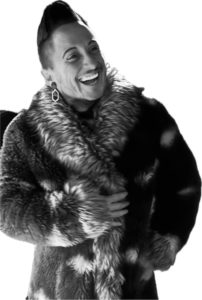
D/Annie Liontas is the trans-genderqueer author known for the memoir Sex with a Brain Injury: On Concussion and Recovery, which received the ALA’s 2025 Stonewall Award for Nonfiction and the 2025 Lambda Literary Cordova prize, as well as the novel Let Me Explain You. Their work has appeared in The Atlantic, The New York Times Book Review, The New Review, Oprah Daily, and more. They serve as an Assistant Professor at Lehigh University, helped obtain a Mellon Foundation grant focused on Disability Justice to bring storytelling to communities in the criminal justice system, and curate the Most Anticipated Queer Books list for Electric Literature. They reside in Philadelphia with their spouse, a dog, and the rabbit named Email.
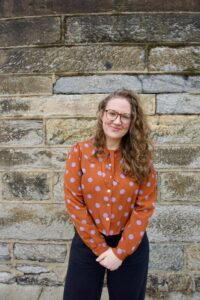
Maria Adelmann is the author of the forthcoming novel The Adjunct, along with the short-story collection Girls of a Certain Age and the novel How to Be Eaten, which was selected as an NPR Book of the Year and a Belletrist book club pick. Her essays and stories have appeared in Tin House, n+1, Electric Literature, The New York Times, among others, and her work has been recognized by The Best American Short Stories. Her background includes stints as a hotel reviewer, product tester, and copywriter; she currently makes her home in Philadelphia.

Chet’la Sebree is the author of the debut essay collection Turn (W)here: A Geography of Home along with the poetry volumes Blue Opening, which was longlisted for the PEN/Voelcker Award for Poetry and a finalist for both the Los Angeles Times Book Prize and the Lambda Literary Award for Bisexual Poetry; Field Study, recipient of the James Laughlin Award; and Mistress, nominated for an NAACP Image Award. She presently teaches as an associate professor at George Washington University.
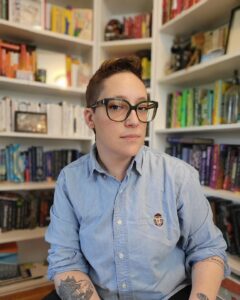
Sara Nović is the author of the novels True Biz and Girl at War, the nonfiction America is Immigrants, and a forthcoming memoir, Mother Tongue. They work as a Deaf studies and creative writing instructor and reside in Philadelphia with their family.