
The sway of classical tradition on postcolonial writing is immense, even if it is often understated. Puerto Rican playwright Luis Rafael Sánchez reimagined Sophocles’ Antigone as La pasión según Antígona Pérez, relocating the action to the fictional Caribbean nation of Molina to illustrate the United States’ aggressive economic and political suppression of Puerto Rican nationalist movements during the 1960s.
In Wide Sargasso Sea, Jean Rhys’s response to Charlotte Brontë’s Jane Eyre, the Dominican-British novelist crafts a Creolized backstory for the “mad wife” whom Rochester confines in his attic, offering a portrait of colonial hostility and neglect. The Martinican poet-playwright Aimé Césaire powerfully adapted and enriched Shakespeare’s The Tempest into Caliban’s existential drama after having his own name, language, and identity stolen upon Prospero’s arrival in Une Tempête, dramatizing the colonial dilemma faced by Caribbean island nations. More recently, Jamaican poet and memoirist Safiya Sinclair has passionately engaged with Césaire’s watershed rewrite in her stark poetry collection Cannibal, reframing postcolonial identity for someone who has migrated to the metropole of an imperial power—here, the United States. This Caribbean tradition of literary hybridity, intertextuality, and relationality is long-standing.
In college, I didn’t know or care about any of it.
In his words, the Iliad could be more than a story of glory, pride, war, and death; it was a framework for one’s struggle with vanity and the dark paths down which it might take you.
I found myself seated in thoughtfully crafted chairs within grand lecture halls or ornate classrooms arranged around expansive, polished tables, listening to professors and peers debate Homeric epithets, patrilineal descent, and the cadence of dactylic hexameter, watching the sun drift through the windows and nearly slipping into sleep. I carried with me a child’s memory of a simpler time. I was raised in a tight-knit Haitian immigrant family in a South Florida town whose population of newcomers resembled a microcosm of Latin America and the Caribbean. My sister, cousins, and I spent a great deal of time together as children, and as we grew older we would occasionally make the late-night pilgrimage to Miami to celebrate holidays or special occasions.
We lived near a pleasant park with green meadows and a basketball court, aside from the occasional outing of Black youth being questioned by the police. We rode our bicycles for hours, well into the evening. Both of my parents held solid, stable jobs: my father, once a physics teacher in Haiti, worked in construction and plumbing; my mother funded her education and became a nurse, until illness forced her to pause her career. We weren’t rich, but we weren’t destitute either.
On campus I savored the Beaux-Arts and Neoclassical architecture, the spirited conversations about imagery, meter, and line in poetry workshops, and the belief that academic prestige would in time help me land a respectable career. Yet I struggled to imagine how reading austere texts by ancient Greeks—the so-called Dead White Men—about men killing one another in bloody battles and waging senseless wars could serve my future. Homer’s Iliad and Odyssey, Virgil’s Aeneid, Dante’s Inferno, and Milton’s Paradise Lost held a certain appeal, but ultimately they felt like material for another exam I would study, conquer, and move beyond.
That perspective shifted the first time I encountered Derek Walcott’s epic Omeros. Walcott recasts the classical epic through a Caribbean lens: his Achilles is the Saint Lucian fisherman Achille, eking out a living in a tourism-driven economy and undergoing a spiritual voyage and ancestral consultation reminiscent of Odysseus’s katabasis and Tiresias’s counsel. His Hector is a fisherman-turned-driver who trades his canoe for a flashy van to chase money, doomed to a tragic fate like his Homeric counterpart. His Helen is a local island beauty and servant girl who becomes the subject of a quarrel between the two men, rather than the global conflict of the Achaeans and Trojans. His Philoctetes is transformed into a wounded tourist guide who speaks French Creole, swallows rum, and clings to the Caribbean superstition that a camera can capture not just your image but your soul. The central human drama concerns islanders wrestling with love, fraternity, and identity. Some might dismiss these as simple, everyday dramas, yet a larger, overarching design gives them heft.
Walcott’s verse is suffused with such lyrical richness that even the mundane appears grand. Oars become spears, and rain over the ferns glitters like lances and arrows; buses resemble chariots, and trees are felled with the violence of ancient warfare; a pantheon of West African deities stands beside the Greeks, and Shango’s thunderbolt is likened to Zeus’s. All of this unfolds against the vast, timeless sea of the Caribbean, whose ancient currents thread history into the Atlantic and then into the Aegean.
Yet what did the classics have to do with the Caribbean? When Walcott writes lines such as
our only inheritance that elemental noise
of the windward, unbroken breakers, Ithaca’s
or Africa’s, all joining the ocean’s voice,
because this is the Atlantic now
or
Why not see Helen
as the sun saw her, with no Homeric shadow,
swinging her plastic sandals on that beach alone,
as fresh as the sea-wind? Why make the smoke a door?
he makes the answer explicit: his homeland is equally mythic and sovereign.
He was not merely copying or adjusting the epic. He had taken the structure of the genre and found, within its hollows, echoes of his own history, discovering the commonalities that stretched across time, space, and cultures and were folded into a single, larger epic.
In his view, the Iliad could be more than a chronicle of glory, pride, war, and death; it could serve as a model for a person’s struggle with vanity and the perilous paths vanity might lead one down. The Odyssey could be more than the tale of a cunning man’s homecoming; it could describe losing one’s way and rediscovering it. These epics belonged to everyone, and their shape offered a framework that contemporary stories—each with its own specific details—could occupy.
I wanted to tell a story about a man in a place.
As Walcott asserted in his 1992 Nobel Prize acceptance speech, Caribbean literature and culture were not “timid, not derivative, any more than the hard white petals of the frangipani are derivative and timid.” He wasn’t copying a colonial precedent. He was presenting a synthesis of the Antilles. He took a text rooted in a long tradition of a language shaped by colonization and demonstrated its resonance. I felt that resonance, too.
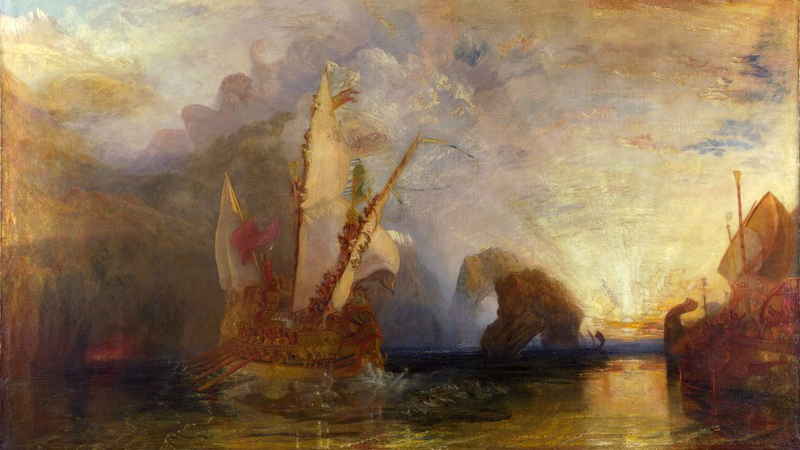
Homages to the Odyssey aren’t a recent novelty. Dante Alighieri imagines a doom for vain Ulysses in the Inferno, where he has Ulysses speak to Virgil from the flames in the Eighth Circle of Hell, damned for letting his wanderlust lead him astray. Alfred, Lord Tennyson celebrates that same longing in his Romantic poem “Ulysses.” James Joyce’s Modernist novel Ulysses, set in present-day Dublin, stands as perhaps the most famous and conspicuous example.
Ezra Pound’s The Cantos, a 120-section epic, threads an Odyssean archetype through global politics and literature as a unifying motif to impose coherence on history and civilization. William Faulkner’s borrowing of the ghost of Agamemnon lamenting his fate for Odysseus in the underworld informs the title and mood of As I Lay Dying. Margaret Atwood playfully interrogates the Odyssey’s male-focused narrative through Penelope’s wry observations in The Penelopiad. Some argue that the aimless roaming across nations and decades by Ulises Lima and Arturo Belano in Roberto Bolaño’s The Savage Detectives is a loose, fragmented echo of the Odyssey form. This same current is likely why Christopher Nolan chose to translate the Odyssey into a film (setting aside Emily Wilson’s sharp critique) to frame a meditation on cultural disintegration within a late-capitalist world marked by war-making.
The list of examples could continue, but Walcott’s achievement, for me, stands apart. He gave Homer new life as a narrative with undeniable relevance. I too longed to tell a story in that vein—a narrative about a man in a place, a place like mine, with all its racial and social complexities that starkly contrast the ivory towers of my college. I yearned to write about a homeland I had left yet hoped to return to someday. I aspired to put down a story about home. This is what drove me to write my novel Beyond the Baths of Stars, a work forged from the poetry of the classics, the Caribbean imagination, and a distinctly Haitian immigrant experience. Walcott granted me that permission. I hope I have made something worthy of it.
__________________________________
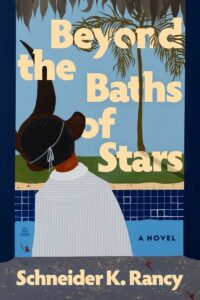
Beyond the Baths of Stars by Schneider K. Rancy is available from Amistad.
