
I.
From the very first encounter with it, something inside him resonates—a clash of excitement that language can barely capture.
The mountain towers over him: sheer walls of rock, capped with snow, with glints of limestone catching the light. Standing at roughly twelve thousand feet above sea level—and far more crucially, some seven thousand feet above the teenager gazing up—the scene awakens more than awe. Before long he is not merely a spectator; movement becomes the instinctive pull, and his feet take charge, propelling him upward, driving him toward a closeness with this behemoth. He threads through a meadow of sage and sumac, arriving in a hollow beneath a cliff face that glows with aspen, a yellow turning to orange. He presses on, his pace quickening into a near run.
He halts to watch cloud shadows drift across the mountain’s facade. The land lifts his spirits. He spots motion within the rock face and, drawing closer, recognizes its source: water in perpetual motion. A continuous torrent and spray tumble down the rock’s chasm, spraying below. He studies the ledges where the water climbs and drops, trying to memorize the panorama. The white stone bears orange stains where it remains damp. He tunes into the stark, cold music of water crashing downward. With his head lowered, the sound is a roaring industrial clamor; with his eyes lifted, it climbs to a higher pitch.
He will come to learn the mountain’s name is Timpanogos, and that people named after it once inhabited the nearby terrain around five centuries ago. The meaning—roughly “rock,” or perhaps “river,” or in some translations the combined “rocky torrent” or “rock river”—will eventually reveal itself, though it will take him a long time to truly grasp what Timpanogos will signify in his life. How could he know? His future lay spread out in uncertain fragments before him. He senses a vague intuition that this place will matter, though the reason remains out of reach.
All the confusion and anger that have clung to him fade for the moment. A playful notion crosses his mind. Life suddenly feels larger. The sense of smallness he had carried back in Los Angeles, with his silent, judgmental father nearby, melts away. The year in Boulder, the disdain for school, the drinking, the lack of direction, the early experiments in making art—none of it defines him anymore, and his restless energy quiets.
Yet a twinge remains. The familiar, old urge to possess—this place, to make it his own. Then, almost immediately, a broader impulse: to stand beneath its beauty. Not for any practical aim, but to be absorbed by something grander, wilder, and overwhelming. This is a moment that will stay with him, a turning point that changes his life forever.
He has stumbled upon this spot by chance, while driving home to Los Angeles from the University of Colorado. He would later recall: “It was so beautiful that I couldn’t pull myself away. The mountain, Timpanogos, felt to me like Everest. It was Yosemite on a different scale. Spiritually, it was captivating. When I left, I couldn’t shake it off. I lay in bed thinking about it. And whenever I had the chance to go back, I did. I have a clear memory of thinking, Someday I’d like to put a stake down here.”
The year is 1954 and the young man’s name is Robert Redford, and he would indeed plant that stake a few years later by paying $500 for two acres in the shadow of the mountain.
II.
Sixty-two years later, in December 2016, I was invited to give a reading at Sundance. In truth, the entire family joined me, and my wife Nina, my daughter Hadley and I were thrilled to be there. The word was that Robert Redford would be present, but despite his absence, the week proved wonderful.
There was a particular air at Sundance that year. Even without Bob, his presence seemed to saturate the place—the celebrity hum, the aura of “Bob.” In the evenings, Nina and I retreated to the Owl Bar after a day of skiing. The bar, built in the 1890s, had been moved to Sundance from Thermopolis, Wyoming, and was rumored to have once hosted Butch Cassidy. The bartender told me Redford preferred tequila, so that’s what we ordered.
I wish I could recall the bartender’s name. One night I entered alone, and the bar was near-deserted except for him. I began talking, sharing my tale, bragging a little about how Redford had called me out of the blue to offer kind words about a book I’d written. The bartender yawned, seemingly unimpressed by another Redford anecdote. He’d heard plenty.
Then he recounted how Bob first discovered Sundance. I’d heard variations other people told that week—Chad, the Sundance manager at the time, and a woman who approached me after my Tree Room talk. In any case, the story felt as inseparable from the place as the limestone crags that spray from the snow on Mount Timpanogos. I recognized it for what it was:
An origin story.
III.
It happened one afternoon while driving home from college. Born in Los Angeles, Redford didn’t fit the Western-reinvention cliché later embodied by Jeremiah Johnson, a story of an Easterner who ventures into the Rockies to become a mountain man, but his landmark discovery occurred while heading west, on the long return from the University of Colorado. Near Salt Lake City he veered off the highway and wandered, following a sudden impulse that, in hindsight, would alter everything.
When first glimpsed, a rough ski retreat named Timp Haven occupied the land that would become Sundance. From the outset, this place was marked by odd coincidences; Redford soon learned that Timp Haven and the surrounding terrain belonged to the Stewart family—the same Omer Stewart who had inspired him during his time at CU. Then years later he would meet his wife Lola Van Wagenen in Los Angeles, both moving into the same apartment building, with Lola hailing from Provo, just down the canyon from the magical site.
The writer Ed Abbey, who Redford would hike and camp with, described his first look at the Rockies as “an impossible beauty, like a boy’s first sight of an undressed girl,” a vision that struck a deep chord in his imagination that has echoed ever since. That same chord resonated for Redford. It lingered like a dream of an alternate life as he flunked out of CU, mourned his mother’s death, eloped with Lola, and bore the loss of their infant Scott at two months.
The vision faded only briefly as he found TV work, but with earnings in hand he bought two acres below Mount Timpanogos for $500. The lone structure on the lot was a tumbledown chicken coop, yet it marked a beginning.
As the struggling young actor tried to make it in New York and Los Angeles, the land waited for him in Utah. By then his daughter Shauna had come into the world, but the birth of his son, David James (Jamie), changed everything. Lola and Jamie survived a dangerous delivery; this prompted a deeper questioning—a tug-of-war between career and family. After a period of soul-searching that included a ninety-mile November walk through the Big Sur woods, he resolved that his life was too scattered. He yearned for a home for his growing family, and he knew precisely where that home should be.
Yet just as he made this decision and prepared to return to the plot beneath Timp, a windfall arrived—a fortune he would come to call the honeypot. His agent rang with the news that Bing Crosby Productions wanted him as the lead in a new summer show, Breaking Point. It could be the big break, delivering $3,750 a week. A fortune to a young actor on the brink.
Nearing Salt Lake City, he turned off the main road and wandered, basically following an impulse—an impulse that, it turned out, would change everything.
He would always be, like his Sundance character, a man who thrived on motion. But Sundance would offer him a place where he could, at least intermittently, slow down and quiet himself—a sanctuary where, to borrow a line from Wendell Berry, he could face his shadow and his reflection. If that sounds mystical, it was; it felt mystical to Redford.
And the place did confer power.
Consider this:
He said no to the first offer of $3,750 a week.
He said no when the offer climbed to $6,000 a week.
And after another walk and another night of thinking on a Malibu beach, he refused the final bid of $10,000 a week. Remember, this was 1963 when ten thousand dollars a week equaled more than a hundred thousand in today’s money. No guaranteed hit films loomed ahead, and there was no assurance of success. His agent, baffled, quit. Robert Redford, it seemed, must be crazy. He turned his back on Los Angeles and headed for Utah.
People around him shared that sense of puzzlement; some believed he was stubborn, perhaps even angry. Maybe they were right. It was hard to justify turning down money when you needed it and your future seemed unsure.
Why he chose to say no remains unclear, but he did.
And the payoff?
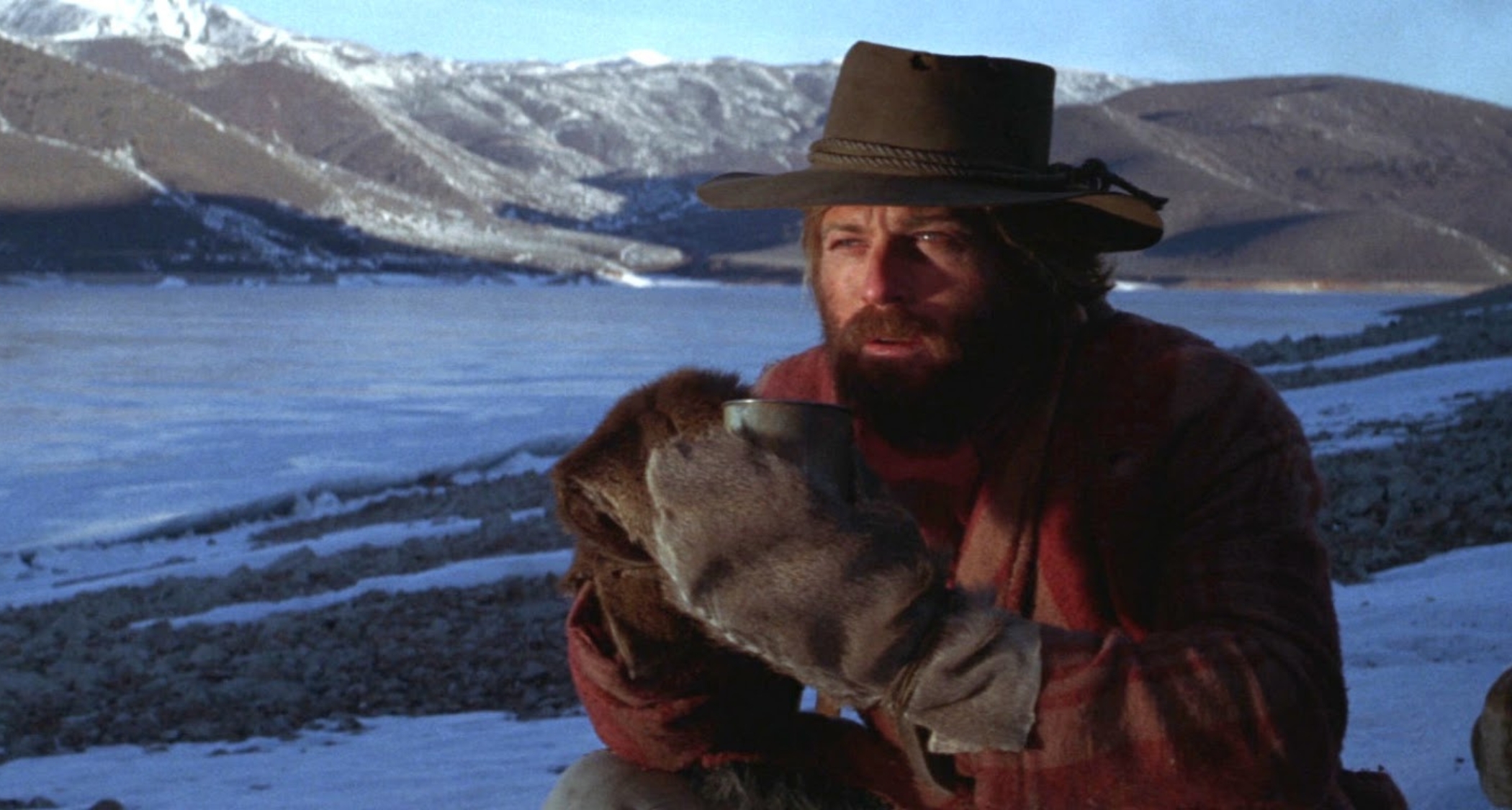
It arrived in days of calm exertion—“soul work,” he called it—gazing up at the mountain while he built his new home in the canyon. He worked with a local builder and the man’s son, planning the house himself. He shed weight, let his hair grow long, and let his beard fill in. He withdrew from the world, not unlike a character he would later inhabit.
The house was not merely a residence; it was a refuge and a work of art, shaped by Frank Lloyd Wright’s organic design ethos. An A-frame, really a sequence of As, built with native timber and stone, with windows directed at Mount Timpanogos.
Looking back, he described that exuberant period: “We had moose and deer, a mountain lion, bald eagles, every kind of wilderness creature—but no running water. When the snows fell, we boiled water for cooking and bathing.”
Offers for films came flooding in, yet he ignored them. His beard lengthened. He retreated fully.
“The house is GREAT,” he would later write after the A-frame was complete. “A three-level affair with exposed eight panels of glass and 48 tons of rock work, it is 45 miles from the nearest town and 8,000 feet up. The view is tremendous, looking toward the back of a colossal mountain peak and a year-round glacier. The hunting is superb and the streams teem with rainbow trout.”
Over the ensuing decades, the place and his life kept evolving together—more land acquisitions, clashes with developers seeking to build condos in the canyon, and in 1981 the Sundance Institute was formed. Yet this was when the true commitment began—“the first flush of rootedness is unrepeatable,” as the nature writer Robert Finch wrote. Redford was planting roots, and this was his first flush.
IV.
When people spoke of “Sundance,” many meant the large festival in Park City, Utah. For Redford, Sundance referred to the comparatively modest ski resort tucked beneath Mount Timpanogos, forty-five minutes away in Provo Canyon.
The origin story would be recounted many times over the years, and details often grew fuzzy as people narrated it anew. Redford himself would tell the tale when directors rolled down from Park City to Sundance for the festival’s first day. There, beside a stone hearth outside the screening room, he would begin, “Where you were wasn’t Sundance… This is the real Sundance.” In later years the task of telling the origin story passed to Chad, who had become Sundance’s president. Not long ago, over lunch, Chad and I debated the finer points—was it 1954 or 1956 when he first glimpsed the mountain, was he in a car, as Chad and the Sundance Institute clung to, or on a motorcycle, as the Sundance camp contended?
“There was so much retelling that it became a kind of myth,” Chad noted.
And as with any myth, the real, more tangled truth lay beneath. Redford’s retreat to the mountain to build his home was brief. When Henry David Thoreau emerged from the woods, he worked as a surveyor and handyman for Emerson. When Redford left the woods, he went to Broadway, where he achieved his breakthrough opposite Elizabeth Ashley in Neil Simon’s Barefoot in the Park.
“The first flush of rootedness is unrepeatable,” said the nature writer Robert Finch. Redford was rooting down and this was his first flush.
As for Sundance, there would be years of debt, disappointment, and doubt. The project grew into a money pit; his idealism clashed with the harsh economics of the venture. Sometimes it seemed that he took on films or TV roles simply to fund the resort. Early on Redford’s philosophy was, “Do another TV show, buy another acre.”
This pattern persisted for decades. Yet after the thunderous success of Butch Cassidy and the Sundance Kid, he could substantially increase the landholdings.
That film bestowed the resort around Mount Timpanogos with its new name, Sundance, but it did not resolve Sundance’s financial woes. Redford quickly expanded by purchasing another 3,379 acres, and he wasn’t stopping there. There was a practical motive: to ward off subdivisions on the mountainside. But some perceived something more in his drive—an impulse to own, to possess the entire mountain. And Sundance continued to bleed money. At times the most bankable star in the world spent roughly $300,000 annually on the property, most of his film earnings poured into financing the place.
Ironies abounded. To keep the resort viable, especially after Park City’s larger, higher-elevation resort opened nearby in 1973, he found himself taking on the very role he despised: developer. What began as a simple rope-tow area called Timp Haven required expansion—new chairlifts, new runs, clearing trees, building more houses—to turn a profit. To his credit, Redford attempted to adhere to strict environmental standards, aiming for sustainability, but that came with a heavy price tag. Sundance hadn’t begun to pay for itself. It is peculiar to note that the world’s most lucrative film star sometimes faced cash-flow issues.
Over time another irony emerged regarding his Sundance home: he wasn’t there much.
“We humans are an elsewhere,” wrote the Western poet and essayist Reg Saner.
Redford lived largely elsewhere than most people.
He kept an apartment in New York, spent considerable time in Los Angeles, and was constantly on location for film work. If the dream was to settle at Sundance, he remained restless.
Redford shared a trait with the Sundance Kid: in a famous scene in Butch Cassidy and the Sundance Kid, the duo attempt to go straight, becoming payroll guards for a Bolivian mining company. Their employer asks Sundance, “Can you hit anything?” Sundance replies, “Sometimes.” The old man flicks a coin down the street and tells them to “Hit that.” Sundance, trying to show off, moves into position, only to miss the target. Butch stares, thinking this is the one thing you do well that you can’t manage. The elder says nothing but walks away. Sundance asks, “Can I move?” and the question is met with, “Move, what the hell you mean, move?” Then Sundance drops down, pivots, draws his gun, and sinks two shots as the coin flies through the air.
“I’m better when I move,” he says.
That moment became a touchstone for his life. Movement defined him: he drove swiftly, ran five miles a day, and played tennis constantly. His daughter Amy noted how his energy surged when he was home at Sundance—sports, hikes, all sorts of activity. Mary Tyler Moore, however, saw a different side. After Ordinary People and after fighting through alcoholism that nearly killed her, she found Redford’s pace almost relentless. Tennis at nine, swimming at eleven, what would come next? Archery? To her, he resembled an overbearing camp counselor, Conway’s energy on endless loop.
He carried that same zeal to the slopes. Although he learned to ski as an adult—for Downhill Racer—he skied with velocity, paying the price with broken noses and collarbones. He also produced films with speed, a remarkable burst from 1972 to 1974—Jeremiah Johnson, The Candidate, The Way We Were, The Sting, The Great Gatsby—an astonishing sprint. He did not allow two takes to be performed the same way, chasing spontaneity and resisting theory. On the set of All the President’s Men he grew impatient with Dustin Hoffman and Jason Robards, who liked to analyze characters and their motives. “Let’s get to it” was Bob’s credo. Yet he refused to repeat a take identically; he sought the immediate and the impulsive, valuing action over deliberation.
His urge to root in one place clashed with his need to move. Both impulses remained real: he loved his family and yearned to construct a dreamlike domestic space at Sundance, but he traveled constantly. He longed for serenity, a retreat from life’s incessant clamor, and he did manage quiet moments with his family and in nature. Still, it would be a stretch to call him serene. His characters showed unease, and so did he.
V.
There are many things the young man cannot know when he first lifts his eyes to Timpanogos. He cannot foresee the path his life will trace. If you could appear from the future and meet him on that day and tell him what lay ahead, he would likely laugh at you, perhaps thinking you were insane.
He dreamed of a peaceful refuge, a sanctuary from the world’s disturbances, and he did find those quiet moments with family and in nature. Yet calm is not how to describe him. His on-screen figures carried unease, and so did he.
What a strange and extraordinary tale one could relate to him. One could tell him that he would become a father multiple times, a devoted husband more than once, a sex symbol, a would‑be cowboy, a roguish outlaw on screen and sometimes a charmingly awkward one off screen. That he would rise to become America’s most famous movie star, and among the most famous people on the planet, all while constantly trying to retreat and preserve a sense of his true self. That his devotion to this place would ignite a defense of it, rippling outward to protect an entire region. And that he would not merely proffer lip service to this fight but would undertake the grueling work—lobbying lawmakers, sitting in meetings—to advance the cause.
And let us not forget the Sundance Institute and Sundance Festival. He could hardly have imagined conceiving a space where young filmmakers would pursue work shielded from the market’s pressures, and then help launch a platform to showcase such independent cinema. If that platform grew into something formidable, embodying, in certain ways, the antithesis of its original spirit, it would not erase the impulse that birthed it nor all the good achieved because of it. His resolve would be a stubborn counterweight to Hollywood, and without that stubbornness none of it would have come to pass. Oh—and by the way, tell him he would appear in many films, some of which would be truly excellent.
When he first stands beneath Timpanogos, there is no way to predict the gifts the mountain will grant him. One might argue that nearly every facet of his life—art, family, nature, activism—will spring from that moment: the spark that makes an artist out of a young man who isn’t entirely sure what he wants to become, who still wrestles with a judgmental father, a youth full of questions about fate and luck, and who looks up to see the mountain and imagines a future he could scarcely have conceived.