
I’m furious with MAGA leadership every day for the lies, manipulation, and wreckage they’ve inflicted on the very people who voted for them—and on the rest of us as well. I burn with anger when I witness faith being twisted and wielded as a weapon, while countless individuals suffer in poverty, lack healthcare, face shrinking job prospects, and see a dwindling route toward the middle class.
For much of my life, I was the quintessential MSNBC Democrat, but I’ve drifted leftward and stepped back from corporate news in recent years. After backing Barack Obama, Hillary Clinton, Joe Biden, and Kamala Harris, I’ve come to believe that Bernie Sanders’s democratic socialist vision has endured the test of time. And as my political awareness has deepened, so has my anger.
I am livid about the Democratic Party’s failings—failings that helped usher in the fascist nightmare we’re living in today. I would even contend that Democrats bear a comparable share of responsibility to the far right when it comes to enabling fascism through a string of missed chances, by retreating without reason under the banner of “integrity,” abandoning the working class in favor of corporate interests, and remaining so fixated on their own moral virtue that they forgot the actual work they were elected to do.
That betrayal cuts to the core of what they’re supposed to stand for. And if they cannot shield their own—those who trust in the inherent goodness of the Democratic Party—they don’t stand a chance with voters in the Bible Belt or the South, who view Democrats not as the “good guys” but as outsiders threatening their way of life. They perceive them as adversaries, and they see Donald Trump as the only one truly representing them, even though his policies have gutted them.
When it comes to fighting fascism, Democrats are showing up with a cardboard knife to a gun fight.
The Republicans could set the world ablaze on their march toward authoritarianism, and it might still not matter. Because in the battle against fascism, Democrats keep showing up with a cardboard knife to a gun fight.
*
On January 6, 2021, I sat in my office, juggling twenty upscale interior-design projects. I kept the door shut so I could hear CNN or MSNBC in the background. The same insatiable curiosity that had marked my youth hadn’t faded, and I was, by then, a confirmed news junkie. I knew Trump planned a rally to parallel the certification of the results, and he’d been pushing baseless claims of fraud since Biden’s huge victory, but I did my best to stay focused on the day’s tasks. Then his voice cut through: “If you don’t fight like hell, you’re not going to have a country anymore!”
Something in his tone sent my cortisol surging. I turned toward the screen, work forgotten. A wild crowd, decked out in MAGA gear, surged forward as the cameras followed. The crowd transformed into something I could only describe as an occupation in progress.
My eyes remained glued to the screen as an armed mob surged past barriers and stormed the U.S. Capitol in an attempt to overturn the results of a free and fair election. An invasion of the Capitol? And I’m watching it unfold on television? To this day, it remains one of the most horrific visions I’ve ever witnessed.
For many of us, the specifics of that day have faded amid the lore of our collective trauma. But it’s crucial that we remember precisely what occurred.
At eight in the morning, Trump tweeted instructions to Mike Pence to refuse to certify the election. At noon, he addressed a rally and urged his followers to descend on the Capitol, where, within an hour, the crowd overwhelmed the Capitol Police, who struggled to contain the marauders. One participant even erected a gallows with a noose.
Inside the Capitol, the certification process began, while outside, overwhelmed police called for reinforcements, reporting that a riot had formed. The Secret Service evacuated Vice President Pence, as rioters breached additional barriers and kicked open doors to let even more rioters flood in.
All of my staff hurried to my office to witness the scene on TV. We covered our mouths in disbelief—not merely at the violence, which would have been shocking enough on its own, but at the eerie absence of rescue or relief. The police collapsed, and hours would pass before the National Guard arrived. It took mere moments to accept what sworn testimony would later confirm: this was driven from the top.
The details are important and easily glossed over. The rioters waved the Confederate flag, a stark symbol of racist hate. Some wore masks; others wore tactical gear. One participant wore a shirt proclaiming “Camp Auschwitz.” (This man, an unapologetic antisemite, would later be pardoned by Trump.) Some senators fled, while others braced themselves inside the Senate chamber as Officer Eugene Goodman attempted to reason with the mob, and Senate staffers barricaded themselves in offices, hiding. The rioters pounded on doors, screaming for Nancy Pelosi.
They moved through the Capitol Building, opening more doors to permit additional rioters to pour in. The House suspended its floor debate, and members were instructed to prepare tear gas masks. The sitting president posted that “Mike Pence didn’t have the courage to do what should have been done to protect our Country and our Constitution, giving States a chance to certify a corrected set of facts, not the fraudulent or inaccurate ones which they were asked to previously certify. USA demands the truth!”—further inciting the mob. The House attempted to resume debate, only to suspend again, urging lawmakers to take cover under their chairs. Trump spoke directly to Alabama senator Tommy Tuberville, who told him Pence had been evacuated. The danger was unmistakable to all who watched.
During the chaos, a colleague from the shipping dock that housed my clients’ furniture called. I answered instinctively, despite the fact that this woman had long treated Trump and Jesus as interchangeable figures, and had made that clear in our business relationship. Her question was plain and mundane, and I snapped, “I can’t think about that right now! Are you watching TV? MAGA is ransacking the Capitol, and they want to hang Mike Pence!”
Immediately, she fired back, “Well, this is what happened when Black Lives Matter protests. What did you think we were going to do?” What in the world was she talking about? Before I could gain clarity, she revealed that her own brother-in-law stood right there at the Capitol, the man I watched being stormed on national television. It was chilling, and it turned my stomach.
I’d avoided personal ties with Trump supporters. It wasn’t a political difference but a moral divide—one I couldn’t bridge. That phone call illustrated why. I was the lone Democrat in her life, and I am certain she enjoyed the exchange and my sputtering responses. My reaction was precisely the reason for her call in the first place.
Around me, my colleagues were in shock, too. We felt the nation slipping away. Biden had defeated Trump by more than seven million votes—and inside the Capitol, rioters were defecating as they acted out their violence. That woman found perverse satisfaction in rubbing my face in it, and I hung up and refused to work with her again. It felt as though the world had reached a point of no return, and in time I would learn that we had.
Outside the House chamber, the mob attempted to force open locked doors, shattering glass. A man wielded a baton, whether he brought it or pulled it from a Capitol officer, to push through as the crowd chanted, “Break it down! Break it down!” An officer fired into the advancing crowd, killing Ashli Babbitt, a rioter who has since become a far-right symbol. The members of the House inside remained trapped, while rioters breached the Senate Gallery. Disappointed to find the senators evacuated, rioters rifled through papers left behind, hoping to uncover something usable against the defenders.
*
At 3:13pm, Trump tweeted again, urging the rioters to “remain peaceful.” The mob’s presence swelled both inside and outside the Capitol. At 4:17, he told the rioters to go home, stating, “We love you.”
By 6pm, after Ashli Babbitt’s death had been reported, Trump posted, “These are the things and events that happen when a sacred landslide election victory is so unceremoniously & viciously stripped away from great patriots who have been badly & unfairly treated for so long. Go home with love & in peace. Remember this day forever!”
I pieced together this timeline from earlier news broadcasts and the BBC’s meticulous minute-by-minute breakdown. It’s essential to be exact about what occurred, because, from my perspective, this represented the point of no return. I remember the day despite the bedlam. Five people died in the 36 hours following the insurrection, and 140 police officers sustained serious injuries—including cracked ribs, traumatic brain injuries, damaged spinal discs, and heart attacks—as rioters used bats, flagpoles, chemical sprays, stolen shields, and other weapons against officers, according to a deposition from a House Judiciary Committee. The accounts from lawmakers and staffers are appalling. It was, in effect, terrorism at the center of the American government.
In my circle, among friends’ households, and on television, Republicans began to say that MAGA had finally crossed a line. And at the very moment of certifying Biden’s victory and transferring power from Republicans to Democrats, the party now in charge had a chance to declare, “No more.”
*
The slide into fascism seemed like a distant peak within reach, and for a fleeting moment on January 6, it looked as though the nation might veer in a different direction.
In an alternate history, President Joe Biden, newly empowered by a decisive electoral victory and a country hungry for change, would have been unwavering in defense of democracy in the United States.
He would have chosen a relentless prosecutor who would aggressively pursue investigations into wrongdoing. I imagine that with a prompt and thorough trial, and with all evidence laid bare—including proof that Trump-aligned groups, one of which was started by his son, allocated millions for the January 6 gathering—Trump would have faced a federal sentence for attempting to overturn the 2020 election. Once convicted, he would be barred from holding public office, and Biden would have staved off the advancement of fascism for longer.
In those early days of Biden’s presidency, Trump had not yet decided to try again. Just imagine if Joe Biden had appointed a top Justice Department leader who approached the job with the utmost urgency. Picture the Department of Justice taking decisive action—uncovering illegal acts through investigation and trial—and halting the dictator in his tracks. The Republican Party might have produced a successor, but one devoid of Trump’s populist wind and the aura of a Divine Right of Kings.
Take a moment to revisit that day in your mind.
Did you ever imagine that man would be granted entry again? I surely did not. I assumed the Justice Department would initiate charges to defend our elections and protect our country.
God, I was wrong.
When the Capitol’s dust settled and the nation returned to its routine the next day, Biden nominated Merrick Garland as Attorney General, citing payback for how Garland was treated during the Obama era. (Recall that Obama had nominated Garland to the Supreme Court, an effort McConnell blocked.) Whoever assumed leadership of the Department of Justice after rioters erected a gallows and shouted “Hang Mike Pence,” and after the capricious violence in the Capitol, needed to act with unyielding urgency to safeguard our democracy. Instead, Garland treated it as if he’d overdone the Xanax.
It took Merrick Garland two years to appoint a special prosecutor to investigate Trump’s role in January 6. While ordinary Democrats tossed up their hands and asked what on earth was happening, Garland’s Department of Justice wavered about being impartial, objective, and neutral in the face of violent authoritarianism. They called it “integrity politics.” I call it sacrificing the American people, betraying democracy, and rubber-stamping the madness. There is nothing neutral about delaying justice, and a rigorous crime investigation is the DOJ’s sole mandate.
As I write this four years later, people call it a minor fracas at the Capitol—a peaceful protest. During Trump’s campaign, which yielded his disastrous, fascist second term, he labeled the imprisoned rioters as “hostages” and later pardoned them after his victory. Make no mistake: what unfolded on January 6 was, in effect, a violent assault on the sitting vice president, a crime I believe was fueled by Trump’s words and actions. Yet those two years gave him ample time to reshape the narrative, aided by the enormous right-wing media ecosystem. The attempted coup became a “freedom march.” And those two years were handed to him on a silver platter by a DOJ that slept on the job. Two years to sanitise terrorism with comforting rhetoric.
Among dyed-in-the-wool Democrats, criticizing the party’s shortcomings is unfashionable. Some argue that such critique weakens the fight. I understand the sentiment—I used to share it, especially given how the mainstream media maintains a double standard by shielding Democrats while giving Republicans cover. But with an approval rating from an exhausted base dipping—fewer than half of registered Democrats, or 42 percent, approve of Congressional Democrats, according to a Quinnipiac poll at the end of 2025—I cannot imagine anything more essential than rigorous critique and a fresh path forward. I am a committed Democrat, and I’ll critique the party until it serves the people—until it becomes a genuine opposition party that fights for all Americans in every state. I know what resonates in rural America. I know what wins with working-class Oklahomans. They want a fierce defender.
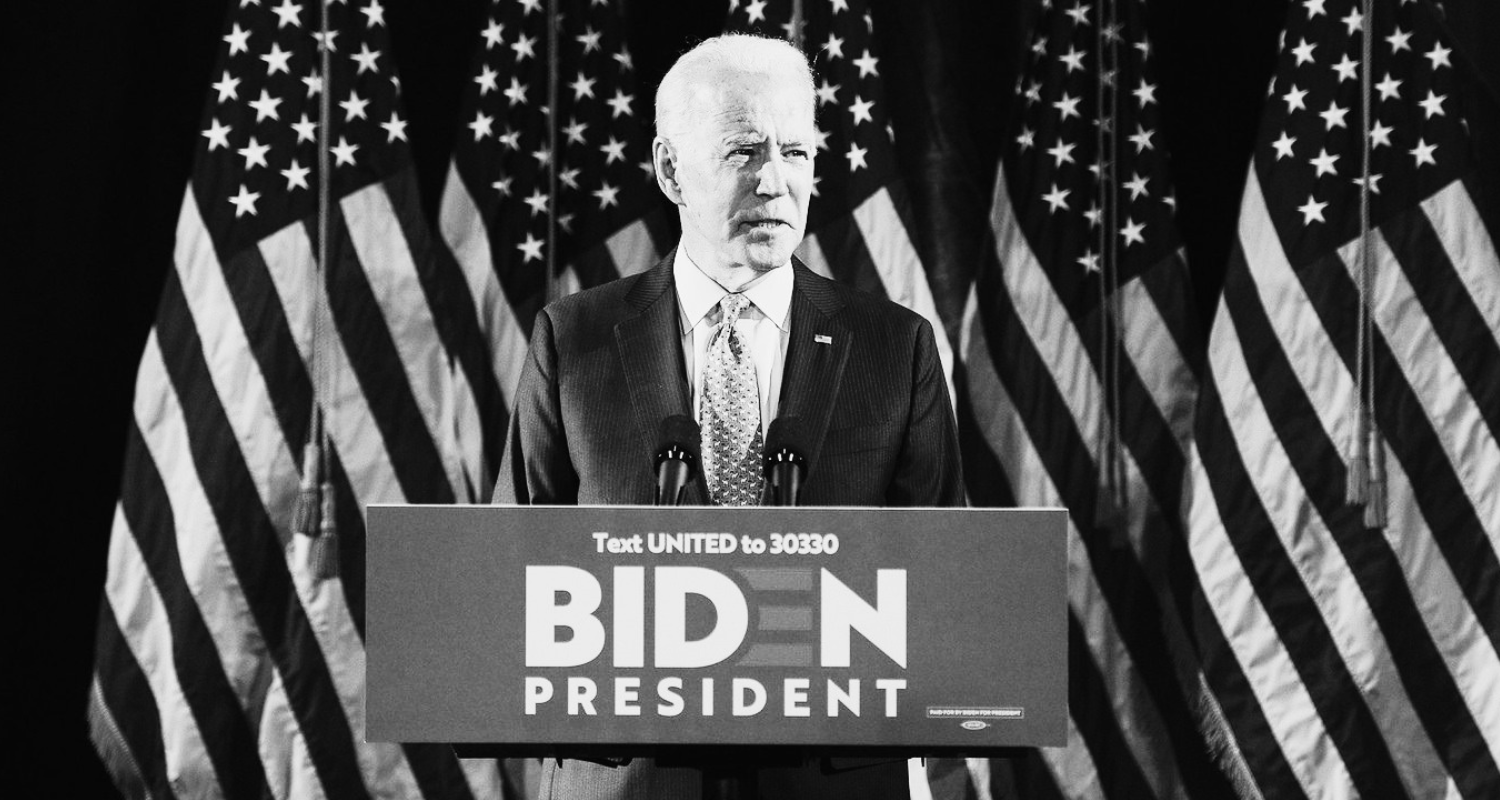
Joe Biden and the Democrats didn’t meet the moment—the most critical appointment of our lifetimes. That one failure alone is enough to forever define his presidency.
Over time, that inertia would align with corporate media and far-right outlets to gloss over the coup with a veneer of calm. We expect this from Republicans, who have made lying a cornerstone of their messaging. But when Democrats fail to push back—when Biden doesn’t fight back—it becomes complicity, and it takes us nowhere.
There’s a disturbing illness infecting the entire party, where Democrats truly believe they will win by showing deference to the right. By capitulating to white supremacy and patriarchy. Even if they don’t name it publicly, that quiet deference amounts to selling out Americans. That quiet deference reeks of weakness, and voters smell it a mile away.
In reality, Democrats aren’t playing the same game as Republicans—and they pretend that taking the high road is a form of moral virtue.
Not only did Donald Trump escape accountability for his insurrection, but he was also rewarded with two years of normalization—a foundational asset for the spread of his fascism. Facilitated by the Biden administration, this “sane-washing” dovetails with an authoritarian strain of religion, because Evangelical Christianity often frames forgiveness without accountability as a virtue. If the Evangelical political machine could tolerate him morally, they could persuade Americans to overlook the violence he fostered, no questions asked.
*
Let me remind you precisely what we knew about Trump’s leadership when Biden faced the decision after January 6. To start, he had imprisoned 500,000 children in detention centers, repeatedly violating the federal 72-hour limit on holding minors. (If you’re tracking the fascist playbook, these are your scapegoats.)
Detention centers exist nationwide, though most are in the South, and the conditions are heartbreakingly cruel. In 2018, reporters visited the Ursula detention center in South Texas—an old warehouse turned into a cage complex—housing hundreds of children behind metal fencing. It’s nicknamed “La Perrera,” Spanish for “the dog kennel.” The Associated Press reported a cage containing twenty children, with foil blankets, separated from their parents or other guardians, left to care for one another. “One teenager…” described how she had to show others in her cell how to change another child’s diaper, while the facility kept its lights on around the clock. (Round-the-clock lighting is known to disrupt sleep, potentially causing cognitive disarray, paranoia, and even hallucinations.) Officials and journalists testified to horrific conditions: a child so traumatized she stopped speaking, a boy clutching a photocopy of his mother’s ID, a girl beating her fists as she cried; visitors and staff were not permitted to console them.
A Human Rights Watch report interviewed 110 women and children detained at the southern border. (Among those interviewed, 103 were held in 2017; some had been held in 2015 or 2016, under the Obama administration. While Trump’s administration escalated the cruelty, it did not invent it.) They “routinely described sleeping directly on the floor in cold cells, lacking soap to wash hands after using the toilets, before meals, and before caring for infants, and being separated from their families while in detention, among other abusive practices.” The frigid temperatures—denied by Customs and Border Protection—appear consistently in detainee accounts and in statements by visiting officials or journalists. They slept on the floor, even if pregnant. They lacked toothbrushes, toothpaste, or menstrual products.
In 2019, labeling these detention facilities as “concentration camps” sparked controversy when Representative Alexandria Ocasio-Cortez made the comparison. But as M. Gessen wrote in The New Yorker:
[T]he argument is really about how we perceive history, ourselves, and ourselves in history. We learn to think of history as something that has already happened, to other people…As for history, the greater the event, the more mythologized it becomes. Despite our best intentions, the myth becomes a caricature of sorts…This has the effect of making them, essentially, unimaginable.
Eight years and countless unimaginable horrors later, I don’t find that characterization of “concentration camps” controversial—or unimaginable—especially using the simplest definition as “mass detention of civilians without trial.” I certainly don’t find it controversial given the American history of concentration camps, like the 120,000 Japanese citizens who were placed in “internment camps” during World War II. And when we observe the realities of today’s detention centers, with their meager nutrition, their inhumane conditions, and their excessively long holds, it’s clear as day.
These modern-day concentration camps grew out of Trump’s zero-tolerance immigration policy and his broader inhuman migrant-separation strategies. (There’s your ultranationalism.) He banned Muslims from entering the country through a travel ban targeting seven predominantly Muslim nations. (More scapegoats.) Federal agents used tear gas on protesters near Washington, D.C., evoking First Amendment violations, and in Portland, Oregon, federal agents abducted protesters in unmarked vans, denying them due process. (There’s your state-sanctioned violence.) He banned transgender people from military service, claiming that transgender service members could not meet the armed forces’ standards of readiness, lethality, cohesion, honesty, humility, uniformity, and integrity due to gender dysphoria. There is zero evidence that transgender identity makes someone unfit for service, and this move clearly escalates the administration’s efforts to erase trans people from public life. (We’re piling up scapegoats.) That’s merely the tip of the iceberg of his first term.
And so today’s fascism should have surprised no one. Joe Biden and the Democrats didn’t meet the moment—the most critical appointment of our lifetimes. That one failure alone is enough to forever define his presidency.
_______________________________

Excerpted from Not Today, Fascists: The Lies That Got Us Here, and the Truths That Will Reunite Us by Jennifer Welch. Copyright © 2026 by Jennifer Welch Designs, Inc., Published by Hanover Square Press, an imprint of HarperCollins Publishers.
