
Hair around the genital region is, clearly, tied to sexuality. Natural, ample pubic hair on women has, at various moments, been deemed appealing, not solely in the era of the 1970s. Its allure echoes across centuries in art, literature, and even graffiti. In Pompeii, a Roman left a blunt remark on a wall: a “hairy cunt” was preferable to a bald one because it “keeps warmth and stimulates the organ.” The Tiv people of Nigeria find pubic hair captivating—the more, the better; they have crafted nuptial verses praising it. Likewise, among the Kwoma people of New Guinea, the thickest and most luxuriant pubic hair is seen as a symbol of female beauty. Shakespeare’s Venus enticed Adonis with lines about her “sweet bottom-grass and high, delightful plain,” and the racy eighteenth‑century figure Fanny Hill describes a fellow sex worker’s pubic hair as “the dark umbrage of the downy sprig-moss that over-arch’d it, bestowed on the luxury of the landscape, a touching warmth, a tender finishing.”
Historically, the presence of a woman’s pubic hair has often signalled sexuality simply due to its obvious connection to sex. Moreover, a luxuriant thatch could imply a body rich in androgens and estrogens, potentially accompanying a lively libido.
In a cultural ethos of open sexuality, pubic hair seems to be the one thing that must remain private.
The distinction for the most pubic-hair-obsessed among the annals of history goes to the eighteenth‑century English and Scottish aristocracy, who collected locks of hair to commemorate their romantic liaisons. Mistresses offered lovers keepsakes in lockets, and men tucked them away in hats or kept them as curios. King Charles II raised the bar by turning such love locks into a wig, to which he added fresh strands as his conquests grew—the modern precursor to a flamboyant beaver-hat upgrade.
My own encounter with the power of pubic hair occurred during my graduate days in Oxford, when I surveyed biologists about why pubic hair develops. In a professor’s library, seated on twin wingback chairs, I balanced a biscuit in one hand and a juice box in the other as he lunged toward me and dropped his face into my lap, exclaiming, “All this talk about pubic hair makes me think about yours.” His gaze lingered on the subject. A stream of apple juice sprayed, a biscuit clattered to the floor, and the look on my face signalled my refusal. I escaped the room, deeply unsettled.
That disconcerting moment underscored the grip that biology can hold over us; even scientists can lose their composure. It also muddied my own scientific curiosity. I could no longer envision delivering a formal talk about pubic hair to a respected audience of biologists without battling a tremendous urge to vanish behind a very large podium. I stopped discussing pubic hair in public and tucked away the papers I’d gathered in a manila folder labeled Personal. They remained there for decades until I felt ready to confront what it means to be an animal. In my naïveté, I blamed the professor’s behavior on the power of my anatomy—like the magnetic pull of a bright red bottom. Pubic hair can be a challenging topic, both for individuals and for societies. To this day, friends and I don’t speak about it openly. Perhaps you don’t either.
Unease about pubic hair has, at times, given rise to notable cultural counterpoints. Rather than being celebrated as a lush garden, pubic hair has sometimes been depicted as a grotesque reminder of our animal nature. In the years before the French Revolution, a dense growth became associated with sheer wantonness. Marie Antoinette endured a smear campaign that included pornographic pamphlets portraying her in debauched acts, some of which featured pubic hair. Hair in the groin clashed with the beauty ideals and notions of propriety of the era.
More recently, the tangled history of Japan’s sexual mores reveals how anxiety over pubic hair can be twisted in surprising ways. Shinto traditions celebrate genitalia and their pleasures in full, furry display. Yet, a 1907 law banned the distribution, sale, or display of obscene writings, pictures, and objects. When freedom of expression became a right in 1947, the obscenity statute persisted but transformed into something that prohibited hair imagery. For much of the twentieth century, depictions of genital hair in media were forbidden, producing a striking paradox. Anthropologist Anne Allison notes that pubic hair’s “representation in visual media…defines obscenity and constitutes an ‘offense’ against the ‘sexual mores’ of the people.” This is “in a country where pictures of naked women appear in news magazines, unclothed breasts in public advertisements, scenes of rape and nudity on television, and sado-masochistic imagery in comic books are widely read and sold.”
On the North American front, the 2016 animated film Sausage Party dodged an NC-17 rating by agreeing to remove pubic hair from the pita-bread character’s scrotal sac, while an orgy sequence featuring grocery items engaging in anal and oral sex was deemed acceptable.
In a culture that prizes open sexuality, pubic hair remains the one topic that must stay private. It may be permissible to have it, but there is a social expectation not to display it. Revealing the bare groin in public is tolerated to some degree, yet wearing a “fur-lined” swimsuit is considered improper. Pubic hair thus stands as the ultimate private part, consistent with its role in human sexuality.
Bald genitals, then, were pure genitals, shameless genitals, original genitals: what genitals looked like before the snake in the Garden of Eden, before lust and unpleasant smells, before sin.
Across many cultures, numerous traditions have sought not only to conceal pubic hair but to remove it entirely. In the name of spiritual purification, pubic hair removal has at times become a ritual to erase our sexual core. When Egyptian priests and Levite initiates shaved their bodies, the removal extended to the hair on their bodies as well. The Islamic tradition recorded in the Sahih al-Bukhari states that the fitra—the natural, pristine state—includes pubic-hair removal for both men and women. Hair removal has a long history among Islamic peoples, with depilation methods dating back to at least the ninth century. Today, some Muslims still remove hair using a paste made of sugar, water, and lemon juice, which many find pleasantly fragrant.
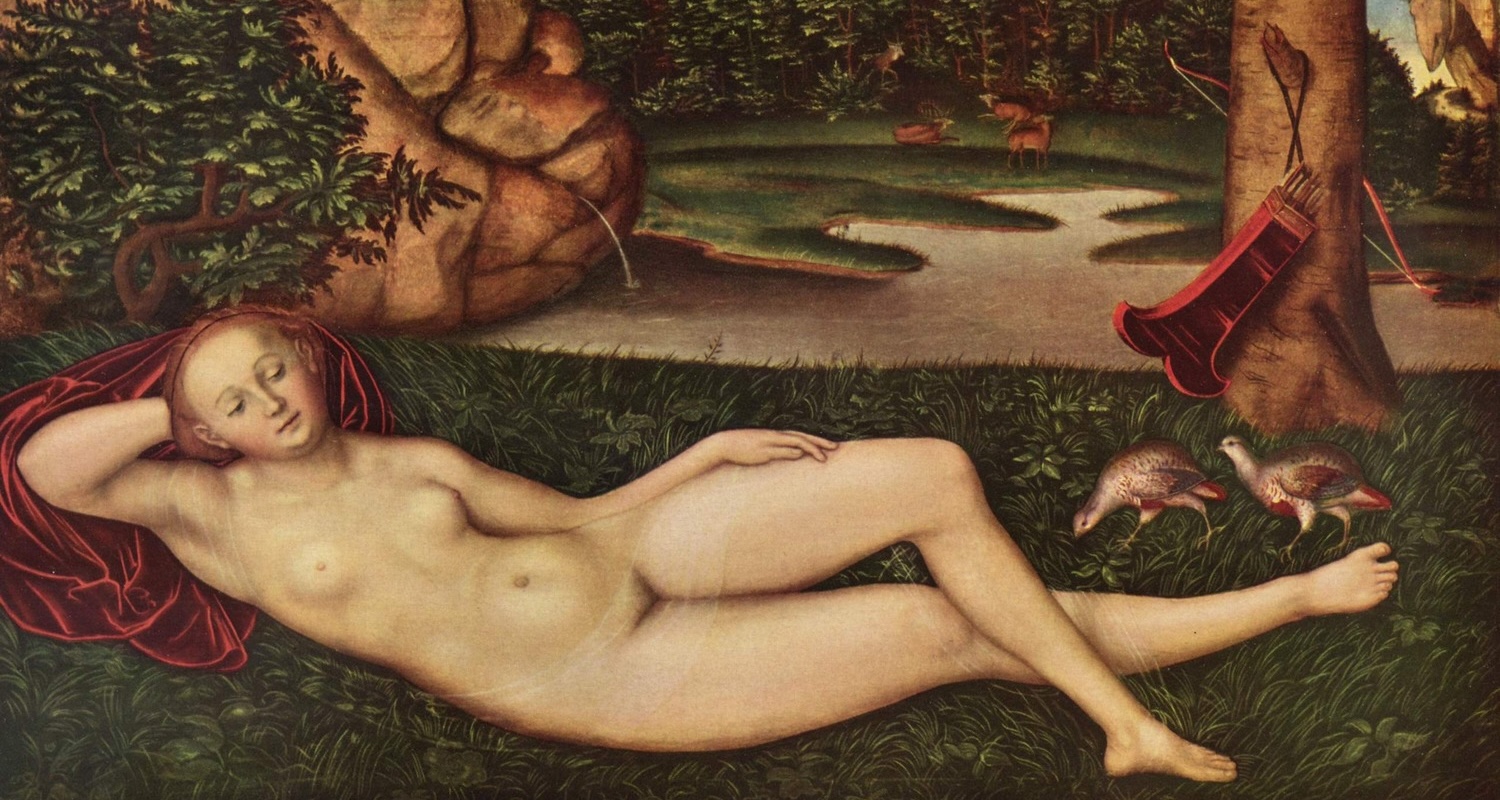
I once assumed that Western art’s female nude was typically depicted with a bald vulva, but a survey of art history texts set me straight. Some depictions clearly show body hair, though many works obscure or omit it to align with sexual norms. Nevertheless, there are images that purposefully depict a hair-free vulva. For instance, a sixteenth‑century German engraving by Barthel Beham portrays a mature woman in a bathhouse with her legs splayed, and a hair-removal implement is visible on the wall.
Art historian Johannes Endres pondered the meaning of genital depiction during the eighteenth‑century Enlightenment, which echoed the Greek marble nudes. In both eras, male genitalia were often shown with a coat of fur while female vulvas appeared bald as balloons. Endres suggested that the Greek sculptors, and their European imitators, were not merely reproducing actual grooming practices but presenting an aesthetic philosophy. He cites Denis Diderot, a pivotal Enlightenment writer, who asserted that the naked vulva could be aesthetically pleasing and more beautiful for its contours. Men, Diderot argued, retained their “natural clothing,” because depilated genitals would resemble “a small intestine, an unpleasantly formed worm.”
Endres links pubic hair, and its removal, to the Fall, the original sin. In the Enlightenment mind, hair functioned like clothing, and shame drove the covering of the genitals. Bald genitals, then, stood for purity—unashamed, primordial genitals, the way genitals appeared before the serpent’s temptation, lust, and odor.
Indigenous Canadian writer Drew Hayden Taylor offers a counterpoint, suggesting that natural pubic hair and the Garden of Eden persist among Indigenous peoples because they never Left the Garden, tongue subtly in cheek.
These widely spread attitudes toward pubic hair—especially among women—make me wonder what hidden forces in the human psyche drive generations to pluck, shave, wax, or burn away their hair.
_______________________________
From Anxious and Hairy: The Evolution and Culture of Human Hair by Judy Wearing. Copyright © 2026. Available from House of Anansi Press.
