
The winners of the 77th National Book Awards—given every year in Young People’s Literature, Translation, Poetry, Nonfiction, and Fiction—will be announced this week in a ceremony hosted by Kyle MacLachlan at Cipriani Wall Street in New York City.
Ahead of the festivities, Literary Hub caught up with (most of) the finalists to ask them a bit about their books, their reading habits, and their writing lives.
FICTION
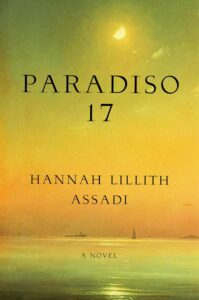 Hannah Lillith Assadi, author of Paradiso 17
When do you typically write, and what drives that timing?
For me, the writing sessions tend to happen late at night, after the house settles and everyone—including my three children—drifts off to sleep. I’ve always been a nocturnal person, though lately I’ve been finding inspiration in the early morning light as well, its hues beginning to move me in new ways.
Which non-literary work of culture—film, TV, painting, or song—could you not picture life without?
I see all of these as literary in their own right, but I’ll name a few examples from each realm: Sorrentino’s La Grande Bellezza, the TV series Mad Men, Rodin’s sculpture Je Suis Belle, and The Cure’s album Disintegration.
What was the first book you fell in love with—and why?
A Wrinkle in Time by Madeline L’Engle captivated me for its time-travel premise and the idea of tessering through dimensions. I think I was around 8 or 9, and my imagination bloomed as a space nerd, perhaps fueled by growing up in a desert where the night sky sparkled with stars because light pollution was minimal.
Which books do you revisit most often?
Among them are Giovanni’s Room by James Baldwin, The English Patient by Michael Ondaatje, The Lover by Marguerite Duras, Beloved by Toni Morrison, and Wuthering Heights by Emily Brontë. I also revisit Solaris by Stanislaw Lem, and I used to reread Faulkner’s Absalom, Absalom! though less frequently these days.
If you weren’t a writer, what other path might you have pursued?
Science and space have always attracted me; I once studied astrophysics in college and still feel the pull of the science of spacetime, black holes, and dark matter. I also fantasize about directing or cinematography, and I’ve always loved dancing—these avenues feel connected to the act of crafting narratives.
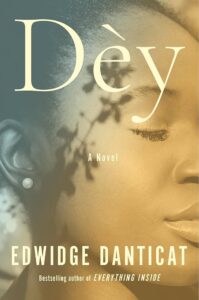 Edwidge Danticat, author of Dèy
Who would you most like to see read your book?
It would be wonderful for many people to read it, but I’d especially love two teachers from my early schooling in Brooklyn to read it—my ESL instructor Mr. Dusseck and my first English teacher, whose name I barely recall due to the time that has passed. They were the ones who recognized my talent with words and sparked the possibility that I could become a writer.
Which of your characters remains your favorite?
My latest characters occupy that spot for now. Magnolia from Dèy holds it today. She’s stubborn in a way I would like to embody, and she has a job that lets her peek into people’s lives while she wears a wardrobe I secretly envy. She’s dutiful toward her family, yet challenges her parents and questions their choices. She feels like a successor to my earlier heroines from Breath, Eyes, Memory and Krik? Krak!—secure financially in a way previous generations could only dream, while recognizing there’s more she can become and contribute to her family and community.
How do you handle writer’s block?
I never truly experience it; I simply treat it as a signal that the work isn’t ready yet. When progress stalls, I fill the interval with reading or drafting shorter pieces to keep momentum. If I’m stuck in the middle—after the spark of a beginning fades but before the sense of an ending arrives—I push forward, writing imperfectly until forward motion returns. I also use downtime to reconnect with life beyond the page, as a fuller life often nourishes the writing.
What’s the best or worst writing advice you’ve ever received?
One standout memory is the guidance from Laura Hruska at Soho Press after I finished Breath, Eyes, Memory: “Start writing something else right away. You’re young, and both praise and criticism can derail a career before it begins. Begin something new so you can project into the future beyond this book.” I still recall that exchange vividly, and I jotted it in my journal that night.
That same night I began assembling the stories that would become Krik? Krak!, which would later be nominated for the National Book Award. At the ceremony, fellow fiction judge Erica Jong visited my table and offered encouraging words: “It’s good you didn’t win so young. It wouldn’t have been healthy for your writing in the long run. Now get back to work.” Knowing she shared Barnard College roots with me, her remark felt like a sisterly nudge I deeply valued.
If you weren’t a writer, what other path would you pursue?
In my college years I contemplated becoming a psychiatrist, a dream that traces back to a pre-med track I pursued. Later on, I realized many writers imagine themselves in roles where they can inhabit other people’s stories. Today I might choose a visual field—photography or visual arts—since observing and recreating the world through images fascinates me just as much as text does.
Additionally, given the painful experience of losing both parents after terminal illnesses, I’ve contemplated the possibility of becoming a death doula, offering compassionate support at the end of life. It’s a sacred, meaningful practice in its own right, akin to assisting in birth.
 Valeria Luiselli, author of Beginning Middle End
If you weren’t a writer, what would you do instead?
I’d choose to become a vulcanologist; perhaps there’s still time to pursue that path.
How do you decide what to read next?
I rely on chance encounters with books—some of the most meaningful reads in my life have arrived by luck rather than design.
What’s the best or worst writing advice you’ve ever received?
Although not spoken directly to me, the line often heard is “Write about what you know.” I would offer a counter-suggestion: pursue what remains most mysterious and intriguing to you, what you want to learn as you write.
How do you fight writer’s block?
By turning to reading; it often unlocks new energy for writing.
What was the first book you loved (and why)?
When I was a child, I secretly sneaked into my brother’s library to read Stephen King’s Pet Sematary, a sense of rebellion and the thrill of reading that felt like a risk I needed to take for my own freedom.
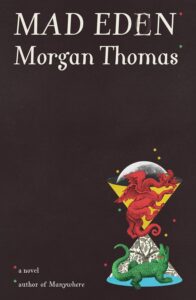 Morgan Thomas, Mad Eden
How do you handle writer’s block?
Blockages come in various forms, and responding to them requires discernment. Generally, if I’m not itching to write, I trust there’s a reason. It can mean I need to engage with other parts of life—discovering new music or books, spending time with loved ones, taking a walk among trees, or simply resting. I listen to that inner cue. I’ve also found that I’m often reluctant to press on when a project is roughly three-quarters complete—when the initial thrill has faded but the finish line isn’t near. In those moments I push forward, despite reluctance.
Who or what has shaped your writing education most significantly?
Mary Robison showed me that writing can become a lifelong vocation and helped me apply to graduate school. In workshops, she’d ask, “Where’s the laughter? Where’s the magic? Where’s the heartbreak?” Those questions still haunt my revisions and readings, even if not every piece requires all three elements.
How do you decide what to read next?
Recommendations from friends carry substantial weight for me. I also enjoy tracing bibliographies and following intellectual lineages backward through time.
What topic do you wish you could discuss more in interviews but rarely get to?
About pterosaurs! They come up whenever possible, though they’re not easy to weave in. It’s fascinating to note that while paleontologists rarely find wing impressions, evidence suggests some of these ancient creatures could fly, hunt, and move with remarkable agility.
If you weren’t a writer, what would you do instead?
I’d pursue a career in marine ecology.
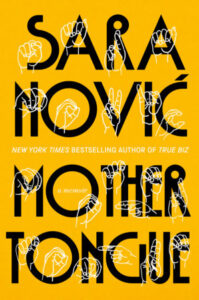 Sara Nović, author of Mother Tongue
What time of day do you write (and why)?
I tend to be a night owl, though life with small children now means I write whenever I can steal a moment. In fact, I crafted a substantial portion of Mother Tongue while showering—composing thoughts in my head and then sprinting to capture them before someone needed something from me.
How do you approach writer’s block?
I return to the handwritten page. The laptop can tempt me to erase and rewrite the same line endlessly, but a notebook forces me to generate new material. I mark stubborn word choices to revisit later and keep moving forward.
What’s the strongest or weakest writing advice you’ve ever gotten?
One mentor suggested a notion I still carry: “Real writers write every day.” I didn’t, and I don’t think daily writing is a universal requirement. The point is to stay observant—every day, notice, wonder, and keep the door open to possibility. Some days these reflections lead to writing; other days they point elsewhere. But staying attentive fuels life as a writer even when writing itself isn’t constant.
What part of your routine might surprise readers?
I read aloud every word I publish, often multiple times. When tackling a major project, I begin each day by printing yesterday’s draft, reading aloud with music, and making notes. If close to finishing, I’ll print, read, edit, print again, and repeat this loop several times in a single day.
Which book has provoked the strongest emotional response in you?
It’s hard to pick a single title; feelings evolve with time, and becoming a parent has made me more prone to tears. That said, JD Vance’s Hillbilly Elegy struck me with its raw, painful honesty and the way it contrasted with my own upbringing, prompting empathy for a writer’s stubborn contradictions.
What’s a book you wish you’d read when you were younger?
I didn’t read extensively as a youth; it wasn’t until my twenties that I began to read seriously. If I’d encountered certain works earlier—such as The Bluest Eye, Fear and Loathing in Las Vegas, Their Eyes Were Watching God, or One Hundred Years of Solitude—perhaps they would have reshaped my early perspectives differently. But I’m grateful for the later, self-guided education that shaped me.
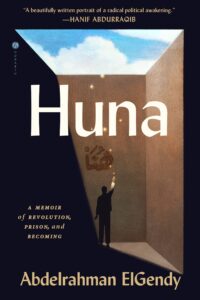 Abdelrahman ElGendy, author of Huna: A Memoir of Revolution, Prison, and Becoming
Who do you most wish would read your book? (your boss, your childhood bully, etc.)
I hope the work reaches incarcerated readers, too, and that it finds a place in prisons. It would feel incredibly lucky if someone behind bars found meaning in it the same way books have shaped my own path.
What’s the best or worst writing advice you’ve ever received?
“You must plant the flag somewhere and begin writing.” I’ve heard this urge toward decisiveness, yet my experience as a perfectionist taught me that move can hinder progress. A mentor helped me loosen up: openings are often best written last, and writing doesn’t have to be strictly linear—you can explore ideas as a network, letting language lead you to where it wants to go. The thrill comes from discovery, not planning everything in advance.
Which aspect of your routine would surprise readers?
My happiest sessions happen in airports or on trains, where travel’s transience seems to unlock the flow. The sense of movement and strangers passing through fosters the momentum my writing needs.
Which books do you tend to revisit?
Poetry is my frequent companion. I often return to Manifesto by Mostafa Ibrahim, especially since I’ve helped translate portions for Lit Hub. It has become a kind of spiritual touchstone for those who engage with urgent political moments—an insistence that upheaval may be a doorway to imagining another world. Since 2013, I ritualistically recite Manifesto on the eve of each revolution anniversary, letting its cadence anchor my memory and longing for a different future.
What’s your favorite way to procrastinate when you should be writing?
Surprisingly, I’m most productive when I should be writing; I’ll tackle various tasks—emails, articles in open tabs, household chores, or even gym plans—to avoid the desk. If I’m truly stuck, I’ll dive into a new writing project instead, and momentum often returns.
Sara Nović, author of Mother Tongue
What time of day do you write (and why)?
Night owls rule here, though with little ones at home I steal time wherever I can. I even drafted a large portion of Mother Tongue while showering, shaping paragraphs in my head and rushing to record them before someone interrupted.
How do you tackle writer’s block?
Grounding the process in handwriting helps. If the laptop prompts endless edits, I switch to the notebook to generate fresh words. I circle problematic phrasing to revisit later and keep moving forward.
What’s the best or worst writing advice you’ve ever received?
A few clunkers come to mind, including a teacher’s quip that there are too many sad Holocaust novels around. Yet I’ve learned that most advice isn’t universally good or bad; it’s about finding what suits you. I once felt hindered by the notion that a deaf writer must read dialogue aloud to test its rhythm, but I realized we shouldn’t imitate past male “greats.” Instead, we should sound like our own best selves. A line from Sam Lipsyte—“you can’t force certain scenes to be merely good part’s before you reach the best part”—still guides me: every scene has to be good, not just the payoff.
Which non-literary cultural artifact would you struggle to live without?
My Cousin Vinny serves as a comfort movie for me; it travels with me on planes and even accompanied me during labor. Its pacing and construction feel almost perfect.
If you weren’t a writer, what would you pursue?
As a kid, I dreamed of architecture; though I lack practical skills, I understand the appeal—creating new spaces is a core pleasure of storytelling as well.
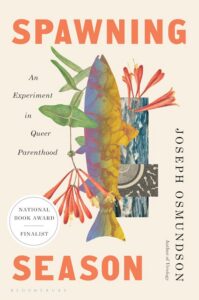 Joseph Osmundson, author of Spawning Season: The Secret Prison History of American Music
Who do you most wish would read your book? (your boss, your childhood bully, etc.)
Anyone who has felt isolated or censored in their journey toward parenthood—whether choosing to have children or not. Our culture often tells us parenthood is essential, shaping a person’s identity from early on, and I’m curious to see how readers who felt pressured by such norms respond to my work.
What’s the best or worst writing advice you’ve ever heard?
“Start from wherever you’re certain you know the ending.” I’ve learned to resist this urge; I prefer letting the writing discover its own path. It’s not about arriving at a predetermined conclusion but about allowing the process to reveal itself.
What part of your writing routine would surprise readers?
I sometimes use a calculator to craft certain effects, treating words as a sequence of letters and paragraphs as algorithms with their own internal logic. It’s a playful approach drawn from my poetry practice, where rhythm and balance matter as much as meaning.
What was the first book you truly fell in love with (and why)?
Richard Brautigan’s Revenge of the Lawn drew me in as a young reader; the mix of whimsy and darkness opened me to a broader literary world. If I’d been more inclined toward the European canon at that moment, I might have gravitated toward Goethe or Rilke instead, but Brautigan hooked me first.
Which books do you return to most?
There’s always something new to discover in the canon, but I often circle back to the classics and to poetry—authors like Homer, Dante, Shakespeare; moderns such as James Joyce and Proust; and poets like Dickinson, Stevens, and Rilke. I also find value in rereading a range of works that nourish my own writing, and I continually encounter new layers in them.
How do you decide what to read next?
I keep an eye on traditional reviews, but today’s culture pages lean toward TV and film. I still value recommendations from thoughtful booksellers and friends, as well as the canon itself, which remains a boundless source of inspiration.
If you weren’t a writer or a translator, what would you pursue?
I’d love to participate in making a symphony, perhaps as a player in a larger orchestra, commuting to rehearsals and sharing in the shared experience of performance.
 Fady Joudah, author of Exhibit G: Poems, Essays, and Photographs of Gaza
What time of day do you write (and why)?
I begin in the morning because that’s when my mind and body function best and I’m the most lucid. The evening, in contrast, serves as a time for reflection to set up the next day.
How do you approach writer’s block?
I don’t label it as a block; I see periods of silence as a form of meditation or self-examination that eventually pays off. I trust that quietude can yield insights, and I try to view it as a healthy, often productive phase rather than a setback.
Which book(s) do you tend to reread?
I often underline and annotate texts as I reread, letting my marginal notes reveal what I found significant over time. Returning to those marks helps me see how my perceptions shift and what remains compelling.
What book has provoked the strongest emotional reaction in you?
Tolstoy’s Hadji Murat moved me deeply, provoking a powerful emotional response that lingered afterward.
If you weren’t a writer, what would you pursue?
I’d aim to become a physician—a healer by trade.
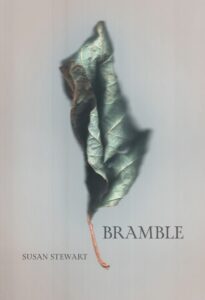 Susan Stewart, author of Bramble
What time of day do you write (and why)?
I tend to think about poems at night when the world is quiet. During the day I mull ideas while walking or doing chores; motion itself often helps me imagine forms. I usually write in the morning and revise in the afternoon. Then I set the poems aside for weeks or months and return to them later. The morning light and the world waking up signal possibilities, offering an escape from night’s burdens. For a long time my life included teaching, scholarship, family, and caregiving, so my writing has been interwoven with life rather than rigidly scheduled. The poem tends to arrive through a process that mirrors life itself.
What part of your routine would surprise readers?
I rarely craft a single poem in one go. I often work by hand on large sheets, filling different zones of a single expansive page. Sometimes it’s a cluster of phrases, sometimes a pair of poems beginning to form a series, or sometimes letting go of one poem to reveal another. Gradually I move from large-hand versions to typing and revising on a computer, shaping the whole book through this iterative, expansive process.
Which books do you reread?
The canon I repeatedly return to includes Homer, Sophocles, Euripides, Virgil, Dante, Shakespeare, Melville, Proust; and I don’t view rereading as an end but as a way to keep drawing on infinite wells of meaning. I see them as living works, always capable of offering fresh insight beyond any final reading.
How do you decide what to read next?
Reading decisions often come from the sheer pull of the canon itself, supported by ongoing explorations in literary criticism and the work of great writers. I’m always seeking new angles and treasures that might illuminate my own writing.
If you weren’t a writer or translator, what would you do instead?
I’d imagine myself performing in a symphony orchestra, occupying a modest seat and traveling to rehearsals to contribute to a collective musical experience before audiences in Europe’s rain-kissed capitals.
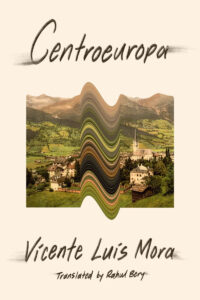 Vicente Luis Mora, author of Centroeuropa
Who would you most like to see read this book? (your boss, your childhood bully, etc.)
Anyone who has believed that wars can be entertaining, inevitable, or necessary should read this, so the ideas behind the book can be weighed against those assumptions.
What’s the best or worst writing advice you’ve ever received?
The worst was the simplistic insistence to “stick to the point.” Writing isn’t reduced to a single topic; its breadth is what makes it alive.
What aspect of your writing routine would surprise readers?
Sometimes I write with a calculator for guidance, treating words as numerical units and paragraphs as algorithms with their own internal flow and balance. This might stem from my poetry background where rhythm and form matter as much as content.
What was the first book you fell in love with—and why?
Mark Twain’s The Mysterious Stranger captivated me at thirteen or fourteen. It fused fantasy, strange fiction, and nihilism in a way that shattered and rebuilt my sense of reading. It opened a doorway to a world I wanted to inhabit.
What do you always want to talk about in interviews but never get to?
The quiet, hidden value of silence in writing. I’m interested in how writers manage the space between questions, and how the letter “h” in annihilate quietly shifts the word’s impact. It’s a small but meaningful technical topic that deserves attention.
If you weren’t a writer, what would you do instead?
I’d like to contribute to the world as a translator or a poet who also thinks in the rhythms of other languages and cultures.
Rahul Bery, translator of Centroeuropa
Which non-literary piece of culture—film, tv show, painting, song—could you not imagine life without?
The realm of music is indispensable, though it’s hard to pick just one. A long list of songs—from “The Sickbed of Cuchulainn” by the Pogues to “Buckets of Rain” by Bob Dylan—forms an essential soundtrack for me. I also cherish the music I perform, listen to with friends, or encounter at ceremonies and gatherings. It all accompanies daily life and work.
Which books do you reread?
I used to revisit many authors, but now my reading is crowded with new titles. If I do return to a writer, it’s usually to Joyce or Beckett. The most recent reread of note is Vicente Luis Mora’s Nosotras, which I found so compelling I read it twice.
What’s your favorite way to procrastinate when you should be writing?
Typically I’ll drift toward online browsing or other diversions, though I can also be drawn to activities that enrich me, like exercising or practicing music. Sometimes I end up watching YouTube clips from the Sopranos—the kind of detour that’s not exactly productive, but harmless enough to be entertaining.
What has provoked the strongest emotional reaction from you?
Beckett’s More Pricks Than Kicks often provokes a blend of laughter and awe, especially its most dazzling set pieces. The splashiest moment for me is the joke about a lobster: “Well, thought Belacqua, it’s a quick death, God help us all.” Then the counter: “It is not.”
If you weren’t a translator, what would you do?
My instinct would be to seek a more traditional, stable profession with steady pay, though I’ve learned that such a path isn’t for me. Perhaps I’d return to teaching in some capacity, but I’m not sure it would suit me again.
Susan Stewart, author of Bramble
What time of day do you write (and why)?
I tend to think in terms of nightly reflections, letting the day’s events percolate in my thoughts and then shaping them with morning light. I often write in the morning and revise in the afternoon. Then I set the poems aside for long periods before revisiting them. The rhythm of early light and the waking world gives a sense of openness and possibility, offering an escape from the nocturnal anxieties of dreams. My life has been deeply intertwined with teaching, research, family care, and other responsibilities, so my writing has always emerged in a more fluid, interconnected way rather than on a strict schedule. The poem tends to reveal itself through a process that is as much about living as about composing.
What part of your writing routine would surprise readers?
I rarely craft a single poem from start to finish; instead I work on large sheets of paper, marking phrases, sketches, or beginnings of series. Sometimes one fragment leads to another, sometimes giving up one piece allows a different poem to form. Eventually, I transfer the ideas to handwritten drafts and then to a computer, shaping an entire book as it comes into being.
Which books do you reread?
The canon I keep returning to is vast and diverse: Homer, Sophocles, Euripides, Virgil, Dante, Shakespeare, Melville, Proust; I don’t think I ever truly finish with them. They’re like nature—endlessly giving up new meanings and textures, more enduring than any person could be.
How do you decide what to read next?
Reading choices often arrive through traditional review pages, but today they’re increasingly dominated by visual media. I still rely on recommendations from trusted booksellers and friends, plus the inexhaustible inspiration of the literary tradition itself.
If you weren’t a writer or translator, what would you do instead?
I’d love to play in a symphony orchestra as a plain, everyday musician commuting to rehearsals and performing for audiences in a European capital—an imagined life of shared artistry and collective achievement.
Vicente Luis Mora, author of Centroeuropa
Who do you most wish would read this book? (your boss, your childhood bully, etc.)
All those who believe that wars are entertaining, inevitable, or necessary should read it so they can confront that belief directly.
What’s the best or worst writing advice you’ve ever received?
The worst was the idea to “stick to the point.” Writing isn’t just about topics; it’s an art that thrives on nuance and expansion beyond a single target idea.
What part of your writing routine would surprise readers?
On occasion I use a calculator to compose, treating text as a sequence of letters and paragraphs as algorithms governed by internal rules of rhythm and balance. This reflects a poetry-informed approach where form and cadence matter as much as content.
What was the first book you fell in love with—and why?
Mark Twain’s The Mysterious Stranger captivated me at thirteen or fourteen, mixing fantasy, weird fiction, and nihilism in a way that reshaped my reading impulse and invited me into a more expansive literary universe.
What do you always want to talk about in interviews but never get to?
The value of silence in writing and the need to create spaces of nothingness within a text. I’m interested in how writers can resist the urge to fill every moment with answers and instead let questions breathe.
Lara Vergnaud, translator of Pure Men
What time of day do you work (and why)?
I translate mostly in the morning when my focus is sharp and the caffeine is doing its job. My own writing tends to happen in the late afternoon or evening, when I’ve burned through the day’s energy but still have room for thought.
What’s the best or worst writing advice you’ve ever received?
A common notion is to “write about what you know.” I’d flip that and suggest writing about what remains most mysterious and inviting to learn about during the process of writing.
How do you approach writer’s block?
By turning to reading; it often inoculates and reorients me, allowing new ideas to surface.
What’s the first book you fell in love with (and why)?
During my youth I sneaked a reading binge in other libraries, and Stephen King’s early works sparked a fascination with reading as a form of rebellion and personal liberation.
Which book has sparked the strongest emotional response in you?
As a Pisces, I cry easily; everything—from a light breeze to a sudden thought—can provoke tears when I’m paying attention.
If you weren’t a translator, what would you do?
I’d choose to be a scientist, a field where curiosity can translate into discovery.
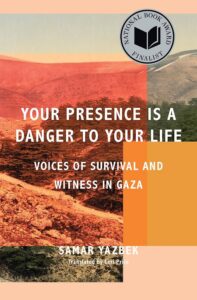 Leri Price, translator of Your Presence Is a Danger to Your Life: Voices of Survival and Witness in Gaza
What time of day do you work (and why)?
During standard office hours, to ensure I don’t miss time with family. If I have a window to myself, I prefer the late afternoon to midnight; darkness helps me concentrate.
Who had the greatest impact on your writing education?
Mrs. Taylor, my eight-year-old teacher, inspired a lifelong habit: we wrote monthly letters to our favorite authors. Her enthusiasm was contagious, and she also happened to be an excellent baker, which I still remember fondly.
Which books do you reread?
All of them eventually; I return to a broad array of titles over time.
What’s your favorite way to procrastinate when you should be working?
Browsing knitting patterns and selecting fancy yarns. It’s oddly soothing and can spark a different kind of creativity.
What book has elicited the strongest emotional reaction from you?
This book itself, the experience of reading it, moved me deeply.
Also in Literature in Translation: Intan Paramaditha, tr. Stephen Epstein and Tiffany Tsao, Night of a Thousand Hells
YOUNG PEOPLE’S LITERATURE:
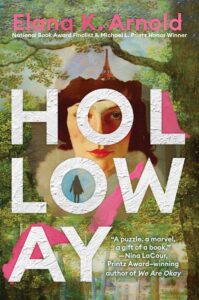 Elana K. Arnold, author of Holloway
How do you tackle writer’s block?
Research is the antidote. The type of research expands with the project’s setting—whether it involves an asylum in 1946 France or exploring the two meanings of “asylum” itself. Delving into adjacent terms and exploring related words can spark a fresh idea for a minor character and propel the manuscript forward. The sense of connection—how all routes can circle back to the core narrative—often unlocks momentum.
What’s the best or worst writing advice you’ve ever received?
A mentor once implied that “real writers write every day.” I didn’t always follow that, and I learned that daily writing isn’t a universal rule. The core is paying attention, noticing, and wondering. Some days these reflections become writing; other days they lead elsewhere. Still, staying curious helps you live your life as a writer even if you don’t produce a new page every day.
Which non-literary piece of culture—film, tv show, painting, song—could you not imagine life without?
My comfort movie is My Cousin Vinny; I watch it on planes and even during labor. Its rhythm and humor feel perfectly calibrated.
If you weren’t a writer, what would you do instead?
As a kid I imagined becoming an architect, even though I have no real skills for it. Still, the appeal remains—designing spaces is a thrill parallel to shaping stories.
Joseph Osmundson, author of Spawning Season: The Secret Prison History of American Music
What time of day do you write (and why)?
I tend to start in the morning when my brain is freshest and the caffeine is flowing. My own writing flow tends to be strongest during that later afternoon slump when energy dips, which is when I’ve learned to push through and continue. During the time I was writing my memoir, Untranslatable, I used to set a half-hour boundary after work to write before picking up my kids; that built-in deadline often forced productivity. Ultimately, as any writer or translator will tell you, the real labor happens in editing, which usually occurs at night after everyone else has slept.
What’s the best or worst writing advice you’ve ever received?
The worst advice I’ve heard is the idea that simply writing makes you a writer. The discipline, intuition, curiosity, discernment, and talent all matter, not just the act of putting words on the page. Translators face the same challenge; translating doesn’t automatically confer the identity of a translator—the craft is more nuanced than that.
Who has had the most significant influence on your literary education?
My mother, by far. Our home was full of English-language books across multiple moves and countries. She read to me every night and later read beside me as I grew older. She repeatedly passed along books she loved, hunting for new titles at the library and thrift stores. Even today, when she visits, she often leaves a book behind for me to read on the plane. Her influence is a continuous thread through my life as a writer and translator.
Which book do you reread most often?
Among many, I’ve reread Dune repeatedly. It’s the one I’d rescue from a fire—the copy that belonged to my father, a well-loved, yellowed edition. My translation work tends toward more experimental or literary texts, but the science fiction part of me remains alive. And I have not watched the recent film adaptations.
How do you decide what to read next?
A fellow once asked whether translating has ruined reading for me by turning my attention to potential translations. My reading habit remains diverse: I keep a running list of books I want to read—new, upcoming releases, or classics I’ve yet to tackle. Occasionally I’ll pick a book “cold” based on a recommendation or a mention in an interview, starting from page one without reading the back cover, and I often end up surprised in delightful ways. For example, a friend recommended Javier Marias’ A Heart So White, and I discovered it’s about translators at its core. Upcoming for me is Said the Dead by Doireann Ní Ghríofa—a title I eagerly anticipate.
Leri Price, translator of Your Presence Is a Danger to Your Life: Voices of Survival and Witness in Gaza
What time of day do you work (and why)?
Standard business hours are my norm so I can be with my family; if I have a chance to work solo, I favor the late afternoon into the late hours of the night. Darkness sharpens concentration for me.
Who most influenced your writing education?
Mrs. Taylor, my eight-year-old teacher, was incredibly inspirational. We were encouraged to write monthly letters to our favorite authors, and she inspired a lifelong appreciation for words. Her bakery skills are still legendary in memory.
Which of your books do you reread?
All of them, eventually—each reread reveals something anew.
What’s your favorite way to procrastinate when you should be writing?
Browsing knitting patterns and selecting exquisite yarns—it’s a pleasant diversion that can spark new thoughts later.
What book has elicited the strongest emotional reaction from you?
This one—the book in question itself—it has had a profound, personal impact.
