
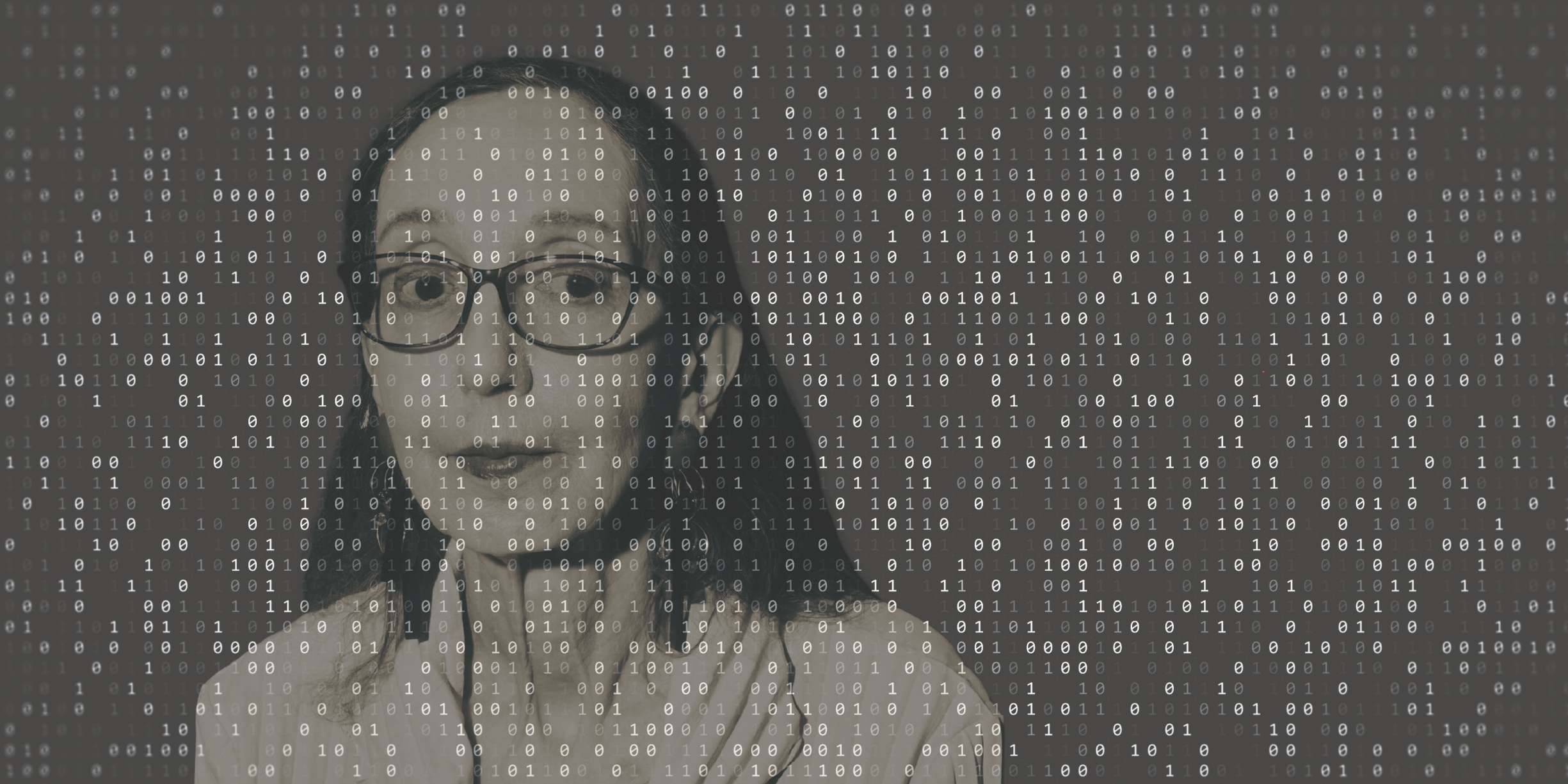
On June 16, The Hogarth Press unveiled The Frenzy: Stories, Joyce Carol Oates’s forty-ninth collection. The same day, the eminent author—often hailed as “America’s premier woman of letters”—posted and reshared more than forty updates on X, touching on topics from Dick Cavett and orange tiger lilies to felines and, repeatedly, concerns about police brutality. The volume, already receiving favorable notices for its outstanding short fiction, is likely to attract even more attention through the author’s prolific presence online. With an audience nearing two hundred thousand followers, Oates commands a reach that often outstrips her conventional readership.
Compared with peers like Stephen King (about 6.7 million followers), Margaret Atwood (roughly 1.7 million), and Gary Shteyngart (around 487,000), Oates has a notably stronger knack for going viral on the increasingly conservative space that is X. In 2022, critics took issue with a controversial tweet in which she suggested the undervalued potential of “young white male writers… who may, in fact, be brilliant, & critical of their own ‘privilege.’” Three years later, she enjoyed renewed online acclaim for a pointed takedown of Elon Musk.
“So curious that such a wealthy man never posts anything that indicates that he enjoys or is even aware of what virtually everyone appreciates,” wrote Oates. “The poorest persons on Twitter may have access to more beauty & meaning in life than the ’most wealthy person in the world.’” Blending a sharp edge with a compassionate flair, she continually attracts a robust stream of views through wit, candor, and a sense of empathy.
Not everyone welcomed the online attention. Some early reactions were uneasy. Gawker’s Michelle Dean urged the deletion of @JoyceCarolOates, while Lit Hub’s Eric Thurm worried that the posts might distract from Oates’s literary reputation. Lately, however, the author’s anti-MAGA posts have drawn praise, with Sophie Lee of Culture Magazine dubbing Oates a “Gen Z Twitter meme” and Mary Kate Carr of AV Club lauding her as perhaps the most dangerous “gunslinger” in X’s wild West of posts.
But what about Oates’s fiction? How do her sizable corpus—nearly a hundred novels and story collections—inform or resist her online celebrity? Her social feed is not necessarily her greatest literary achievement, yet her prose has surely colored her digital visibility. Long before the age of Twitter and Instagram, Oates turned to real-world upheavals and troubling subjects as raw material for her art. The National Book Award–winning them (1969) maps the 1967 Detroit riots; Black Water (1992) reimagines the Chappaquiddick episode; Zombie (1995) draws on the Jeffrey Dahmer case; Blonde (2000) recasts the life and death of Marilyn Monroe; and Sacrifice (2015) centers on the Tawana Brawley affair. Even before the rise of social platforms, Oates specialized in the graphic portrayal of disturbingly vivid figures and events.
This impulse to engage with controversy—and at times to fuel it—persists in The Frenzy, not through a direct fictionalization of a single sensational headline, but by examining a more nebulous phenomenon: the crisis of selfhood in the digital era. In this volume, as in recent works like Subaqueous (2021) and This Is Not a Drill (2023), she underscores the demoralizing impact of technology on modern existence, drawing attention to the alienation and anomie that define the age of smartphones. Yet, unsurprisingly, the literary magnate of X also stresses that computer platforms do not own a monopoly on human self-destruction. For all their ubiquity, these devices are not the sole source of our troubles.
Oates doesn’t indulge in the predictable condemnation of social media. She may have claimed that Twitter is “largely a waste of time,” but she also recognizes that we sometimes scapegoat technology to avoid confronting our own limitations and failures.
The titular tale hints at as much. The “frenzy” alludes to Matthew Cassidy’s encounter with a cannibalistic school of fish off the New England coast—“writhing silvery bodies in the dark water, savagely feeding”—yet the scene serves as a clear allegory for the brutality of American capitalism. Oates’s acute attention to economic inequality—her fiction routinely attests to it—reminds us that, in this society, the big predators prey on the small.
This insight also extends to the frenzied realm of X, though Oates does not offer a simple rebuke of social media. She portrays Matthew’s midlife drift, including his affair with Brianna, the nineteen-year-old daughter of a family friend, while also critiquing Brianna’s compulsive scrolling through emails, as well as Instagram and TikTok, before they meet for a Jersey Shore encounter.
When Brianna’s iPhone disappears into the surf at his insistence, she treats it as a betrayal—and retaliates in kind. Yet Oates does not take Matthew’s side. His wish to disappear from the world of screens—paired with his brusque reaction to Brianna’s fixation—exposes far more about his self-centeredness than it does about any deep critique of communication technology. In this story—arguably one of her finest since Where Are You Going, Where Have You Been—the cellphone becomes less a barrier to connection than a mirror reflecting a middle-aged man’s infidelity.
The fascination with self and other continues in “The Fear,” a moving piece about Janette and Juliet, two cousins nearly identical, the latter struck by jaw cancer and subjected to several operations. The title refers to the dread of corporeal difference that underpins demonization and violence. As the narrator notes when describing how teenage boys react to Juliet’s altered face—mouth and eye marked by multiple surgeries: “Like looking into a mirror. Seeing in your own (familiar) face something profoundly unfamiliar, unexpected. Unfathomable.” The story centers on Janette’s struggle with accepting her ill cousin, asking readers to contemplate how fear of the other can trigger a panic that leads to ostracism. “The Fear” invites us to consider the deep-rooted anxieties about being seen, objectified, isolated, and dissected, whether in online spaces or beyond them.
Oates is keenly aware of the loneliness of contemporary existence, and several pieces reflect how much of human interaction now unfolds through mobile devices. In The Return, Maud—the first-person narrator—notes that Audra aches for genuine contact, desiring to “not speak at her, coolly detached as in an email” but to “speak with her.” Reading The Return with an eye toward Oates’s broader engagement with X suggests that the solitary nature of online communication can intensify the craving for real recognition that social media often promises but seldom delivers.
Yet the author also makes clear that any flight from this dilemma is likely to fail. In “The Refuge,” Marcus, a self-hating technologist who recoils from his wife Lorene’s interest in digital devices, goes “off the grid” in hopes of enlightenment. He visits a Buddhist shrine, but instead of discovering serenity, he descends into instability and eventually violence. For Marcus, discarding “idiotic devices like cell phones” yields consequences far grimmer than the isolation of online life: a capacity for physical violence. In The Refuge, even the most shocking online posts pale beside the prospect of real bloodshed.
Across The Frenzy, Oates does not merely indict but strives to understand, in dialogue with the culture of cell phones and social media, Apple and X. She compels readers to acknowledge, alongside Matthew, that the ways we use and respond to technology reveal far more about ourselves than the gadgets themselves. Digital culture, even when shaped by corporate power, is not the core problem; it is what people say on and through these platforms that truly concerns Oates. Machines are simply instruments—and through her work, we are reminded that they can speak with a subversive force when shaped by human hands.