
If Americans conjure the UT Austin massacre of August 1, 1966, they are likely to picture it as a sparse, remote fragment of history—distant, clinical, and overshadowed by newer, more recent atrocities. They might recall a thin wisp of smoke curling above the Texas Tower’s balustrade, a blurry image of bullet-riddled glass against a merciless blue sky gracing the cover of LIFE magazine, perhaps a portrait of the smiling, athletic white Marine, an Eagle Scout and former altar boy who could not possibly have committed such monstrous violence, yet did. Six decades of Texas lore and media shorthand have erected barriers to a deeper understanding of what happened.
As the first American mass shooting to be broadcast live on television and radio and to surge onto the international stage, the tower assault set in motion a template for investigation and storytelling that would prove stubborn to overturn. The sniper, Charles Whitman, became the enduring axis around which explanations and speculation orbited as Americans of the era wrestled with a violence they insisted they could not fully comprehend, even amid the lingering shadows of Kennedy’s death, the Birmingham church bombing, Malcolm X’s assassination, and the Chicago nursing massacre that had just occurred days earlier.
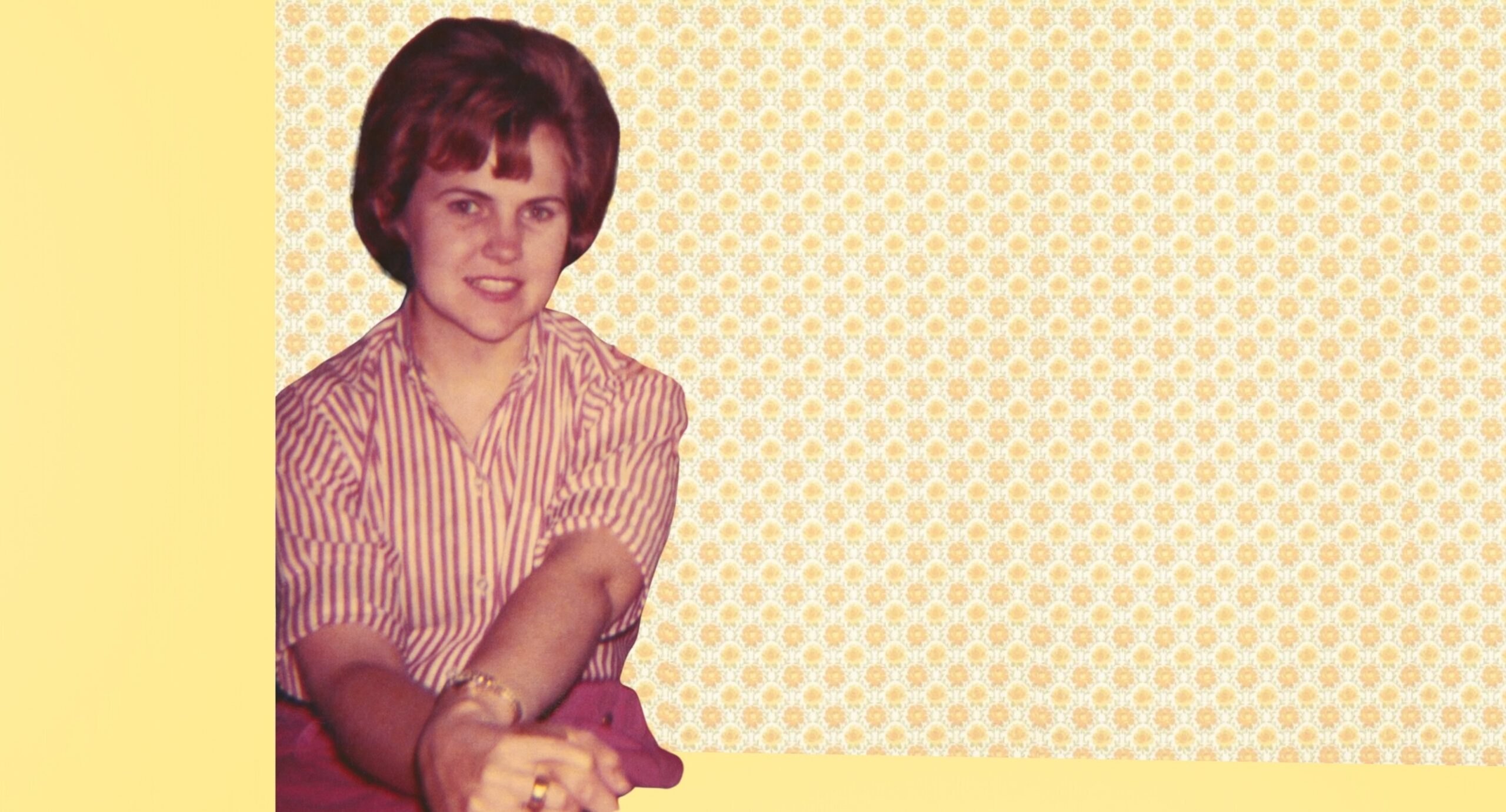
After physically commandeering a university campus and the state capital for 96 minutes from more than 300 feet above street level, Whitman inexorably shaped the mass-shooting narrative for decades to come. Yet the shorthand that reduced him to a single figure—“Whitman’s wife”—omitted a woman who had her own name and story: Kathy Leissner, who—and, with her mother-in-law, Margaret—would be killed by Whitman in the dark hours before he opened fire from the tower, wounding and killing 46 people he had never met.
The sweeping, highly publicized forensic inquiry that followed the shooting involved a host of agencies—local and state police, a Grand Jury, the FBI, and a special commission convened by then-Governor John Connally. Yet at every point Kathy’s voice—with the richness and texture of her lived experience—was nowhere to be found.
At each turn, Kathy’s voice—with the depth and texture of her experience—was already missing.
Today, a private trove of Kathy’s personal letters—nearly lost to time—reclaims her identity from beneath the weight of the gun and the broader story of the man who ended her life after a four-year pattern of coercive control. These letters offer a sharply distinct lens for understanding the UT massacre and many similar crimes, highlighting them not as abrupt bursts of male violence but as the gruesome continuation of private harm that was already in motion. As a recent study indicates, nearly 70% of mass shootings are preceded by a history of domestic or intimate-partner abuse. Thus this archive does more than reframe a single history; it provides a compelling alternative way of reading and interpreting violence from the vantage point of intimate witnesses—an essential throughline rather than invisible ink or a disposable appendix.
In 2014, as I was finishing MASS, my book exploring the troubling connection between Whitman and his mentor, Rev. Joseph G. Leduc, a Catholic priest later credibly accused of abuse, I wrote to Kathy Leissner’s brother, Nelson, asking if he would share any memories of his sister’s marriage and their 1962 wedding (a Catholic-Methodist union). Over time, Nelson disclosed that he had been safeguarding his sister’s papers for fifty years and hoped she would be remembered as a complete person, not just a crime-scene still.
Archivists remind us that the private papers of ordinary women are frequently discarded, a gendered pattern of abandonment that might well have erased Kathy’s legacy as well. Yet, as with many private collections, the road to preservation began away from the spotlight. Nominally just nineteen when his sister died, Nelson rescued boxes of letters from the trash and stored them as a young man, keeping them safe throughout his life, even against the floodwaters of Hurricane Ike.
His work was a deeply personal, persistent, and dignified form of advocacy long before anyone outside could bear witness. When he finally opened up about the letters and urged me to write about them, his cautious foresight began to bear fruit. My examination of the archive during much of the last decade appeared in several articles for both popular and scholarly audiences, beginning in 2016 and culminating in the book Unheard Witness, published by UT Press in 2023.
Together, Kathy’s testimonies trace a young woman’s steady, ultimately fatal effort to reason with—and escape from—a dangerous partner who would never permit her to leave.
*
The Leissner collection holds nearly 600 letters in total: those Kathy wrote to her husband and to her mother, as well as exchanges she received from her husband and other relatives during extended separations. Kathy herself was an ambitious, prolific writer, contributing roughly 180,000 words between 1962 and 1966, beginning just before her marriage at age 19 and ending weeks before her death at 23. The archive also includes family photographs, school records and yearbooks, restored home movies, canceled checks from Kathy’s first year at the University of Texas, and a scrapbook with personal notes, keepsakes, and clippings from her thirteenth through sixteenth birthdays.
Kathy grew up in Needville, Texas, the eldest child and only daughter of two college-educated parents—her father cultivated rice and ran cattle, while her mother taught. She was deeply loved by family and cherished by friends. Like her brothers, she learned to work in the fields, driving the rice truck and tending cattle. In 1961, after graduating high school, she stood poised to enter UT as a pharmacy student, a bright, socially minded, and diligent young woman. But during the summer before her junior year, she found herself married, already planning to complete her studies as a wife.
Kathy’s actual writing materials themselves illuminate her endurance and creativity, her eagerness to learn and create in spite of so much ugliness.
Kathy embarked on this new chapter with a mix of hopeful anticipation and romantic possibility, writing to her intended husband in the summer of 1962, “I’ve got enough love myself to keep you busy for about 80 years!” Yet a troubling atmosphere began to descend as Kathy’s daily life fell under her husband’s physical and psychological domination, his manipulations, unreliability, his sexist rules, and fixations. A January 1963 letter from Kathy’s mother, Frances, to Charles Whitman captured the stark transformation in Kathy: “You were right—you are right. She is nearly the most miserable young woman—and she is a young woman, not a child, as you seem to think—who is trying to make a marriage work.”
By February 1963, when her husband lost his academic scholarship and was sent back into active Marine duty, Kathy briefly left school to join him at Camp Lejeune in North Carolina. During this period, he acted violently toward her, even striking her in the mouth in a car. Even as he controlled her wages, monitored her mail, and pressed her to become pregnant, Kathy’s letters reveal her resourcefulness—making friends, finding work, and planning, with family support, to return to Texas and regain her educational footing and sense of autonomy.
Back at UT for almost two years of separation, Kathy wrote to him frequently. The geographic distance fortified her confidence to confront him about the problems—his violent family history, his volatile mood swings and fights with others, his sexual fixation and rigid gender rules, his gambling and obsession with guns, his frequenting of a strip club, his drinking, and his chronic evasiveness. During intermittent reunions, she tried to negotiate his arbitrary expectations about her weight, cleanliness, and even the style and color of her shoes.
Kathy’s writing materials themselves illuminate her endurance and creativity, her eagerness to learn and create in spite of so much ugliness. Nearly all are penned by hand—sometimes in cursive, sometimes in block letters—on blue and pink formal stationery and Air Mail onion skin, and occasionally on improvised, matching papers and playful cards. Most survive in their original envelopes, many with enclosures still attached. The different settings she described—writing at kitchen counters and dining tables, in living rooms and beds; in cars, laundries, and repair shops; in theaters, classrooms, and libraries; even once by torchlight at a campsite along the Comal River—show how determined she was to carve out space for expression and connection even when she felt most isolated.
In November 1963, as her husband faced arrest, a court-martial, and demotion within the Marines, Kathy’s voice took on a stark, pragmatic tone, far from the bright student’s earlier optimism. “I feel so detached from everything that means anything to me,” she wrote to him, adding a prescient line a few days later: “Sometimes I just don’t see how we will ever survive.”
Upon reuniting with her husband in the final year of her life, Kathy spoke with her family about divorce. Contemporary research has since shown that survivors face the greatest danger precisely when they take concrete steps to leave a violent partner.
*
Just six months before the UT Tower massacre, Truman Capote’s In Cold Blood had etched a new path for journalism—what some called the nonfiction novel—leaving a lasting mark on long-form crime reporting, and influencing how stories were told. Yet Capote’s achievement tended to render the victims as a background note, while centering the perpetrator’s motives and voice.
Conventional forensic and journalistic traditions have another, more troubling effect: they shape public perception by evaluating victims’ innocence and importance according to race, class, or how closely they are connected to the crime’s center of gravity. A stranger shot on campus, in a church, or in a nightclub may receive a flood of attention and sympathy, while a wife, ex-girlfriend, or family member harmed in the same violent arc often languishes in silence, stigma, or blame. The Leissner archive challenges many of these patterns. Kathy is not a romantic ghost or a placeholder for stereotypes about domestic violence.
Kathy Leissner ran out of time on August 1, 1966, but she had already surpassed the expectations of many observers. With her words re-centered rather than pushed to the page’s edge, we can witness one woman’s real-time experience of abuse, her language sometimes strikingly contemporary in its resistance to misogynistic denigration. “I guess I’ve always just hated anyone who excused men + boys ‘just because they’re males,’” she wrote to her husband in July 1964. “Maybe women ought to start having 2 dozen affairs before they are married + see how the man who wants to marry a virgin likes it.”
Her letters, like numerous overlooked or undervalued materials, invite us to recalibrate our attention toward the hidden truths embedded in true crime.
*