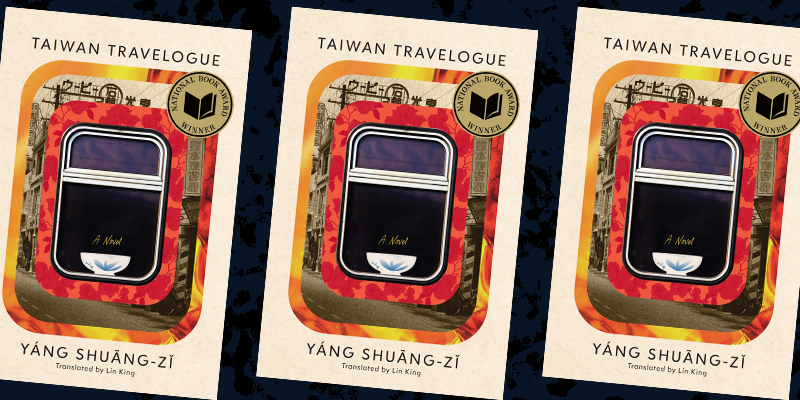
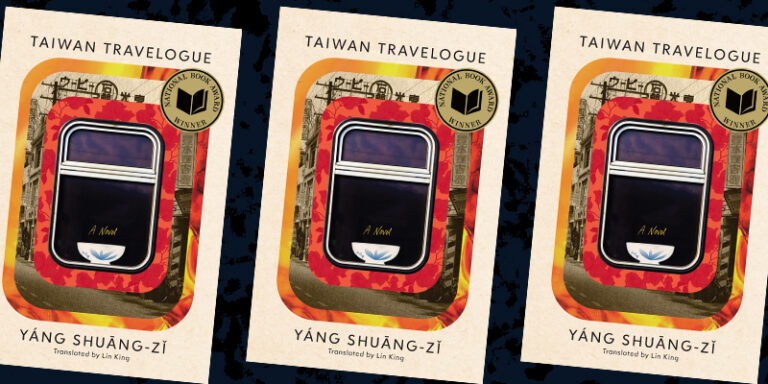
Translator and writer Lin King released a statement on Instagram on Tuesday laying out her claim of copyright infringement of her Booker-Prize-winning English translation of Taiwan Travelogue by Yáng Shuāng-Zǐ, originally written in Mandarin and titled Táiwān Màn Yóu Lù (《臺灣漫遊錄》).
On Tuesday, Lin King, a practitioner of both translation and authorship, used Instagram to articulate her assertion that a European publisher intends to publish a rendition of Taiwan Travelogue that would be derived from her English edition, a practice known as relay translation whereby a book is rendered into a third language starting from an existing translation rather than from the original Mandarin text. King warned that this planned translation would bypass her rights and constitute an infringement.
“Because I alone hold the copyright for the English Taiwan Travelogue,” she writes, “an unauthorized rendering into another language violates my rights.” She has proceeded with legal action against this unnamed European publisher.
What follows in King’s message are some of the most moving parts: her articulation of translation as a form of art. To quote her, in paraphrase, at greater length:
Translation represents adaptation. It shares a spirit with a filmmaker reshaping a novel for the screen, or with a musician performing a Dolly Parton song. Whether one interpretation is superior to another is a matter of debate, but their differences are undeniable.
Translation is also an act of performance. If the author acts as a writer, the translator takes on the mantle of an actor; if the author is a composer, the translator becomes the musician; if the author is a choreographer, the translator is the dancer. Every choice made by the performer influences how the original work is delivered and received.
People often ask me whether I identify more as a writer or as a translator. This dichotomy is a false one. Not all writers translate, but every translator writes. I selected, from the vastness of the English lexicon, each word that forms Taiwan Travelogue. Shuāng-Zǐ cannot read it—just as I will not be able to read most translations of my own novel when it appears next year. It is our translators who will craft those books, not us.
Yuka Igarashi, Executive Editor at Graywolf Press, which brought out Taiwan Travelogue, affirmed King’s stance in support of her work:
Lin King’s inspired rendering of Yáng Shuāng-zǐ’s remarkable novel makes the point clear: translators are writers in their own right, with copyrights that deserve respect. As artists, mediators, and advocates, translators are essential to sharing literature across borders, and we back Lin King’s effort to illuminate the often unseen labor that they perform.
King likewise emphasizes that her aim is to expose the unfair commercial practices that have become too routine, practices that tolerate copyright violations when it comes to third-language renderings.
“This isn’t about money,” King notes, a fact unlikely to surprise anyone acquainted with the economics of literary translation. She recalls volunteering, without pay, to begin translating Táiwān Màn Yóu Lù and to pitch the book directly to publishers in the United States.
“Translation is a brutal business model,” she adds, “I do it because I have faith in the books.”
Her pursuit extends beyond a single case. By pursuing legal action, she hopes to establish a new legal precedent and to alter the prevailing condition that permits such infringements to pass without consequence.
“Since when has ‘it’s always been done this way’ justified continuing to violate people’s rights?” she asks.
She concludes with a summons for reform:
To every publisher of translated fiction, please seek permission rather than forgiveness. If you love these books, honor the rights of those who rewrite them so that you, too, can read them.
King’s complete statement remains available on her Instagram, where the discussion continues to unfold.