
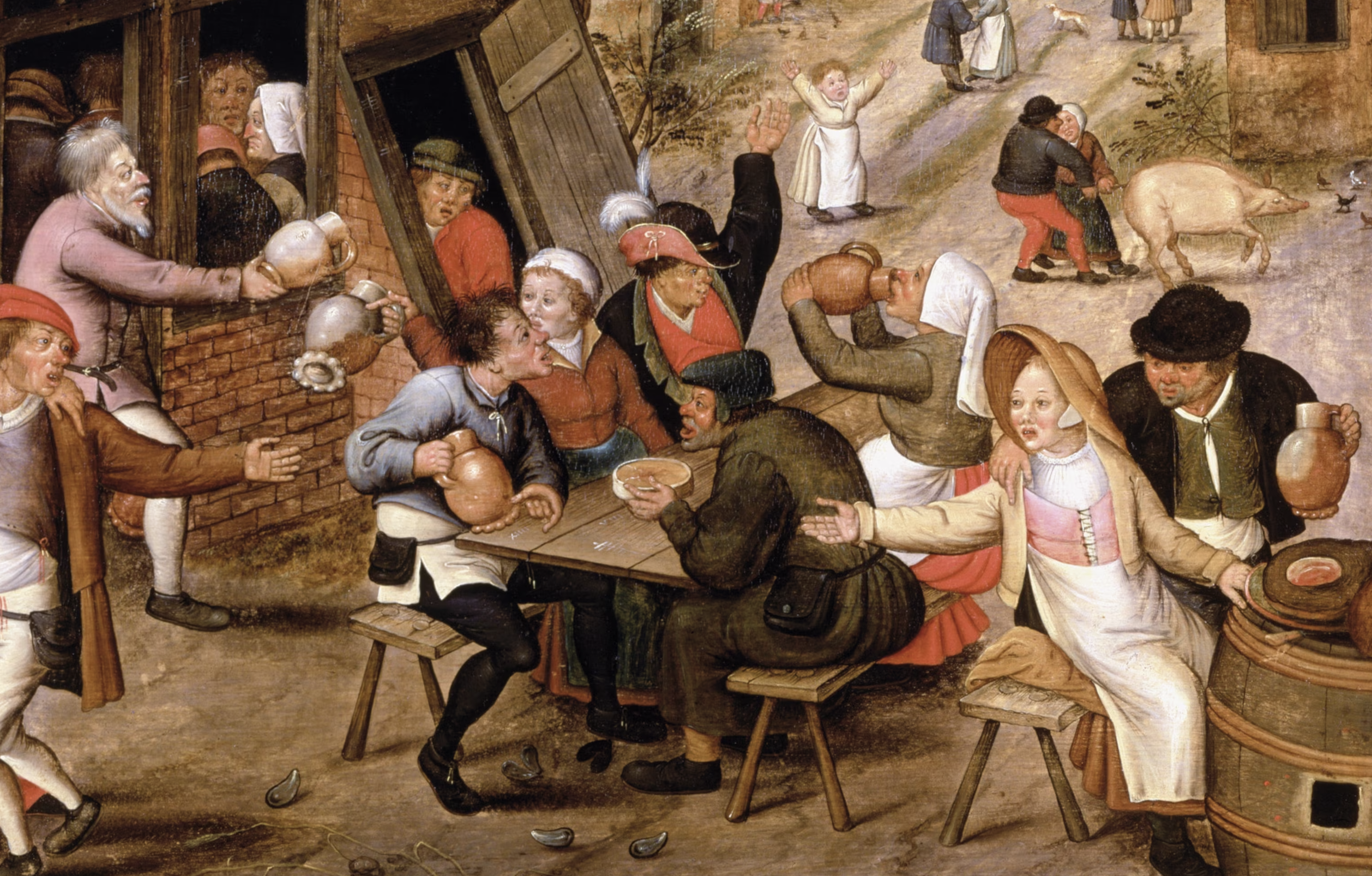
Although medieval ideas about food were very different to our own, its importance was widely recognized. According to Galen, food “is probably the most important of all medical subjects,” and it dominated medieval regimens—many of which consist almost entirely of lists of foods and discussions of their properties and impact on the human body.
In order to stay well, it was essential to understand the qualities of different foods, which were categorized as hot or cold and wet or dry, with each trait affecting the body in distinct ways and with certain combinations deemed detrimental. Health concepts tied to diet rested on ideas about digestion that imagined digestion as roughly a three-stage sequence, comparable to cooking, distillation and combustion. The initial stage occurred in the stomach and intestines, where food was transformed into chyle with some excess matter eliminated through defecation. The intermediary stage took place in the liver, producing blood and the two principal bile fluids—black bile and yellow bile—stored respectively in the spleen and gallbladder. The final stage distributed the blood through the body, granting heat, moisture and vital spirits essential for life.
Thanks to the later insight of the English physician William Harvey (1578–1657), we now know that blood circulates throughout the body; however, medieval physiology held that the liver was continuously generating new blood, so what had been digested was literally absorbed into the body, making a person a reflection of what they ate.
So, what did people actually eat in the Middle Ages? The backbone of the diet consisted of processed cereals—pottage and bread—though their quality varied with social rank. The well-to-do enjoyed leavened bread crafted from high-quality wheat, whereas those with fewer means often ate denser, coarser loaves made from barley (considered cold and prone to causing flatulence) or rye (believed to yield weak blood and low energy).
Nevertheless, it is clear that health was a consideration when preparing a meal.
Contrary to the popular stereotype, fruits and vegetables were part of medieval fare too—though there was a marked ambivalence toward plants, with some regarded as dangerous. Brassicas such as cabbage, cauliflower and broccoli played a significant role in peasant diets, yet were thought to provoke melancholy and nightmares; lettuce was deemed perilous for its cold, moist nature; turnips and parsnips were blamed for wind and lust. Beans inspired fears of flatulence and “bad humours,” while peas were easier to digest and thus preferred.
Similarly, certain fruits were judged safer than others: citrus fruits aided digestion in hot weather, raisins were beneficial for the stomach, lungs and liver, and nuts were nourishing for the brain. Yet many familiar fruits—apples, peaches and cherries—were viewed with suspicion because their cold, moist qualities could generate putrid humours. Cooking could render them safer, and many households did indeed eat them. Petrarch’s physician, for example, urged him to avoid “apples and every kind of fruit from trees,” prompting the scholar to express astonishment at what he saw as a “scorn for the most beautiful things that at the same time delight the taste, the touch, the smell and the sight.”
The attitudes toward animal products were similarly intricate. Butter, being warm and moist, was thought to enrich the blood; cheese, a coarse and difficult-to-digest item, was associated with bladder stones, though a small bite at the end of a meal might aid digestion. Eggs were widely eaten, with the yolk considered the healthier portion because it was warm and moist. Among meats, chicken was frequently hailed as the healthiest option: moderately warm, easy to digest, and particularly nourishing for delicate stomachs—suitable for the affluent and for the sick. Pheasant and quail were less common but shared similar properties, though quail could pose a danger if it fed on poisonous plants such as hellebore. Pork, lamb and mutton were viewed as nutritious, yet beef was more troublesome—cheap, coarse and prone to producing thick blood, making it more acceptable for laborers; duck, goose and venison were harder to digest, tended to produce troublesome humours, and were generally avoided by many.
By contrast, cold, wet fish were often regarded as a health risk because of their tendency to encourage phlegm—yet they remained a staple, partly due to religious reasons, partly due to price, and partly because people enjoyed them. Medical writers therefore proposed several ways to lessen the potential harm: heat and dryness could be restored by roasting or frying the fish, avoiding boiling which only increased moisture; sauces and seasonings could further improve both safety and palatability.
Thus, the physician Peter of Spain (later Pope John XXI) advised using oil, vinegar, wine and spices to “consume the moisture of the fish.” Maino de Maineri warned that lamprey was “very dangerous,” though “tasty in the mouth,” and recommended it be killed by soaking in wine, then served with a spicy jelly or bread sauce and cooked thoroughly.
These prescriptions reflected a broader conviction that careful preparation and cooking could render foods healthier. Some scholars have even argued that medieval cuisine operated largely as applied dietetics, with cooks drawing on their knowledge of how individual foods behaved to create healthful dishes. There is evidence to support this, such as recipe collections that included special preparations for the sick, and The Forme of Cury, a fourteenth-century English cookbook compiled with input from “maistres of physic.” Yet access to such expertise was probably limited to the wealthier households, and religious beliefs, display, and taste all influenced cooking choices as well.
Still, health considerations clearly influenced how meals were prepared. For example, cooking methods were believed to alter a food’s properties—dry meats like beef could be made more temperate by boiling to warm and moisten them, while already-moist pork could be dried out through roasting. Most vegetables were considered dry and thus benefited from boiling, but onions, which were particularly moist, were often fried to reduce their moisture. Fruits, being mostly moist, tended to be safer when cooked (roasted or baked) to achieve a drier texture.
Flavorings were another favored route to both health and flavor. Honey functioned as a common sweetener, its warmth and dryness deemed suitable for older people and those with cold constitutions, though it could provoke thirst, itching and stomach issues. Sugar, once a luxury, became more widespread from the mid-fourteenth century—and evaluating it through medieval eyes, its warm, moist qualities were seen as beneficial for the lungs, kidneys and bladder even as modern concerns focus on excess sugar. Salt occupied a dual role as both a seasoning and a preservative; used sparingly it could stimulate appetite and sharpen flavor, but excess could dry the body, burn the blood, injure the stomach and affect the eyes and brain, sometimes prompting cooks to rinse preserved items to remove surplus.
Herbs were widely employed as well, with many offering health benefits. Parsley was believed to enhance good blood and promote urination and bowel movements; sage supported stomach and nerves, while mint was thought to warm the stomach and aid digestion. Spices—often more affordable by the late Middle Ages—were incorporated extensively, and even in twelfth-century London one could buy pepper, cumin and saffron. The elite favored saffron for its warming, drying qualities that soothed the heart and liver and aided digestion, while pepper— cheaper and more widely used—was hot and dry, helping to stimulate appetite, improve digestion, dispel wind and clear phlegm from the chest.
Furthermore, digestion was often compared to a cooking process—and just as it is important to follow the recipe when preparing a meal, this meant that foods must be eaten in the right order.
Many of these flavorings found their way into sauces, which were valued for their culinary charm as well as their medical benefits. Sauces could spark appetite, keep heat in the body after a meal, and assist digestion. Sharp, tangy flavors were considered especially wholesome and were commonly used to entice those with poor appetites to eat: the Salernitan physician Matthaeus Platearius (d. 1161) suggested hard-boiled eggs chopped and stirred into a mint-vinegar sauce, or toast soaked in vinegar, as good for this purpose. And sauces could be mixed to blend flavors and effects, so combinations like vinegar with honey, mixing sweet and bitter notes, were surprisingly common.
But this did not imply indiscriminate combining. Medical authorities warned against certain pairings: for example, John Mirfield (d. 1407) cautioned against eating fish with milk or wine, since such mixtures could provoke illness resembling leprosy. They also warned against pairing heavy and light foods because digestion differed, potentially leading to incomplete digestion and putrefaction.
Moreover, digestion was frequently described as a cooking-like process, and just as a proper recipe matters in the kitchen, meals should be consumed in a particular sequence. Maino de Maineri, writing for a very affluent audience including bishops and the Scottish king Robert the Bruce, proposed starting a meal with confections of pistachio, marzipan, candied hazelnuts or dates to open the stomach. The courses that followed should progress from the easiest to digestible items to the more challenging, including heavier fruits like apples, tougher meats such as beef, or riskier foods such as eel or cheese. Endings might feature additional confections like candied ginger or spiced wine to “close the stomach.”
There was also extensive guidance on when to eat. From a medical standpoint, two meals a day—midday and between noon and nightfall—were ideal to allow the body to complete digestion, a view echoed by non-medical writers. For example, the grain merchant Paolo da Certaldo argued that a self-respecting man should dine once and sup, since “this is how a man should live—eating at all hours is how an animal lives.” Likewise, Geoffroy IV de la Tour Landry advised his daughters to cultivate virtuous eating habits that would benefit them for life, claiming that “To take sustenance once a day is angelic; twice, human; but eating many times a day is a beast’s life.”
In practice, many people appear to have eaten three meals daily, especially toward the end of the medieval period, though breakfast was often later than modern norms. There are even anecdotes—such as a Cambridge laborer who, after already digging for hours, collapsed a breakfast pit while eating—that hint at a broader habit of morning eating tied to daily tasks. The midday meal functioned as the main feast, with a lighter supper in the late afternoon or early evening. Snacking outside these times existed but was generally discouraged.
Moderation remained a guiding principle, and most people recognized that eating only what was necessary benefited both the body and social conduct. Hildegard of Bingen asserted that “someone who eats and drinks with moderation will have good blood and a healthy body,” while Peter Fagarola warned his sons to avoid excessive or nocturnal feasting.
Nevertheless, the amount consumed varied with the season. Christians followed regular fasts that restricted certain foods or eating windows; some devout individuals even practiced complete abstinence. In thirteenth-century England, meat was avoided on most Wednesdays, Fridays and Saturdays during Lent, as well as during Advent and on certain saints’ days, though exemptions existed for children, the sick and elderly, pregnant women and manual laborers.
Although it is easy to assume that such wealthy individuals were simply playing the system in order to indulge their dietary preferences, their claims were undoubtedly compatible with contemporary medical theory.
Seasonal shifts also dictated dietary needs: winter demanded more caloric intake to preserve warmth, while summer favored lighter, cooler fare such as young poultry and leafy greens to prevent overheating. People living in colder climates often required more food than those in warmer regions—illustratively, a Pole might eat considerably more in a single day than an Italian would over a half-week.
Age, temperament and place of origin also shaped diets. As John Mirfield observed, “people are accustomed to dining four times a day, and yet they thrive,” while others ate beans and tough beef; still others ate foxes and various unusual foods and remained healthy. The encyclopaedia On the Properties of Things claimed that the best foods varied from person to person—“what nourishes a healthy man may be poison to a sick one.” A person’s mood could influence what they should eat; a melancholic person might receive certain foods, while a choleric individual might be harmed by others. A person’s age and occupation mattered as well; sedentary individuals required less fuel than those engaged in labor, since activity reduces appetite.
Doctors even proposed that a patient’s native cuisine might suit them best—so much so that campaigns of unaccustomed foods in foreign lands caused many soldiers to fall ill. When Gervase, a cleric from Durham, became gravely ill while studying in Paris, doctors advised returning home to the familiar fare of one’s homeland, arguing that invalids were often better sustained by the foods they had grown up with than by any other medicine.
Such considerations were taken so seriously that critics like the Catalan friar Francesc Eiximenis grumbled that doctors would rather obsess over bodies than souls, urging patients to rely on the doctors’ judgments for abstinence or indulgence. Dispensations from fasting were common for high-status individuals, as reflected in papal records—humphrey, duke of Gloucester, in 1434 received permission to substitute works of piety for fasting on health grounds; Alexander II of Scotland, in 1248, could break the Lenten fast “by the advice of his confessor and physicians”; James III in 148? was allowed to eat fish freely during Lent and other restricted days due to health concerns; Edward IV, in 1481, obtained permission to indulge in other foods because fish was deemed detrimental to his health when consumed for long periods.
While it would be simplistic to assume that wealth simply bought dietary ease, these privileges did align with contemporary medical thinking. St Thomas Becket himself is said to have shown cures for people made ill by fish, such as John, a Pontefract monk, and Juliana, a new mother who suffered after overindulging in a questionable fish dish.
And some affluent individuals took nutrition very seriously indeed. Edward IV’s royal physicians reportedly stood in attendance at his meals, advising on the optimal diet, and the duke of Burgundy likewise employed a team of six physicians for the same purpose. The rich were especially alert to the danger of poisoning; beyond rejecting any dish that looked or smelled suspicious, they sometimes used emerald, coral and ruby as color-changing indicators of poison. If the worst happened, treatments typically aimed to induce vomiting, with phlebotomy sometimes employed a few days later.
__________________________________
From The Medieval Guide to Healthy Living. Used with the permission of the publisher, University of Chicago Press. Copyright © 2026 by Katherine Harvey