
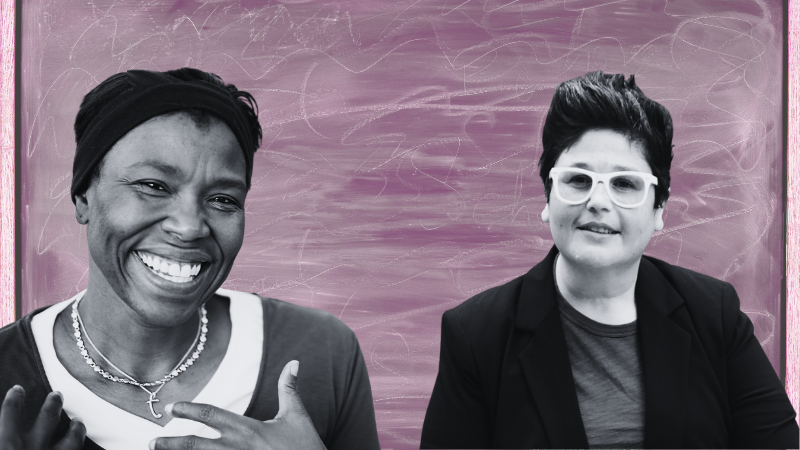
In this conversation, two sociologists explore integrating personal voice with scholarly methods in the realm of memoir. They examine not only writing but also reading and pedagogy, sharing insights into how memoir is expanding its presence in academia and beyond. Tiffany Gayle Chenault holds the position of sociology professor at Salem State University and wrote Black Woman Runner: A Memoir. Georgiann Davis teaches sociology at the University of New Mexico and authored Five Star White Trash: A Memoir of Fraud and Family.
*
Jenny Rossberg: You’re both sociology professors who incorporated your scholarly expertise into the writing of your memoir. What was the experience like blending first-person storytelling with scholarly prose? How did you achieve a balance between the two modes in your respective works?
Tiffany Gayle Chenault: The trick was enlisting a developmental editor. (laughs) When I sat down to write, I felt unsure about how to proceed. As an academic in graduate school, we aren’t trained for this kind of writing. We aren’t prepared to write for a general audience; our training is tailored to fellow academics, which doesn’t serve the broader discipline when studying inequality, social justice, and change. Our writing should be accessible to a wide audience, not just a particular subset of readers.
So I recruited two developmental editors who helped me achieve a balance in my writing. They had to tell me, that’s too academic, people won’t understand that. My editors would ask, how do you write? They urged me to consider the pre-story, the backstory, forward-looking moments, and to maintain a throughline throughout. Sociologists are taught to present data and facts in a straightforward way, but they pushed me to weave those elements more creatively so a reader would stay engaged. You’re not preaching; you’re informing. Storytelling helps you do that more effectively.
JR: Can you describe how the perception of memoir is changing in the academy? And how did this inspire you to write your own memoirs?
Georgiann Davis: I’m a devoted admirer of the memoir form, and I view these narratives as tools that prompt deeper critical reflection on the social world. Works like Kiese Laymon’s Heavy and Michelle Zauner’s Crying in H Mart are masterfully crafted and illuminate the society around us.
I think my unconventional educational path actually aided my memoir-writing. I left middle school early and didn’t master advanced writing until later in graduate school. I consumed newspapers and popular outlets, such as TIME, which helped me write in a way that resonates with a broad audience—whether it’s a parent, a neighbor, a shopper, or a fellow student. In my classes, undergraduates show interest in vulnerability and positionality, making memoir an excellent teaching tool.
Being an educated Black woman who understands the racism within the medical system, I felt like I had to be on the offensive.
As a scholar-activist, I wish more colleagues would lean into their positionality when writing rather than shy away from it out of fear of appearing biased, as if objectivity is even possible. Tell us who you are and what drew you to the topic. I don’t think we should limit ourselves to subjects we’ve personally experienced, but I do think we should situate ourselves within the topic. In my work, from Contesting Intersex to Five Star White Trash, my memoir centers lived experience so readers can get to know me as both a person and a thinker.
TGC: I also use memoir as a teaching instrument to help students connect to broader public issues in a way that feels relatable, for example with Jaquira Díaz’s Ordinary Girls. When students can connect with memoirs, they grasp them more readily, enabling discussions without relying on overly technical academic language.
The academy remains slow to embrace memoir. Many scholars view it as simplistic or lacking rigorous research. Yet at the American Sociological Association conference this year, a panel on incorporating narratives into sociological inquiry drew a packed room.
Sociology is fundamentally about the question of why: why is this happening? why this group? why now? Memoir provides a powerful synthesis of objective evidence—data and ethnography—with a narrative that interrogates the “why.”
GD: Exactly. The sociological imagination sits at the heart of the field; it connects personal difficulties to public issues. That’s why I’m passionate about sociology.
JR: Let’s discuss the kinds of personal difficulties you both address in your memoirs. I’m thinking especially about your relationships with your mothers, and how they might invite comparison with Jennette McCurdy’s I’m Glad My Mom Died. What guidance would you offer writers tackling hard parental relationships? And what can readers take away from these stories?
GD: For writers, start with therapy. (laughs) On a serious note, during writing—and revising relentlessly, as writers do—I wouldn’t sleep well, or I’d awaken feeling heavy with trauma when revisiting painful memories. Working through these experiences in therapy proved invaluable.
I faced stigma for being intersex: outwardly female, yet internally I carried ovaries, a uterus, and undescended testes I didn’t know about. This condition, known as complete androgen insensitivity syndrome, was concealed by my mother on medical advice, with even the reason for childhood abdominal surgery misrepresented. Doctors also urged my parents to consider bariatric surgery for me at fourteen. Our family kept many dark secrets, but sharing my story in a memoir allows readers to learn from my experiences.
In my first book, I wove a thread of my intersex identity into interview data I collected. Revealing that secret brought a sense of release. Two decades ago I wouldn’t have dared to speak publicly about being intersex; today, it feels as ordinary as discussing breakfast. I connected with intersex communities worldwide and felt freer about my body. I revisit that intersex dimension in this second book, though now set against a backdrop of numerous other traumatic experiences from growing up in a poor, economically strained family that often misled me into believing we were affluent. I hope readers finish with a sense of belonging in their own experiences while recognizing how race, gender, class, and other forces shape all of our lives.
TGC: My mother and I were close, almost inseparable. When she passed away, I endured deep grief because I had lost my “person.” Later, while facing breast cancer during the COVID-19 era, I discovered how much my mother had kept hidden about her own illness. I hadn’t known she had a care team, or that she endured radiation without losing her hair, always pushing forward. She never shared these details with me or my father, continuing to embody the image of the Strong Black Woman.
Being an educated Black woman who understands the racism within the medical system, I felt I needed to push back. My identity as a runner influenced how I was treated and perceived—sometimes as healthier or more capable—leading me to compete in races even amid treatment.
I also came to see I was clinging to a myth of the Strong Black Woman that my mother had taught me. Growing up as a Black girl in America, you learn to navigate white people and the system. It’s difficult to recognize this trope from inside it; it’s like a fish unaware of water. It took a lot of effort to realize I was drowning. I know I’m not alone in wrestling with this story, so I chose to be open about it and argue that this narrative needs to stop.
JR: You both use your memoirs to link personal experiences to broader conversations about race and racism. How did you address the complex social issues while preserving your own distinctive voice?
GD: I aim to stay true to who I am. Sometimes that means my sense of humor appears even as I write about experiences of medical abuse, criminal adversity, and family trauma. I endured all of it and shed many tears, yet I arrived at a position as a full professor of sociology at a public university, and I believe white privilege has acted as a shield during the most vulnerable moments.
For instance, in Five Star White Trash I recount how, after earning my GED, I enrolled in a community college just outside Chicago. I was nearly the only white student in a remedial English class, and my instructor pulled me aside asking why I belonged there. I explained I had dropped out in seventh grade, but she still asked to see my scores and mentored me, encouraging me to test out of the remedial course. She permitted me to move into her 100-level class, which counted for credit, while the remedial class did not. Would she have offered this mentorship to her Black students?
It took years to realize this is how white privilege operates—in these small, seemingly trivial ways. That realization helped explain how I arrived at my current position, and putting it in writing clarified what white privilege means to me.
TGC: When my mother passed away, I decided to run half-marathons across all fifty states to process my grief. I collected many stories from other runners, and I quickly learned that you can’t simply lace up and run—you have to present yourself as a runner, particularly in certain parts of the country. Black and Brown runners are acutely aware of the legacy of Ahmaud Arbery, so we must stay vigilant and mindful of our surroundings.
I spoke with numerous Black runners, especially Black women, about their experiences and realized, wait, that happened to you as well? People often dismiss racism and sexism as isolated incidents, as if someone had a bad day. But I’m a sociologist with data from all fifty states, so I know it’s not a one-off occurrence. There are patterns here, and we need to be more conscious of how racism affects things like health and physical activity.
There were also humorous moments, like asking why I’d be a Black woman running in the woods when there could be bears around. This is some of that “white people stuff.” Writing a book like Black Woman Runner is about asserting resistance, which to me equates to joy. It offers hope: how can we move beyond these barriers? Opening up these conversations invites readers to question things they might not have questioned before. And that is the essence of honesty in this work.
__________________________________
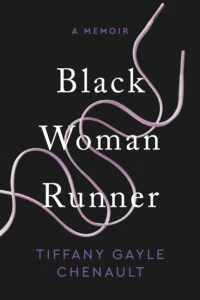

Black Woman Runner by Tiffany Gayle Chenault and Five Star White Trash by Georgiann Davis are both published by NYU Press.
