
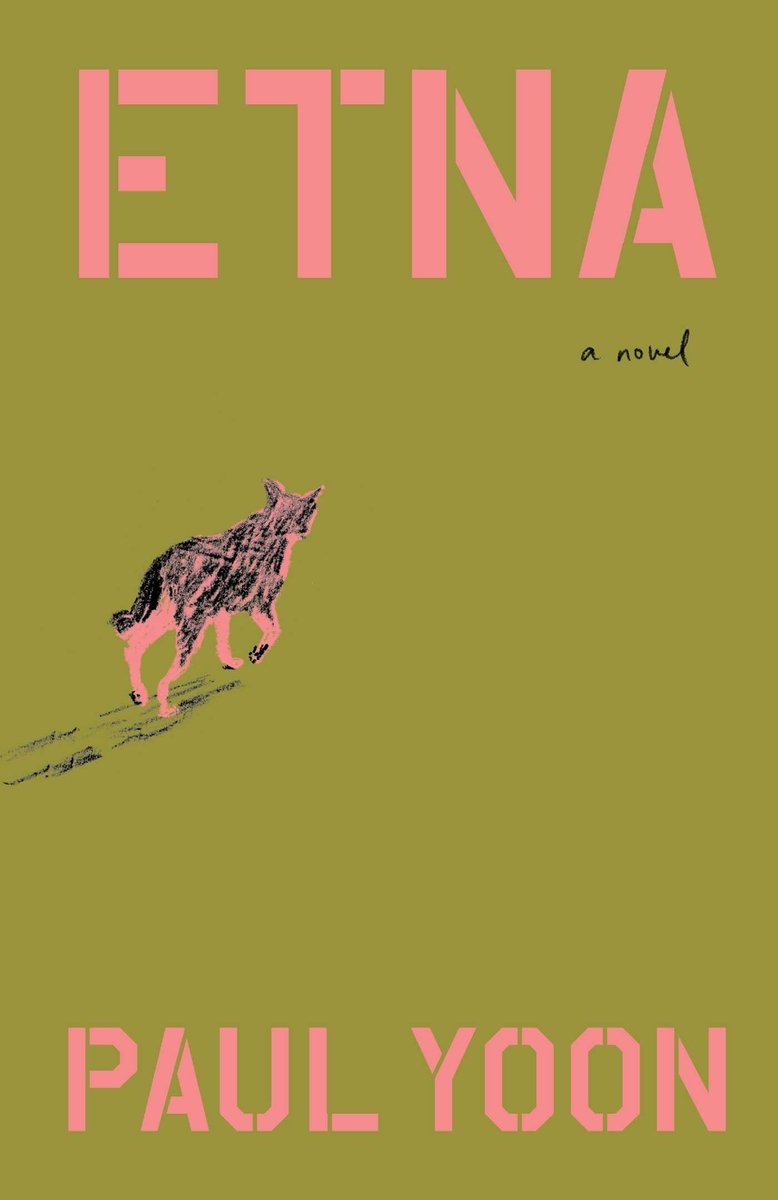
Behold the dogs and all they inhabit.
I came into the world beside the sea.
I was born on a farm where a great many dogs and other creatures were raised, cared for, and allowed to live. I never learned what the farm intended for me. Perhaps nothing specific at all. Perhaps I was meant to grow older there. Or perhaps I was always meant to move on, to work somewhere else and belong to a new family.
Yet that place felt like home to me. My mother existed there. My brothers and my sisters too. One early memory remains: waking to a circle of pale noses, our mother looming over us in the sky, her ears standing tall as if to shelter us from the scent of the coast.
Every day there was sand blown across bright daylight and salt on our tongues. The sea wind drifted over the grass. The barn’s eaves sheltered hornets that built nests resembling empty turtle shells bobbing in the wind.
There were goats with cloven hooves and a huge, sleepy pig who never cared to play with us.
And the birds. Birds everywhere. Their bright plumage and their songs. Their shadows and even the droppings, which I sometimes found myself chewing with odd delight.
I loved listening to the people who owned the land talk to one another. I found the softness in their two voices soothing. The woman spoke often as her hair threaded through her strands. The man would trace a finger along a shirt button when his thoughts wandered. They both spoke of small, ordinary things—the weather, a child, a bucket, meals, sleep, a leak in the roof—and they reminded themselves to remember the dogs, and they spoke of beauty, of birthdays, and of saying goodbye with affection and hope for a future hug.
Then one day their voices shifted. It reminded me of the moment when the man told the woman that his father had died. Silence grew between them, and when they spoke again, it was about people fighting at a distant border.
Day after day, they whispered about it while tending the animals—outside as they filled our water bowls, feeding the creatures, and speaking of the country next to theirs and of other lands traveling here to offer aid or to fight.
And then a young woman arrived, alone, driving a pickup. When she stepped out, she wore a uniform. She removed her hat, exposing a long braid that fell down her back as she approached the couple and explained that she was hoping to find dogs to attach themselves to and help the armies arriving from North America and Europe.
I pretended not to notice her. I stayed close to my mother, who stood tall in the grass, our ears tracking the humans. I learned the words she spoke, the sounds of them—how they spoke of joining and armies and far-away places—and I listened to the fabric of the young woman’s uniform brushing against her thighs as she moved, the sweet, leafy scent of the back of her neck filling the air and pushing the scattered grains of sand away.
The pig slept. My mother’s ears grew stiff, and then her heart beat faster. The air inside that hollow shell above me hummed as three shadows dashed across the grass. The woman scooped me up, and suddenly I was in the air and being carried away, my mother barking and trying to follow until she could no longer keep up.
Later, as we sped along a country road, the woman explained that she had chosen me because she could sense I would grow into a very fast and strong dog. I sat with her in the front seat. A rifle stood upright between us, and she leaned over, running her hand along my front leg to my paw, which I did not like.
To my surprise, she apologized—the farm couple had never apologized when they touched my paws—and then she smiled and said she had chosen me because we could communicate with one another, which wasn’t always the case with every dog she met.
That admission meant I was something special. And it meant she was seeking dogs who were special in their own way.
I couldn’t make sense of it all. I was scared. I whimpered; I wanted to turn back. I didn’t know where we were going, and I had never been in a vehicle before. Everything rattled. I tried not to listen to the scream of the engine and the gravel beneath the tires, and deep inside me I heard my mother still trapped in the field, behind a fence, while I tried not to stare at the other dog in the seat behind me, sleeping on her belly, paws stretched forward, eyes closed tightly and uncomfortably.
The other dog was roughly my age—ten or eleven months—and carried a distant scent on her coat that I could not quite place. Even though I had never laid eyes on her before, that scent brought me a kind of comfort. It steadied me because I could no longer smell my mother and my siblings. My nose had emptied them from me.
So I clung to the smell of the new dog behind me as the truck kept shaking and speeding by, the trees outside rushing past like enormous kites, and the power lines flashing by like a sea on the move.
I nuzzled the rifle barrel, and it tasted bitter.
The woman smiled again. What’s your name? she asked. Why should I tell you? I replied, almost before I could think.
Fair enough, she said. It doesn’t matter what you call yourself now. You’re going to receive a new name. A better one.
And then it happened. I straightened up and turned toward her, realizing in that moment that she had not spoken aloud this time, that we were communicating through a different, shared method of understanding.
With other animals, we have a silent, common language that forms in the space between our eyes, a language we can translate without words. With this young woman, it was similar, but I felt her words as a tangible force, as if the air itself pressed against my ears and a small door opened in my head, revealing a corner I had never entered. The colors around us grew a touch brighter, though less crisp, and it was as if her words rode on those bright hues—like currents that vibrated, and I responded in kind.
I turned back to the window and fell quiet. I attempted to focus on the power line outside, but my head began to ache.
It won’t last, she said, placing a hand on my head. Besides, you’ll come to terms with it. You’ll grow used to all of this, my dear.
Then she shared her own name: Soojin. She was in her late twenties, still young by human standards, I could tell even then. I paid attention to the dog behind me—the scent of fresh grass, a tangle of vomit, clay, and woods—as Soojin explained that she was a doctor by training, currently enlisted in this country’s army, though the Americans had brought her on temporarily because they knew she had a gift for handling dogs.
They don’t know the half of it, she said, tapping the side of her head with a wink.
She told me she doubted I would meet anyone else who could talk to dogs the way she could. She couldn’t explain why this worked for certain dogs and not others, or why it didn’t apply to all animals. She wondered how I felt about all of this: whether it frightened me or enchanted me, whether I wanted to say something back to her immediately.
I wanted to answer, but I wasn’t sure what to say. I could tell she was testing me in some way, though I didn’t know what the test was. I watched a bird flicker across the sky above the trees and thought again of my mother and my siblings, of the couple on the farm with their soft voices even as they worried about the fighting along the border, and I focused once more on the smell and the heartbeats of the dog behind me, until the woman tapped the steering wheel and admitted that keeping up with my thoughts was difficult.
She gestured with her thumb behind us and told me not to worry. The other dog had been queasy from the jostling of the moving truck—they had been on the road for days—but she would be fine. She was from a fishing village that Soojin had visited long before; she was strong, like me.
I named her Fuji, she said. Fuji?
Her war name, Soojin explained. You’re all going to have war names now. You’re becoming war dogs, darling. You’ll find a new home, you’ll make new friends, and you’ll work hard to save many lives. But time is short, so we must hurry.
I did not want a new home. I wanted to return to the farm. I started to pant.
I knew she could hear my thoughts, but Soojin simply turned a dial in the cab. Cold air brushed my neck as she reached across to scratch my chest, and that sensation—all the cold air and her touch—felt wondrous for a moment.
For a moment, everything else disappeared except that warmth, the chill of the breeze, and her touch.
Then, as she sped forward, passing a line of trucks in the same color as her uniform, she named me Etna.
Etna, she said again, letting the name settle in her mouth and in the space between us.
Behind the window of one truck, a young man waved.
I lost track of the bird.
I repeated my new name, Etna, while Soojin explained what a volcano was and that the one she chose for me came from an island called Sicily. She confessed she had been flicking through a library travel guide on Sicily that morning and realized she would be late returning it.
Soojin scratched my chest once more.
Did you know, Etna, that Sicily once housed hermits? she asked.
She admitted it was hard to keep up with my thoughts, but now I could not quite follow hers: What was she talking about? The farmer’s wife sometimes told her husband he was living in his own world. Soojin lived in her own world, too.
I turned to check Fuji, who stirred but hadn’t opened her eyes yet. She had rolled onto her side, and I could see a pale stripe across her chest.
Soojin continued to talk about hermits and cottages on a hillside near a place called Palermo. She said that in another life she would like to be a hermit—alone, unseen, in a vast stillness. Or perhaps a hermit with a few dogs for company.
Tell me, Etna, is a person a hermit if they have dogs? she asked.
I watched the traffic: many cars in the opposite lane, loaded with bags and small pieces of furniture strapped to the tops, all heading away from the sea. A tiny hand waved at us as the sky and the road reflected in every windshield.
Soojin hadn’t stopped talking.
Like you, Etna, she said. How about this? Come live that hermit life with me someday. And what about Fuji, too?
Fuji stirred again; Soojin glanced at the mirror above her and our eyes met Fuji’s for the first time, and we remained locked on one another as Soojin kept speaking:
That’s right, my darling, are you feeling better? We’re talking about you. Meet Etna. He’s strong, just like you. Two strong dogs. You’ll both inhabit my own hermit realm. So, promise me this: endure. Both of you. Take care of each other. And when this is over, seek me out. We’ll go to Sicily together.
She pulled out her phone. She held it to her mouth and recorded my new identity—an eighteen-month-old mixed-breed shepherd, sixty-seven pounds—with a note about how my legs and paws could be handled and the work they would need. Then she ordered the device to relay the update as she drove deeper inland, my head missing the ache as I pressed my ears forward, catching the distant bursts of jet engines.
I imagined Fuji and I remaining with her from that moment. Instead, after hours of driving through more fields and beneath more power lines, Soojin dropped us at a gas station parking area where more trucks and more people in uniform loomed. New, loud noises filled the air. We wriggled and kicked and whimpered as she lifted each of us from the truck and told us the road ahead would be hard, but we would have each other. We would need one another and to remember that we were strong.
She crouched low, burying her face in the napes of our necks, and Fuji and I continued to whine, unsure what would come next, not wanting to be separated from her, pressing our noses toward her chin one last time. Then, as we focused on that spot—pollen, a rising vein, a stranger’s lips—Soojin reminded us to hold fast to our vow before she handed us to a squad of uniformed men and walked away.
During those war years, I would only meet Soojin again once more. It happened when I lay on a cold metal table inside a field hospital, a doctor lowering a bare lightbulb on a rope and threading a needle through my skin. I felt the air tremble around my head. When I opened my eyes briefly, Soojin stood there, leaning down to stroke my ear before my body trembled and I sank back into unconsciousness.
Your mind will wander, I heard in the background, but I still felt a familiar presence every so often—an orderly, a braided woman in uniform slipping into a tent—and the sound of my own heartbeat and tail would rise with relief, and I would whine, wishing to rush toward her, only for Fuji to nudge my shoulder and remind me to stay focused on my training.
Who would have believed that Fuji would grow to be larger and tougher than I, leading us forward, bravely stepping into unknown places first, taking the lead on unfamiliar roads? She became the fiercest among us. She became the bravest. She fought, and fought again, outlasting the rest of us.
Yet on that very first day together, Fuji had been far more frightened than I was. Are we a pack now? she asked in a whisper as Soojin stepped away and the men slid us into crates beside one another on the back of another truck. When they disappeared and the truck jerked to life, Fuji slid across her crate to be as close to me as possible, pressing her damp nose against mine, the little mole on the tip of her tongue whenever she tried to lick me, her blue eyes bright and wary.
__________________________________
From Etna by Paul Yoon. Copyright © 2026 by Paul Yoon. Reprinted by permission of Scribner, an imprint of Simon & Schuster, LLC.