
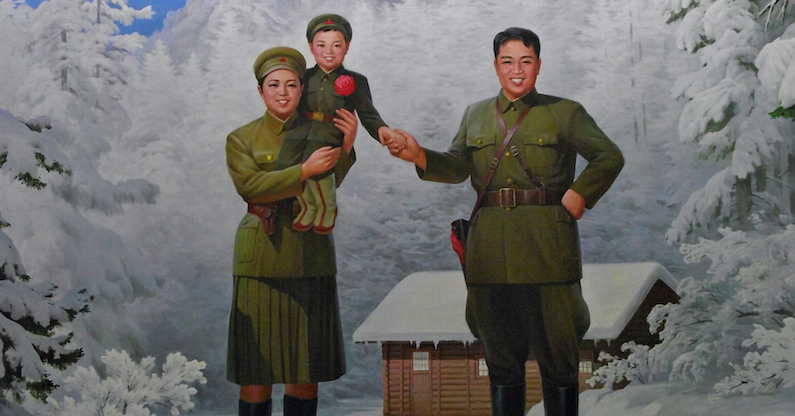
Anyone who reads the news or has logged onto social media is aware of the cult of personality around North Korea’s Kim dynasty. From afar, it’s almost cartoonish, with the bronze statues and the funny haircuts and the penchant for nuclear threats. But examined up close, it’s remarkable—almost breathtaking—in its intensity, in its durability, and, perhaps most strikingly, in its religiosity.
When I first started covering North Korea for The Wall Street Journal more than a decade ago, I was perplexed to learn that Kim Il Sung, the state founder, had been born and raised in a devout Presbyterian family, on the outskirts of a city, Pyongyang, that was so thoroughly Christianized that it was known as the “Jerusalem of the East.” I wondered whether there might have been some connection between Kim’s upbringing in the church and the religiosity of the personality cult that he constructed.
Over the course of twelve years of research and writing, the evidence was, to my mind, unmistakable. Along the way, I realized just how much Kim Il Sung and the broader fate of the North Korean people are woven into the story of modern Korea—in all of its many tragedies, from feudal decay to Japanese colonization to division and civil war. It’s a magnificent story, albeit one full of heartbreak and pain.
Here are five books that were essential to my understanding of the story.
*
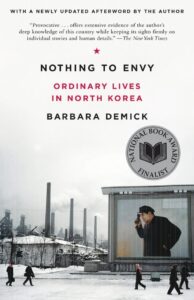
Barbara Demick, Nothing to Envy: Ordinary Lives in North Korea
(Random House)
This narrative non-fiction work is widely acclaimed as the premier account of North Korea’s devastating famine of the 1990s, a period that coincided with Kim Il Sung’s death in 1994. Demick recounts the story of Kim Il Sung’s 25 million subjects through the intimate testimonies of a handful of ordinary people, bringing the era’s tragedy to life while also underscoring how the Kim family’s personality cult endured even when all seemed lost.
Richard E. Kim, Lost Names: Scenes from a Korean Boyhood
(University of California Press)
This collection of thinly veiled autobiographical vignettes from a pioneering Korean American author offers a visceral, ground-level view of what it felt like to live under Japanese colonial rule as a Korean, and what it meant to see Korea liberated—only to then see it divided. Told with tenderness and empathy, this evocative collection of stories from a third-generation Korean Christian writer captures the feelings of nationalism and shame that animated Kim Il Sung.
Richard E. Kim, The Martyred
(Penguin)
Richard E. Kim’s breakthrough novel tells the morally intricate story of fourteen church ministers seized during the Korean War. Twelve are executed on the banks of Pyongyang’s Taedong River, and the advancing South Korean forces seek to turn them into martyrs. Yet an inquiry into the two survivors raises questions about whether they compromised their faith to avoid death. The reality is far more complex and touches the core themes driving this once-popular New York Times bestseller, as well as Korean Messiah: faith, nationalism, guilt, and truth in the face of unimaginable death and destruction.
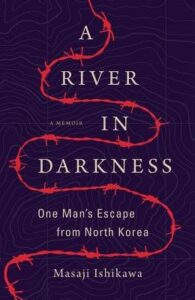
Masaji Ishikawa, A River in Darkness: One Man’s Escape from North Korea
(Amazon Crossing)
In recent decades, dozens of harrowing memoirs have been written by North Koreans who fled the country. But there’s a unique power to the accounts of overseas Koreans who accepted Pyongyang’s repatriation campaign in the 1960s. The horror of discovering that Kim Il Sung’s socialist paradise was anything but—and knowing what they had given up in their previous lives—only raises the moral stakes of the decision to flee. Like Kang Chol-hwan’s better known Aquariums of Pyongyang: Ten Years in the North Korean Gulag (English translation 2001), the life story of Masaji Ishikawa—the pseudonym of a half-Korean, half-Japanese boy born just outside of postwar Tokyo—is a compelling if distressing read.
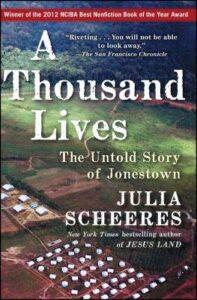
Julia Scheeres, A Thousand Lives: The Untold Story of Jonestown
(Free Press)
The sole selection on this list that isn’t centered on North Korea comes from the jungles of Guyana—yet Kim Il Sung’s influence seems to pervade there as well. Reverend Jim Jones adopted three Korean children, extolled Kim Il Sung over Jonestown’s loudspeakers, dispatched teams to engage with North Korean officials, and even considered relocating Jonestown to Pyongyang. While countless accounts exist about Jonestown, A Thousand Lives offers a recent, accessible entry point into one of the most troubling episodes in the history of religious movements, examining how personality cults like Jones’s and Kim’s are built and how they gain traction.
_________________________
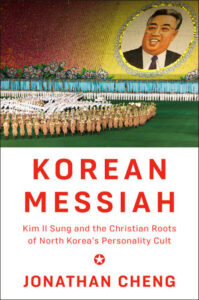
Jonathan Cheng’s Korean Messiah: Kim Il Sung and the Christian Roots of North Korea’s Personality Cult, a finalist for the 2026 Cundill History Prize, is available now.
