Mythologies around the world are filled with stories that orbit around male protagonists. From Gilgamesh to the Iliad, the Mahabharata, and the Shahnameh, vast epics tend to illuminate the feats and journeys of men, while the women connected to them often fade into the background, their identities restricted to that of loyal wives, scheming antagonists, or victims in distress.
The Odyssey unfolds after the Trojan War’s decade of bloodshed, centering on Odysseus and his crew’s voyage home to Ithaca, where Odysseus’s faithful wife Penelope endures another ten years of waiting as she deftly wards off 108 suitors. Penelope’s steadfast fidelity is deployed as a foil against her cousin’s betrayal and against the infamous Helen of Sparta, who abandoned her husband and eloped with a Trojan prince—resulting in a war she is often blamed for inspiring—an image of a singular woman blamed for the thousand ships that set the conflict in motion.
The latest spin on this timeless tale arrives in Christopher Nolan’s newest release. I have admired Nolan’s previous work (notably Inception and Oppenheimer) and I expect to see The Odyssey when it hits theaters later this month. While some early press, including a feature in Elle, suggests the film places women at the center more effectively than many blockbuster outings, I still yearn for a film that delves even deeper into the women who inhabit these myths and rises to the scale of a Wonder Woman-style blockbuster.
Yet while cinema keeps dropping the ball, literature continues to offer a glimmer of hope. Below are nine feminist myth and fairy-tale retellings to read after you’ve watched Nolan’s film.
*
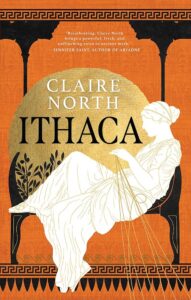 Claire North, Ithaca
Let us begin with a feminist reimagining of the Odyssey that foregrounds Penelope and her retinue. Claire North’s Ithaca, the initial volume of a trilogy, unfolds through the narration of the goddess Hera, who playfully teases the swarm of suitors after Penelope’s hand and Odysseus’s throne. In this universe, deities still exist but rarely intervene in mortal affairs. The spotlight rests on Penelope’s diplomatic acumen and on the devoted women who become a covert network of informants, as well as a quiet militia that governs the island from the shadows for two decades while the men fight abroad.
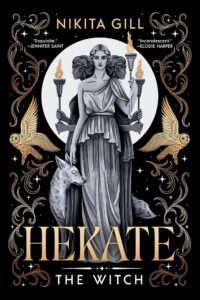 Nikita Gill, Hekate
This verse-novel offers a lyrical retelling of Hekate’s journey—from a child of war to a sovereign witch who can traverse the underworld. Gill’s verse shines brightest in scenes depicting Hekate’s emergence from childhood into formidable power, even as the epic backdrop centers on the colossal clash between Titans and Olympians. Its resonance in our era feels undeniable, especially when paired with contemporary crises and the ongoing crises in Gaza.
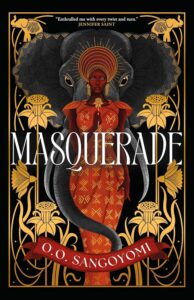 O. O. Sangoyomi, Masquerade
Loosely inspired by the Hades and Persephone myth, Sangoyomi’s work unfolds within a world crafted from 15th-century West Africa and Yorùbá culture. The heroine Òdódó is abducted by a wanderer who visits her blacksmiths’ guild—only to reveal later that he is the warrior king of Yorùbáland, who has also seized her homeland. Òdódó’s evolution from a frightened, naive girl into a formidable queen at the king’s court is both striking and credible, and her intricate dynamic with her husband—and captor—is equally compelling. The author does not shy away from presenting her heroine’s morally gray sides, which enriches the narrative.
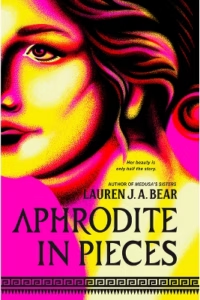 Lauren J.A. Bear, Aphrodite in Pieces
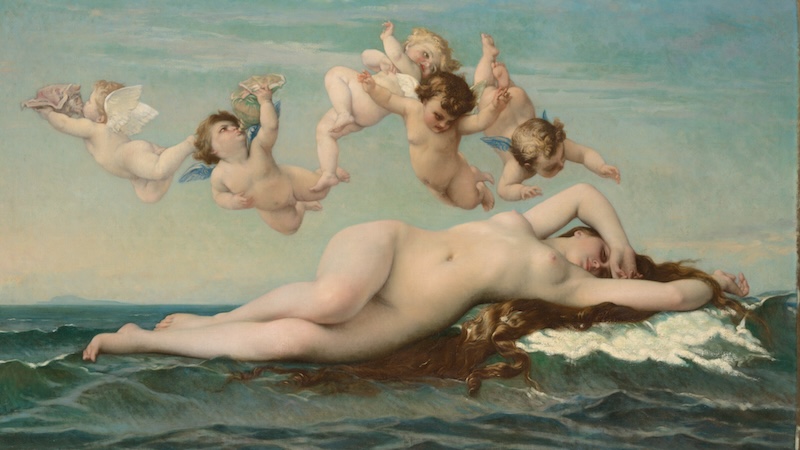
In this novel, Aphrodite’s narrative begins with the goddess visiting a sculptor on the island of Milos. She reveals her life story to him in fragments and bids him carve a statue of her truest self. We learn about Aphrodite’s long romance with Ares and her troubled marriage to Hephaestus. Bear artfully blends myth with the fame of the Venus de Milo, tackling one of Greek myth’s most intricate women—the goddess of love and beauty—with stylish dexterity.
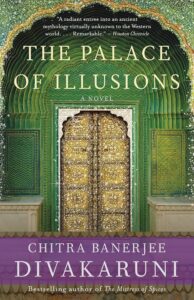 Chitra Banerjee Divakaruni, The Palace of Illusions
Among Indian myth retellings, this one stands apart. Set within the era of the Mahabharata, it centers on Panchali (Draupadi), a princess who weds five brothers—each man embodying one virtue she seeks in a husband. Panchali isn’t flawless; she rejects a worthy suitor for caste reasons. Divakaruni’s deft portrayal makes her protagonist nuanced and morally murky in the most compelling way, underscoring the author’s remarkable storytelling talent.
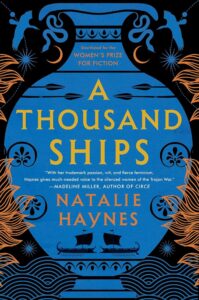 Natalie Haynes, A Thousand Ships
Haynes’s narrative, framed by Calliope the muse of epic poetry, unfolds across 43 chapters, presenting the viewpoints of numerous women on both sides of the Trojan War. We hear from Penelope as she writes letters in the dark, hoping for a sign from Odysseus, and from Clytemnestra as she endures the loss of her daughter amid her husband’s military campaign. Yet some of the most moving voices belong to Trojan women like Creusa, who escapes with Aeneas and helps lay the foundations of Rome, and Andromache, Hector’s wife who is taken as a war prize by Achilles’s son.
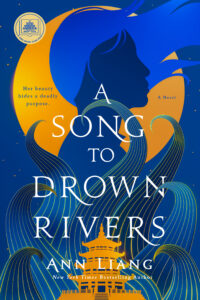 Ann Liang, A Song to Drown Rivers
Inspired by Xishi, one of ancient China’s famed four beauties, this historical fantasy charts the heart-wrenching arc of a woman recruited by a renowned young commander to infiltrate a king’s palace as a concubine and undermine power from inside. Liang—lauded for her contemporary YA works—delivers a richly nuanced exploration of three central figures, revealing their motives with care and making it nearly impossible to pick a single favorite among them.
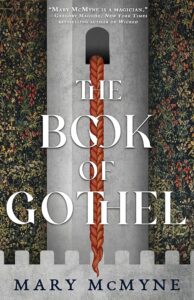 Mary McMyne, The Book of Gothel
A fresh take on Rapunzel’s origin, The Book of Gothel unfolds from the perspective of the misjudged witch, Haelewise, who journeys toward the fabled tower after her mother’s death. There she encounters a sisterhood of women and a tapestry of magic, with the tower offering sanctuary to those seeking protection. Rapunzel’s own presence is relatively minor here, but the cast around Gothel is rich and vividly drawn, and McMyne’s clever blend of myth and history yields an exhilarating and immersive reimagining of the heroine’s beginnings.
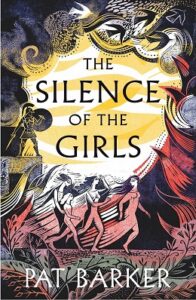 Pat Barker, The Silence of the Girls
When it comes to depictions of the Trojan War, few works offer a closer, more harrowing look at the plight of the captive Trojan women than Barker’s The Silence of the Girls. Told through Briseis, a Trojan woman who becomes Achilles’ war prize, the novel is both gripping and devastating, shedding light on those who were seized and treated as collateral in a brutal conflict. It also centers on resilience and solidarity among the women who endure together. More recently, Emma Thompson announced a plan to adapt Barker’s novel for film, and I’m eager to see how it translates to the screen.
_________________________________________
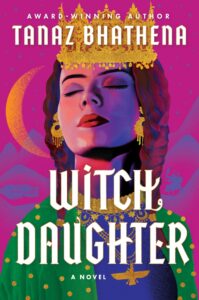 Witch Daughter by Tanaz Bhathena is available for pre-order via Grand Central Publishing.