The first official day of fall is this coming Tuesday, September 22, but if you’re reading this then by now you’ve probably seen a few “most anticipated for fall 2026” lists. There is so much great stuff coming, and so many new novels I want to read.
But I want to focus on some of the nonfiction that’s coming out in the coming months because, according to some book world insiders, nonfiction is in crisis. Or at least, it’s more difficult for editors at major houses to acquire books that purport to be true than it has been previously. Reliable stalwart nonfiction has been passed over by readers for more escapist fare, and I can’t say I blame readers for that. Yet still.
It doesn’t help that the end of the year is traditionally a big time for celebrity memoirs, the kinds of books that make great Christmas gifts and tend to suck up a lot of media attention. There are so many good ones this year—Kyle MacLachlan, Judi Dench, LeVar Burton, and Dustin Hoffman, to name a few—but let’s not talk about them right now. They’ll be fine no matter what.
I want to tell you about some other nonfiction titles that I’m looking forward to reading this season: the kinds of books that don’t require ghostwriters and big marketing budgets and for which their authors didn’t get paid seven-figure advances. The best nonfiction writing relies on our inherent curiosity about the world we live in, as flawed as it may be. I hope something on this list strikes your own thirst for knowledge.
*
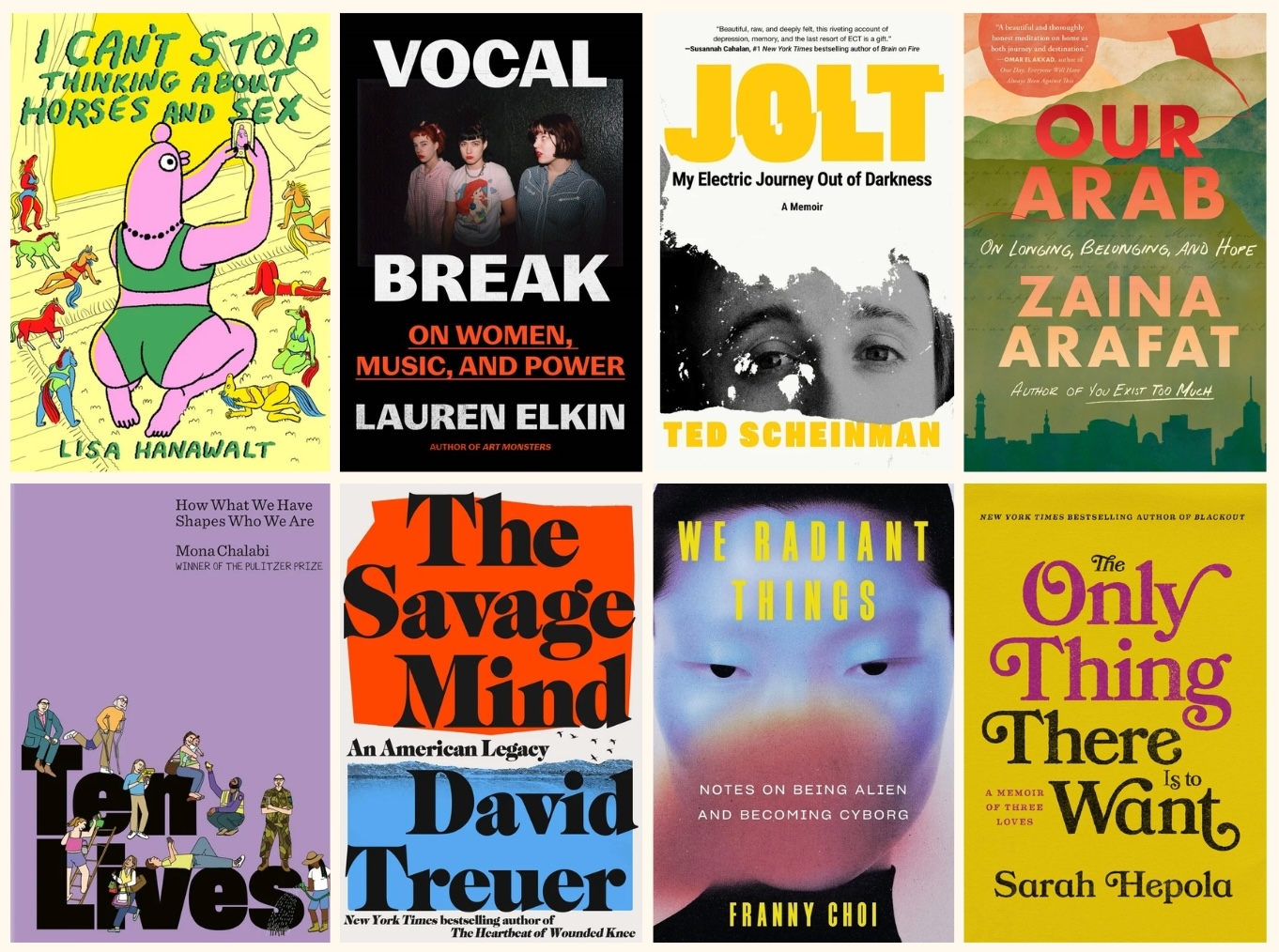
The Only Thing There Is To Want: A Memoir of Three Loves by Sarah Heppola
I anticipate that Heppola’s next book after her acclaimed memoir Blackout will likewise stand as a masterful example of intimate, reflective prose.
Darkness Becomes Bright: On the Brief Life and Immortal Art of Edgar Allan Poe by Emily Ogden
I’m a fan of literary biographies. While new volumes about Janet Malcolm and Anita Brookner are on the horizon, the one I’m most eager for is a study that probes how and why the works of this singular figure became required reading in high school literature classes.
I Want to Be Famous: When Everybody and Nobody Is a Celebrity by Bobby Finger and Lindsey Weber
Bobby and Lindsey have long excelled at dissecting pop culture even before launching their widely followed podcast, Who Weekly. Watching them collaborate again promises insights into celebrity culture in 2026 and the forces that brought us to this moment.
We Radiant Things: Notes on Being Alien and Becoming Cyborg by Franny Choi
This is precisely the kind of work I’m most drawn to. In a perfect literary landscape there would be numerous essay collections from outstanding writers (Choi specializes in poetry) addressing culture, politics, technology, and capitalism’s harms. I’m eager to see how she translates these ideas into prose.
The Savage Mind: An American Legacy by David Treuer
This volume seems set to define the season. Amid a wave of political titles this autumn, few will be as deft and perceptive as Treuer’s examination of violence in America, tracing it from the frontier era to the present.
Freedom’s Gate: Maya Angelou, Lorraine Hansberry, Abbey Lincoln, Miriam Makeba, and Nina Simone Live at the New York Nightclub That Shaped the Civil Rights Movement by Soyica Diggs Colbert
It’s surprising how often micro-histories of narrow moments don’t attract a wider audience, since they tend to offer intimate, vivid storytelling. This book, in particular, promises to be riveting: the tale of the venue where Black women artists from diverse disciplines gathered at the outset of the Civil Rights era.
Back: Essays on the Soul and Spine of America by Lauren Michele Jackson
Jackson stands among my preferred cultural critics. I enjoy essay anthologies centered on a particular body part (for example Heather Radke’s Butts: A Backstory). This pairing of writer and theme feels especially apt.
Hyperscale: The Ambition and Excess of Big Tech’s Data Empires by Paris Marx
There’s no shortage of titles critiquing how Big Tech harms the environment and our mental lives (usually from publishers still hoping AI will be a boon). Yet Hyperscale is the one I’m most looking forward to this fall, in part because I’m a fan of Marx’s podcast, Tech Won’t Save Us.
Our Arab: On Longing, Belonging, and Hope by Zaina Arafat
Arafat’s debut novel, You Exist Too Much, left a strong impression with its portrayal of a Palestinian-American woman’s inner discord. I’m eager for Zaina to carry that voice into this forthcoming collection tackling a related subject, a work that feels especially timely in today’s political moment.
I Can’t Stop Thinking About Horses and Sex by Lisa Hanawalt
If you’ve seen BoJack Horseman or Tuca & Bertie, you know Hanawalt’s world is saturated with vivid colors and anthropomorphic creatures. Her forthcoming graphic memoir—bold in form and content—feels playful, endearing, and tempered by longing.
Jolt: My Electric Journey Out of Darkness by Ted Scheinman
A quick note: in 2019 Ted briefly supervised the author here at the now-closed Pacific Standard. Regardless, this exquisitely crafted memoir about undergoing electroconvulsive therapy stands as a powerful reminder that you can’t fully discern another person’s struggles.
Vocal Break: On Women, Music, and Power by Lauren Elkin
The cover’s glimpse of Bikini Kill’s bandmates hints that Elkin—author of Art Monster and Flâneuse—will offer many insightful reflections on how women across different musical genres have forged power through making music.
Ten Lives: How What We Have Shapes Who We Are by Mona Chalabi
Chalabi, a data journalist and visual artist, has crafted a graceful synthesis of her talents. Ten Lives presents a revealing look at what wealth and financial insecurity mean to ten Americans.
Lovely Me: The Life of Jacqueline Susann by Barbara Seaman
A brief personal aside: this reissued biography includes a newly written introduction for the book, turning the work into a campy, gossip-fueled joy.