
This first appeared in Lit Hub’s Literary History newsletter—sign up here.
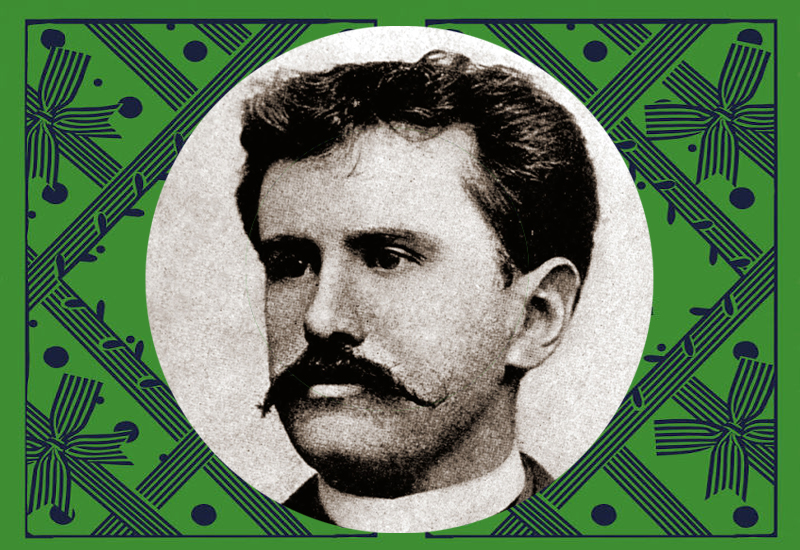
Renowned as O. Henry—the pseudonym of William Sydney Porter—the author of The Gift of the Magi and a leading figure in American short fiction, whose legacy is celebrated every year by the O. Henry Prize for Fiction, he began his literary journey behind bars, while serving a sentence for embezzling funds from the First National Bank in Austin, Texas, where he had worked as a teller.
Scholars have suggested Porter might not have deserved conviction at all: a 1916 account described the bank as “carelessly managed,” noting that customers would slip behind the counter, withdraw sums of 100 or 200 dollars, and tell themselves later, “Porter, I took out $200 last week. See if I left a memorandum of it. I meant to.” A Times report adds that Porter, by the time charges were filed, had moved to Houston to work as a columnist for The Daily Post, and that he resigned before any of the alleged misappropriations; it is argued that a return to Austin for trial might have yielded an acquittal.
But he did not. Instead, he boarded a train to New Orleans and then boarded a fruit steamer bound for Honduras, a route where American law could not reach him. In February 1897, however, he learned that his wife was gravely ill and returned to the United States to care for her. She died in July, and Porter was convicted the following year, receiving a five-year prison sentence for embezzlement in March 1898.
The literary world should be grateful for his misfortune, for it was in prison that Porter “did his first serious literary work,” as the Times describes it. To be able to send money home to support his daughter Margaret, he wrote and published fourteen short stories under various pen names, among them the one with which he would become famous: O. Henry.
Porter was released early for good behavior on July 24, 1901, and returned to Pittsburgh to live with his daughter and his in-laws, before moving on to New York City. Most importantly, he kept writing, and in 1904 published his first collection of short stories, Cabbages and Kings, followed two years later by The Four Million, which would include some of his most enduring tales, including The Gift of the Magi. He was incredibly prolific; he would keep publishing until his death in 1910, and well beyond.