
Perhaps every sixteen-year-old boy could use a bright-witted sister like Phoebe Caulfield. A discerning movie buff, a reader, a budding detective-story author, a skater and a deft dancer, she stands out as a remarkably capable ten-year-old and the only character in The Catcher in the Rye who seems able to exert a gentle, protective influence on her troubled brother.
In Holden’s distinctive, intimate narration, she appears early on—“She’s all right. You’d like her”—and his thoughts keep circling back to her, like a refrain, through the aimless two days in Manhattan after his expulsion from Pencey. He longs to call her, but fears his mother might answer the phone. He’d rather spend time with her than with muscle-bound schoolmates, perplexing girlfriends, insincere adults, or stern teachers. To lift his spirits he buys her a record he knows she will enjoy and makes efforts to locate her at the Mall and in Central Park, where she likes to rollerskate. Ultimately, it is the thought of how sad she would be if he died of pneumonia on a bitter December night that drives him home to see her, even though his parents still don’t know he’s been expelled from his fourth school. Phoebe—or the thought of Phoebe—pulls him back toward the family he has been avoiding.
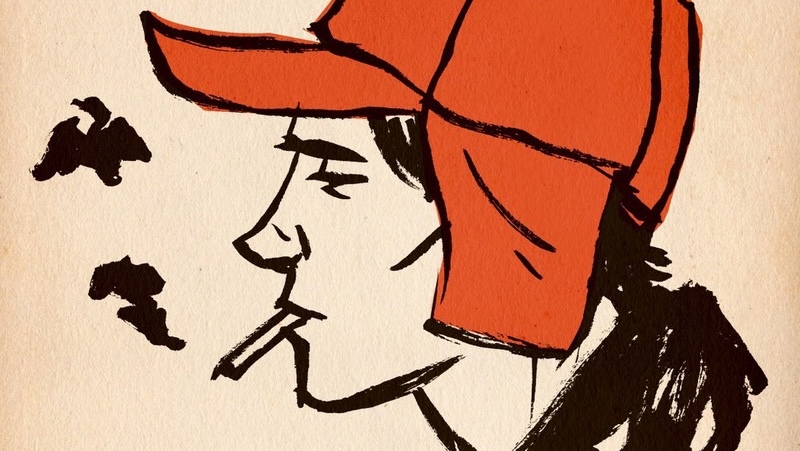
There is nothing counterfeit about Phoebe. She is ten, slim, with red hair that reminds Holden of their brother Allie, who died from cancer three years earlier. She dresses neatly but wears distinctive items—Holden knows she will adore the quirky red hunting hat he bought on impulse during a school trip, and he notices elephants embroidered on her pajamas. She hugs him openly when she’s glad to see him, and she slaps him when she’s annoyed: everything she does is direct and sincere, unlike Holden’s date Sally Hayes, who is preoccupied with appearances, or his predatory teacher Mr. Antolini.
Phoebe—or rather the thought of Phoebe—draws him slowly back to the family he is avoiding.
But Phoebe also shares with Holden a strong personality and a resistance to conventions or behaviors she dislikes. Earlier, she has thrown ink on Curtis Weintraub’s windcheater because she dislikes the way he shadows her. She has given herself a new middle name because she thinks Josephine is awful. She complains to their mother that the house help lingers over her meals. Amusingly, without shame, she is taking belching lessons from Phyllis Margulies and is developing a trick to muster a feverish forehead to dodge school. She and Holden have amused themselves in the past by deliberately annoying a Bloomingdale’s shoe department clerk. When Holden sneaks into the family apartment to talk to her in her room, avoiding their parents, she covers for him and lends him her Christmas money so that he can linger in New York a little longer before he must officially confess that he will not return to Pencey for the holidays. Despite the age gap, the siblings share a lot, and Phoebe’s rebellious streak disrupts any notion that she must be good merely because she is a girl.
For Holden, Phoebe embodies memories of carefree times with her and Allie, as well as their eldest brother, D.B., who is now in Hollywood writing scripts. They would take Phoebe to Central Park and watch her ride the carousel; they would go to the cinema together; they would take her to a show. She always had an opinion about what they saw and she always listened carefully to their conversations: “if you tell old Phoebe something, she knows exactly what the hell you’re talking about.” He affectionately calls her “old Phoebe,” a humorous epithet given that she is the youngest, yet wise beyond her years. Nostalgia for the innocence of preadolescence blends with his respect for his kid sister, reinforced by the fact that she attends the same primary school he did, visits the same museums, and rehearses for the school play just as he did. Holden, who is already a capable writer and a devoted reader, relishes that his sister writes detective stories in her notebooks. These activities offer Holden a familiar comfort: “Certain things they should stay the way they are. You ought to be able to stick them in one of those big glass cases and just leave