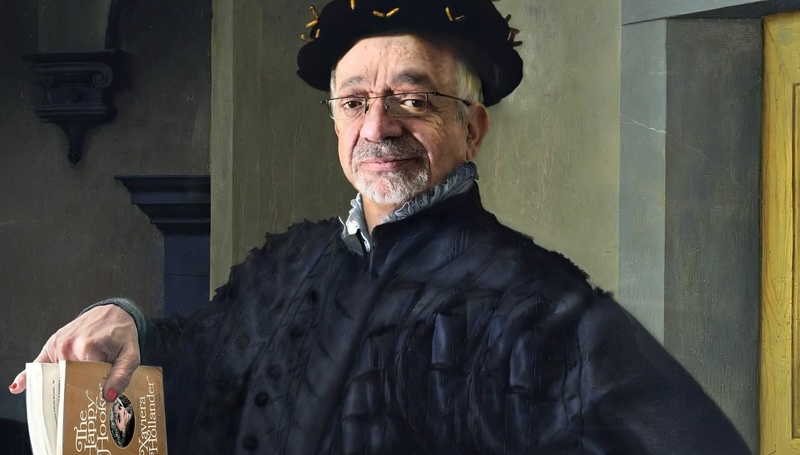
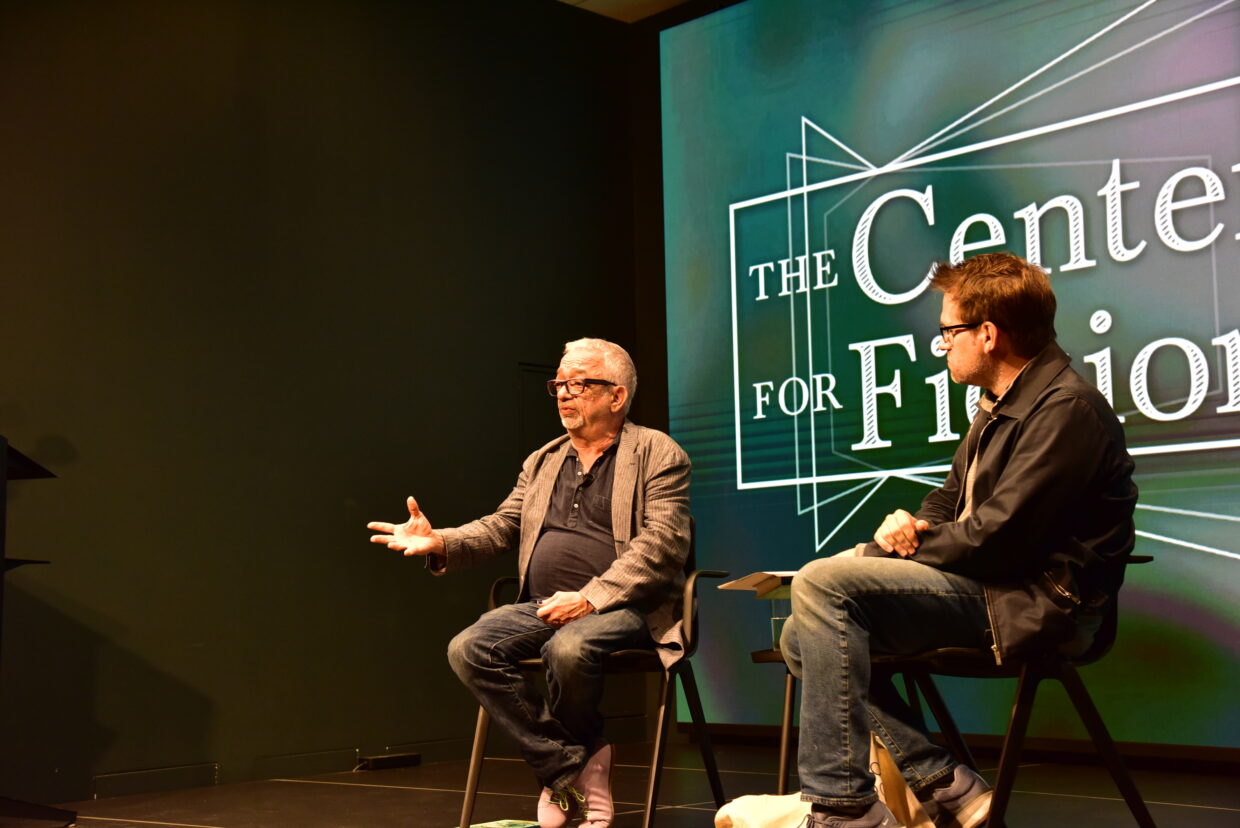
Rabih Alameddine, award-winning author of The Wrong End of the Telescope, celebrated the release of his new novel, The True True Story of Raja the Gullible (and His Mother) at The Center for Fiction.
Wildly original and wickedly funny, Alameddine’s latest explores the profound bond between a mother and son across decades. Set in Lebanon, the story is told in the unforgettable voice of Raja, a beloved philosophy teacher and “the neighborhood homosexual.” When Raja embarks on a writing residency in America, he gains long-sought distance from both personal and national turmoil. But his journey soon compels him to confront the past, weaving a powerful narrative of memory, identity, and resilience.
Author and editor John Freeman, who co-edited the forthcoming Penguin Book of the International Short Story with Alameddine, joined Alameddine for a compelling discussion of this tragicomic love story.
From the conversation:
John Freeman: Well, one of my favorite lines in the book is, after Raja emerges from this experience, which I don’t want to say more about, just, please read the book and get to this section, because it will really blow your mind. He’s asked to interpret it, and he says that what was traumatic was returning to this reality, and not what happened to him there. And I feel like that can apply to so many sections of his life. But also, I feel like it applies so much to the tornadic reality we live in right now. Or you might be in some difficult circumstance, but returning to what is presumed to be normal is almost worse. Have you experienced that in the last couple of years?
Rabih Alameddine: Yeah. I mean, we go back to how it’s the stories we tell ourselves about ourselves, about what’s happening. But the world is in horrible shape. I don’t have to tell you people that it’s horrid. So how do we survive this? How do we live in a world where we’re committing genocide and some people are still cheering that? How do we live in a world where people are disappearing off the streets, where we have Gestapo with masks on, picking people off the street? If I go out now, somebody could come in a van and pick me up off the street and send me to El Salvador before I could do anything. I’m terrified of that. And I lived through that for a long time. I came over here thinking it could never happen, but it happens now.
If this is all going on, how do we survive? What kind of stories do we tell ourselves to go through this?
So here’s the thing. If this is all going on, how do we survive? What kind of stories do we tell ourselves to go through this? It has been my experience. And please, you can correct me if I’m wrong, that most people I talk to think that it will not happen to them. That’s how we survive that. Oh, they’re picking up people who look Latino, so I as a white person will not have to go through that. They might not say that openly, but most of us believe it, that it can’t happen to us because I was born in this country. It can’t happen to us because of many, many things. I don’t have to tell you, but I am going to tell you that it can happen. It starts with what they call aliens or whatever. But once you allow that, once you allow the army onto the streets, it’s a downward spiral.
So what stories do we tell ourselves? Raja, who in my mind, as fucked up as he is, is less fucked up than I am. You know, he’s someone I would like to be, he is actually able to compartmentalize and tell different stories about this. Right now I’m having a lot of trouble telling myself that everything will be okay. I’m having enough trouble that I’m not sure what the point of doing something like this is, or what the point of writing is. But it’s a big issue.
How do we go from knowing what’s happening in the world and looking at it and seeing it and not lie to ourselves about what’s going on, that yes, we are committing a genocide. It’s not happening over there. We are committing it. How do we do that? How—I don’t know about you—how do I live with myself knowing that I’m doing that? And that’s a difficult thing. But the book is funny.
JF: Well, it is also full of moments of tenderness. It never doesn’t look directly at the situation in which Raja and his mother and his Aunt Yasmine and everyone else in the book are in. But another favorite line is, “the women talked and talked, stroking each other with words.” And even as Raja is being driven to what will happen to him and take him away, which will be the kind of core experience of the book that we alluded to in that longer bit of conversation. He’s totally stoned driving in the back of an orange BMW 2002, and the night air is blowing on his face in the most delicious way. And I feel like you, in writing those moments, have sort of retrieved reality from the idea that it’s totalized by terrible things, that you can have a terrible thing right next to a nice thing. And the nice thing isn’t invalidated by the terrible thing, especially if it has to do with acts of care between loved ones, family, students, and their teacher, and—
I live with this because I am lucky enough that I can read a wonderful book and be inspired.
RA: Or inspiration. Again, it’s one of the things I mean when I say, how do I live with this? I live with this because I am lucky enough that I can read a wonderful book and be inspired. I’m lucky enough that I can listen to Beethoven’s 15th Sonata and just burst into tears. That lifts me. Raja is similar. He finds his enjoyment somewhere. The world is really horrific and we should be able to look at it squarely. But I work because I can still find some inspiration from beauty, from real beauty in this world. And some of the beauty is actually people. Though I really hate people, so it’s difficult for me to admit that. But yes, how we treat each other, then the amazing things we do to each other, is just wonderful. And it continues to inspire me.
*
Rabih Alameddine is the author of the novels The Wrong End of the Telescope; Angel of History; An Unnecessary Woman; The Hakawati; I, the Divine; Koolaids; the story collection, The Perv; and one work of nonfiction, Comforting Myths. He has won the PEN/Faulkner Award for Fiction and was a finalist for the National Book Award. He received the Dos Passos Prize in 2019 and a Lannan Award in 2021.
John Freeman is co-editor (with Rabih Alameddine) of the forthcoming Penguin Book of the International Short Story, and the author and editor of another dozen books including California Rewritten, his new book of essays. An executive editor at Alfred A. Knopf, he hosts Alta’s California Book Club once a month over zoom.
______________________________
The Center for Fiction is a literary nonprofit based in Downtown Brooklyn. Our mission is to support readers and writers of all ages and histories, and to build community through fiction. We offer a wide range of programming for local and national audiences, including Events, Reading Groups, and Writing Workshops. Our home in Brooklyn features a Bookstore, Café & Bar, Library, and Writers Studio. Members of The Center for Fiction enjoy invitations, discounts, access to our Library collection, and more. Join today.