
I’m fascinated by relationships between writers and always have been. They are often at turns intimate, competitive, toxic, and gratifying. Just as their own fictions bend and weave tales, so too do their own lives and rivalries. I am fortunate to have some very close writer friends, and they mean the world to me: we share drafts and notes, but also tea and company as we face the trials and vagaries of the publishing industry. And while I myself have been blessed with friendships and mentorships that have shaped my writerly life, I have also seen how writers can turn on one another when the pressure of a cut-throat industry collides with artistic and competitive temperaments: jealousy and competitiveness can sour the milk of the most benign friendship when, for example, one writer eclipses the other.
My novel The Rayburn Affair lays bare notions of friendship, rivalry, envy, authorship, and power. Set in both a university setting and the publishing industry, two places fraught with opportunities for paranoid rivalries and competition, I let my characters loose to claw their way out of the traps they set for themselves when they discovered how fine the line is between friends and rivals.
Here are some of my favourite books that feature creative people and their relationships with other artists or writers:
*
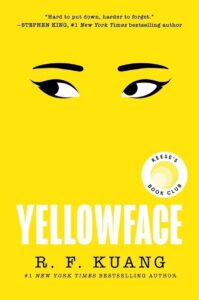
R.F. Kuang, Yellowface
R.F. Kuang’s Yellowface reads as sharp, market-savvy fiction that showcases her knack for sliding between genres. Within its pages, she delivers a cutting critique of the publishing world, including how readers use social media and how agents, editors, and other industry figures navigate diversity debates. The plot centers on June Hayward, a middling white author consumed by jealousy, who brazenly appropriates the manuscript of her far more gifted friend, Athena Liu, after witnessing Athena’s death. June has long harbored envy of Athena’s success and maintains a stance of entitled possession, even adopting a racially ambiguous alias—Juniper Song. Haunted by the sense of Athena’s ghost, she sinks deeper, convinced that she deserves the fame that she yearned for Athena. The narrative echoes recent real-world episodes where white writers have attempted to claim the backgrounds—or even the stories—of authors of color to ride a perceived shift in publishing or to justify their own appropriation. Kuang’s novel resonates with readers who pay attention to both literature and the world surrounding it, and it delivers the satisfaction of watching June’s world come crashing down.
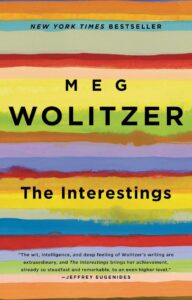
Meg Wolitzer, The Interestings
I encountered this brilliant Meg Wolitzer novel while in New York, and the city’s own energy helps the book’s world leap from the pages. At the outset, we meet a circle of gifted, starry-eyed creators at a summer arts camp called Spirit of the Woods in 1974. The conversations are infused with politics—serious, then audacious—shaped by the era. Ethan stands out as the group’s naturally talented, though not conventionally handsome, artist who calls themselves The Interestings; Jonah and Cathy are the children of a famous folk singer; gentle Ash becomes the magnetic center around which many orbit, including Jules, whose insecurities and envy propel the narration through her writerly observations. Across the book, we watch all six shed childish ideals and pursue artistic dreams with varied success and failure.
The novel probes the difficulties of shaping a life that sits both inside and outside the arts, tracing this arc from adolescence into adulthood. The friends witness each other’s triumphs and failures, sharing a sense of ownership born from decades of friendship. Against a backdrop of political deceit and a country shedding its ideals, the work asks what it means to be an artist in the world.
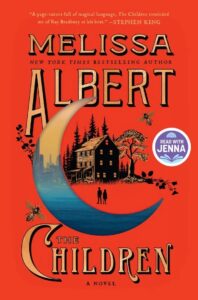
Melissa Albert, The Children
This debut adult novel from Melissa Albert—long known for her YA work—captivated me from the first page. It evokes Roald Dahl’s ability to craft a dark, adventurous tale for grown-ups, a bitter-sweet counterpart to his children’s fiction. It’s like a children’s fantasy that has gone disturbingly wrong. The story follows two grown siblings—Guinevere and Ennis—scarred by a seemingly idyllic and artistic upbringing in a Vermont farmhouse under the neglectful gaze of a gifted mother-writer and an ineffectual painter father. In that seemingly perfect setting, their mother Edith began her writerly journey with the soon-to-be wildly famous The Ninth City series, featuring characters named after and inspired by her own children. Now Ennis and Guin stand adults in the aftermath of that childhood. Where does her talent originate? Where does a muse end and something darker begin? What unfolds is a fearless tale that probes the essence of creativity and the price it demands. These themes recur in my own writing—wonderings about inspiration, drive, and fame. The book reminds me of the unsettling, almost addictive thrill I felt reading eerie novels as a child, the kind that kept me awake late into the night.
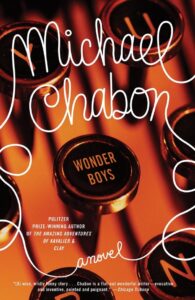
Michael Chabon, Wonder Boys
One of my all-time favorites is Wonder Boys. I even dedicated a chapter of my PhD to it, examining the coming-of-age arc that unfolds between younger and older characters as they compete, compare, and grow together. Michael Chabon blends lyrical prose with graceful storytelling in a deceptively simple setup about a washed-up writer and his talented, troubled protégé, turning the premise into an inquiry about aging, originality, depression, family, and ultimately the sense of peace in a creative life. Grady Tripp, a novelist and professor, has rested on the laurels of his first book for years and cannot finish a second novel, its word count barely at three digits. Plagued by self-doubt and the impression that his prime years are behind him, we accompany Grady and his gifted but fragile student, James Leer, as they stumble through days that are as comic as they are touching, a caper and a love letter to writers. Through a story that pairs older and younger writers, the book reveals how each can envy the other yet also learn from one another.
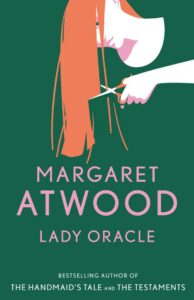
Margaret Atwood, Lady Oracle
What does a writer require to create, and to sustain a creative life? These topics have long occupied my thoughts. I’m curious about what conditions render a life and mind fertile for writing. In this early Atwood novel, we follow Joan Foster, a romance author whose attempts to escape—both in real life and in fiction—are bold and inventive. Joan bears a lifetime of trauma and secrets, and she is a complex, complete figure. After releasing a runaway feminist poetry hit, an anonymous blackmailer threatens to expose her inner life and past to the world. We witness how a writer is formed and unmade by the forces of life and art through this formidable feminist protagonist, who ultimately charts her own path inside and outside the publishing machine, regardless of those who would see her undone. Atwood’s language remains bold and lyrical without ever losing the thread of the plot, which remains fresh and distinctive even now.
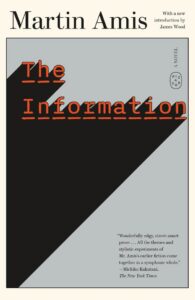
Martin Amis, The Information
Jealousy! Envy in its deepest, greenest, baldest form. Martin Amis delivers a pointed take on two middle-aged writers who are friends: Gwyn Barry and Richard Tull, one successful, the other less so. Richard’s writing career has stalled, while Gwyn’s ascendance has propelled him toward a major prize, and a trap is sprung. We watch as the intoxicating mix of ambition, rivalry, and hubris drives a wild plot as Richard’s seemingly harmless but increasingly perilous schemes to derail Gwyn’s ascent spiral into catastrophe. Amis remains as cool and sharp as ever, and the book’s dry humor paired with a dark undertone aligns perfectly with my tastes. Like many titles on this list, it looks at aging and the anxieties of authors facing a ticking clock, blending wit with a candid realism about the pressures of a fickle industry.
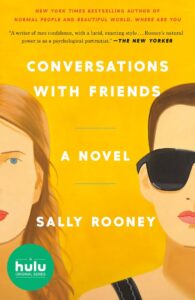
Sally Rooney, Conversations with Friends
My favorite Rooney novel, her debut, reads like a hazy cascade of conversations among a close confidant, lover, and rival, and as we learn about them, the central writer-narrator discovers her own limits and ambitions. It’s another meditation on how to cultivate mind, body, home, and social circle to foster creativity, and it asks what happens when one or more of those spheres stagnate. We meet young creators who collaborate, betray, and remain best friends: Frances (the narrator) and her bold, unreserved friend Bobbi. Frances and Bobbi enter the orbit of two other creatives—the essayist-photographer Melissa and her actor husband Nick. Frances and Nick become lovers, while Melissa and Bobbi grow closer. Frances wrestles with her own talent, her confidence, and the gendered expectations that shape her self-image amid the assurance of Bobbi and Melissa. The writing remains intimate but never stifling; it is a character-driven novel that still feels timely and accessible. Frances reads as a young author navigating the maze of adulthood, and her voice is thoroughly captivating. I enjoyed watching her explore where ideas begin, pause, and accumulate as she writes. Rooney’s deft touch shows how writing can resemble building a house with improvised tools—the tools you’ve crafted yourself without fully understanding yet. Frances is a novice navigating adulthood, and her narration is tender, precise, and wholly compelling.
__________________________________
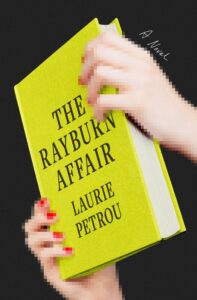
The Rayburn Affair by Laurie Petrou is available from House of Anansi Press.