
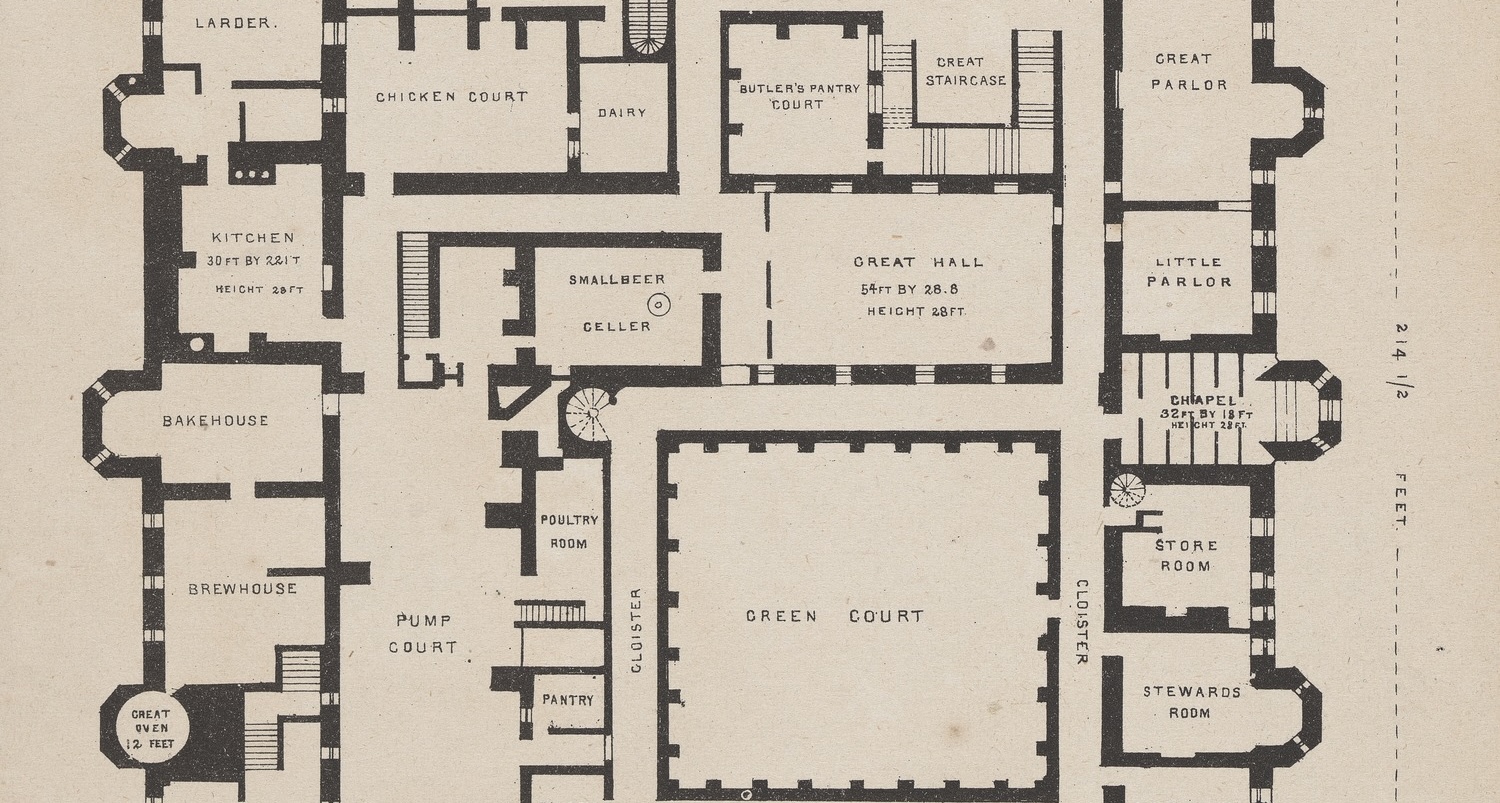
In 1976, while cruising through Marin County just north of San Francisco, a vast structure rose up from the distant hills, appearing almost extraterrestrial, as if a saucer had touched down in a meadow and carved its way into the earth.
The Marin County Civic Center, conceived by Frank Lloyd Wright.
I found myself spellbound by this odd, futuristic form. Its subdued pink hue, its long, low silhouette stretching toward the valley, and its circular and semicircular openings carried a sense of timeless calm. The edifice seemed to belong to the landscape even as it challenged it.
Back then I lacked the language to articulate what I was experiencing. All I knew was that a structure had altered the way I perceived the world around me.
Years later, I came to understand that my attraction to architecture lay in the connection between form and experience. How does a room hold memory? How does a building create a sense of place? What happens to a structure when people occupy it, weaving their histories into its own?
These questions resemble the kinds a writer might pose. A novel, like a building, possesses a framework (beginning, middle, end) that keeps its components connected: passages that guide us from one locale to another, apertures that illuminate or obscure a route. Within this framework, authors use language and rhythm much as an architect wields a straightedge and pencil. Yet the most arresting buildings, like the most compelling tales, exceed the mere sum of their parts. Something transformative occurs when human experience enters the architecture of both: memory and imagination reshape them, enabling meanings the designer may never have intended.
When I write, I return to a handful of books that have helped me think about the links between writing and architecture. Each offers a way of considering how the structures we create interface with the lives we inhabit within them. And each, in its own way, holds something to say about storytelling.
*
Gaston Bachelard, The Poetics of Space
A paperback copy of this work was given to me in 1975 by an architect friend. I devoured it from cover to cover and still own that same worn edition, its spine creased, its loose pages held together with tape.
It opened a door for me.
Bachelard writes about the house as a locus of reflection and memory. The attic, the cellar, the drawer, the corner, the nest—these ordinary spaces become charged with our interior lives. The house is not merely a shelter; it becomes a shape within us.
For writers, Bachelard offers something essential: the insight that place is never simply a physical backdrop. Rooms can carry emotional history that a character cannot always name. The most minute physical detail can serve as a portal to memory. And often a place we’ve left behind continues to inhabit us more powerfully than the place we currently inhabit.
Bachelard gave me permission to think about architecture in lyrical terms, as one might approach poetry or prose: language and imagery unlock our minds to drift beneath the surface, toward the cadence of the subconscious.
Charles Moore, Gerald Allen, and Donlyn Lyndon, The Place of Houses
The premise of The Place of Houses is unexpectedly straightforward: to study the ordinary things that make a dwelling feel uniquely personal, while situating the house within its wider community and landscape. A house should not merely look good from the outside; it should feel right to live in.
Something similar occurs in fiction. A writer imagines not only the world in which a story unfolds but how a character moves through that world. Where does she feel secure, protected, exposed? What does she glimpse from her window? Which room does she skirt? What does she haul from one place to another?
The link between interior and exterior is especially intriguing. A threshold is never just a doorway. It marks a passage between different kinds of experience, between the intimacy of the private sphere and the uncertainty that lies beyond it.
One of the authors, Donlyn Lyndon, once spoke to me about the importance of establishing a sense of place, letting the landscape suggest the patterns from which the building arises. I recall the conversation about the wild, unguarded outdoors and the shelter of the interior. Neither could be fully understood without the other; in that understanding lies the balance between outside and inside.
A story, too, fashions its own geography, a map of exposure and refuge. The spaces a character occupies can reveal tensions between inner life and outward behavior, often more eloquently than anything she says.

Christopher Alexander, A Pattern Language
Christopher Alexander’s A Pattern Language proposes that the places where we feel most at home and alive share recurring configurations. These patterns exist at every scale, from the layout of a town to the placement of a window seat. They aren’t matters of style or taste: they reflect something elemental about how people seek comfort, connection, privacy, and belonging. Like spoken and written language, which is built from simple and intricate sentence structures, Alexander’s pattern language offers a vocabulary from which countless combinations can emerge.
Authors also draw on patterns that grant a story its coherence. The intimate language between lovers and friends differs from the language used in public. A gesture repeated at various moments. An object that gains new meaning with each appearance. A place a character returns to, altered by what happened in the meantime.
Like the patterns Alexander describes, these elements can look deceptively simple. Their power rests in how they relate to one another; in the way they accumulate meaning.
There is a reassurance in Alexander’s conviction that places of great beauty and humanity can arise from patterns built up over time through lived experience. No single element needs to bear the whole weight of the design. The same is true of a novel. Its significance often rests not on a single dramatic reveal, but on the quiet repetition of images, gestures, and experiences that gradually shape the world of a story.

Christopher Alexander, A Timeless Way of Building
In A Timeless Way of Being, Alexander strives to name something inherently difficult to articulate—the “quality without a name,” or the sense that a place feels alive. It isn’t simply about style or fashion, nor is it about conventional beauty. Alexander speaks of a quality that has fire, a link to nature, to wholeness, and to impermanence. There is a similar vitality in literature. Some novels, though perfectly plotted and finely wrought in prose, still lack something essential. Others—perhaps less formally flawless—seem to breathe. Their characters linger in our imaginations long after we’ve turned the last page.
What gives a work that elusive vitality?
Alexander suggests a building attains its deepest integrity when it arises from attentive engagement with its surroundings, materials, history, and the people who live in it or will inhabit it. Rather than imposing a predetermined form, the architect must learn to hear what the place itself asks for.
In writing, we begin with an idea, perhaps a carefully planned structure, but at some moment the work makes its own demands. Characters may resist, making it necessary to revise the initial plan. There is a surrender involved, a willingness to relinquish control and trust what is emerging. The writer, like the architect, must learn when to enforce a structure and when to listen if they wish to craft something carrying that “quality without a name.”
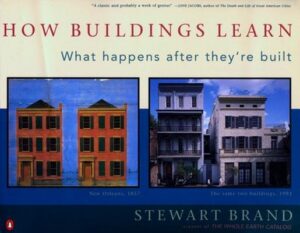
Stewart Brand, How Buildings Learn
Brand begins with a simple, radical assertion: a building is never truly finished.
We tend to picture architecture as something completed at a single moment—when the scaffolding comes down, the architect departs, and the occupants move in. Brand asks us to regard buildings not as fixed objects but as evolving forms, sculpted by time and by shifting needs of their occupants.
I find that idea both practical and lyrical.
We often imagine a story as a journey from a starting point to a conclusive end, with every loose end neatly tied. Real life rarely works that way, and the people inside a story endure beyond its visible pages. Each life began before the opening page and will continue after the final sentence. What a writer chooses to include or omit is an essential part of the craft of storytelling.
Brand’s book implies that durability comes from embracing change, not from resisting it. This is a particularly rich insight for fiction, where the past never truly vanishes, and transformation seldom means starting anew from zero.
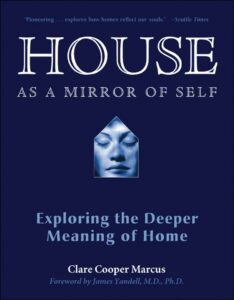
Clare Cooper Marcus, House as a Mirror of Self
Clare Cooper Marcus extends the idea of the house as a repository of memory into the realm of psychology. Drawing on Jungian thought and interviews about people’s homes, she investigates whether the places we shape around ourselves function as unconscious portraits of who we are.
For a writer, this is a particularly fertile concept. A character’s home can expose the gap between who she believes herself to be and who she truly is. A tidily ordered room might hide a turbulent inner life. An inherited piece of furniture could carry the burden of an unresolved relationship. A dwelling filled with beautiful objects might conceal a profound loneliness. The physical environment becomes a form of characterization, an outward manifestation of an inner life. And how much of what we build around us is an attempt to recover something lost? How much is an effort to become someone else? Marcus reminds us that the places we inhabit are never psychologically neutral. They actively participate in the stories we tell about ourselves, and sometimes reveal stories we would rather keep hidden.

Ada Louise Huxtable, On Architecture: Collected Reflections on a Century of Change
Ada Louise Huxtable was a critic—perceptive, exacting, and frequently unyielding—but beneath her judgments lay a deep conviction about architecture’s obligation to people. She understood that buildings aren’t mere objects of beauty; they shape how we move through cities, how we experience public space, and how we anchor ourselves within a community. What I admire about her is her insistence that architecture matters beyond the intentions of its founders. A structure exists in the world and has consequences. It can broaden our sense of possibility or limit it. It can bestow dignity, beauty, and belonging, or it can neglect the people it is meant to serve.
There is a corresponding duty in storytelling as well. A writer constructs a world and invites readers to occupy it. The choices a writer makes—whom lives are shown, whose experiences are overlooked, what is revealed and what remains hidden—shape the reader’s encounter with that world. Huxtable’s criticism reminds me that form and beauty are not ends in themselves. A well-crafted building that fails to serve those who live and work inside it does a disservice to architecture. A story, however meticulously crafted, must also serve the reader beyond simply narrating events. Its larger aim is to return the reader to the self, to spark a resonance of heart and mind.
______________________________

Restoration by Carol Davis is available from Rise Books.