
It was twilight. A horse approached, and from its speed it was clear that it intended to cross me. It wanted to leave Khanaqin as quick as possible and cross to Iran. Before it came close, I did my duty, gave myself a little shake and set off a landmine. The explosion hurled the horse into the air and it landed on its side with a loud thud.
It stood up again with great effort, shaking itself. Its body was still warm, but the horse shivered nonetheless. It tried to move, but it staggered and fell. The horse tried to rise several more times, attempting to move, yet it stumbled every time and fell back down again. Looking at itself, it noticed a gaping wound on one of its legs; steam was rising from the torn flesh and exposed bones. Its blood had drawn crooked and contorted lines on the ground, as if a painter had splashed colorful strokes on a canvas to create a postmodern masterpiece.
That night, the horse was thrashing and writhing in agony, suffering from the pain of its wound. Much of its blood had drained from its body, and as time passed, it had lost its strength and was no longer able to move. Despite the pain, it tried to nibble from the grass and plants nearby. It had become near-impossible for the horse to graze, it had no energy left and it also had to be mindful of the pieces of shrapnel and bullet casings scattered on the ground between the plants. Every time it takes a bite, its lips or teeth touched a bullet, a piece of shrapnel or a casing. When the sun finally rose, the horse resembled a weary painter who, after considerable effort, has completed his painting and fallen asleep on top of it, exhausted and barely alive.
For a few days, the horse fed on the same plants and grass and drank from the rainwater collected in a puddle nearby. About a week passed in this fashion, and the wound on its leg was healing.
*
Gradually, the horse was getting accustomed to standing on its remaining three healthy legs and falling less often.
The anti-aircraft guns and rifles of both Iran and Iraq had burst into action. From both sides, the whizzing sound of bullets, the roar of tanks, and the booming sound of artillery fire could be heard. Hence, nobody dared to approach the horse, and its owner wasn’t found. I had acquired such power that nobody dared to come near me. I had grown so tall that even airplanes and helicopters were mindful of me.
We were in the midst of war, and, astonishingly, I had become more prosperous and more powerful. In these recent years, I, too, have gained a status and influence, and with the assistance of mines and weapons of war, I have secured a place so strong that no one can dream of removing me.
Several nights passed. No matter how much I tried to talk with the horse and start a conversation, it didn’t respond and seemed dazed and confused. However, when it realized it was stuck and unable to move due to the ongoing explosions of artillery fire and bomb shells around it, understanding it could die any second, its heart gradually softened. It was no longer as restless as before and didn’t turn away from me as frequently.
Slowly, it spoke a few words. It knew there was no solution and it had to say some things. Even though I was its sworn enemy, who else did it have to speak to and share its heart with? While the horse spoke, its eyes were fixed on the sky, and it never looked downwards.
*
I lived for twenty-one years on the warm plains of Khanaqin. I carried loads and goods towards the Bamoo mountains for the Peshmerga. Now, I want to return to the place where I was born, to die where the early days of my life were spent. I wanted to become a part of that soil. Amidst the war between two governments, I now find myself trapped at the border and amazed that I have managed to survive until today, and that this half-life of mine has not become a target for the soldiers’ bullets. I can neither go upward towards the mountains nor downward towards the plains. Before the war, we used to travel without fear and hesitation, and the borders weren’t so eager to take anyone’s life.
One morning at dawn, the sky still a bit dark, I brought Barzoo and his sister Shirin, and at this very point, perhaps a little further it, we crossed the border and headed towards Khanaqin. Shirin was sitting behind Barzoo on my back, and said, “Brother! I haven’t seen Khanaqin yet. What will you buy for me there?” Barzoo replied, “My dear sister, I’ll buy you whatever you want: clothes, scarves, shoes . . .” At that time, the border between Qasr and Khanaqin had little security, and most of the time the guards weren’t even at their posts. Whenever they caught someone, they could easily be bribed with a date palm leaf.
It was around noon when we arrived in Khanaqin. Barzoo and Shirin’s relatives came to greet them. A couple of women surrounded Shirin. I still remember the words of Aunt Zmroot, who kissed Shirin’s forehead and said, “May Dawu take good care of you. You’ve grown up! Four years ago, when we came to your house, you were just a little child. How time flies!” Shirin replied, “Thank you, Aunt Zmroot.”
At sunset on the first day, Zmroot and her daughters had spread a big table in the courtyard and prepared soup, meat, and rice. That day, they paid special attention to Shirin and never left her alone.
Shirin later complained and said, “When Zmroot and her daughters brought me those clothes and dressed me up, I became suspicious. My brother was supposed to buy clothes for me, not Zmroot’s family! Later, I realized why my mother was crying when we left.”
These are small fragments of Shirin’s life that I have either witnessed or heard from her own mouth. That day was one of the worst days of her life. On his last trip, Barzoo had promised me and Shirin to Sayeh. On his return, instead of Shirin and me, he brought home some provisions, cloth, and clothes. “Shirin’s life is in your hands now!” he said, before he returned to the other side of the border, and Shirin and I were tied to Sayeh’s fate.
*
I now understood that the final return of the horse to the land of its birth was meant to reveal a secret that needed to be told.
__________________________________
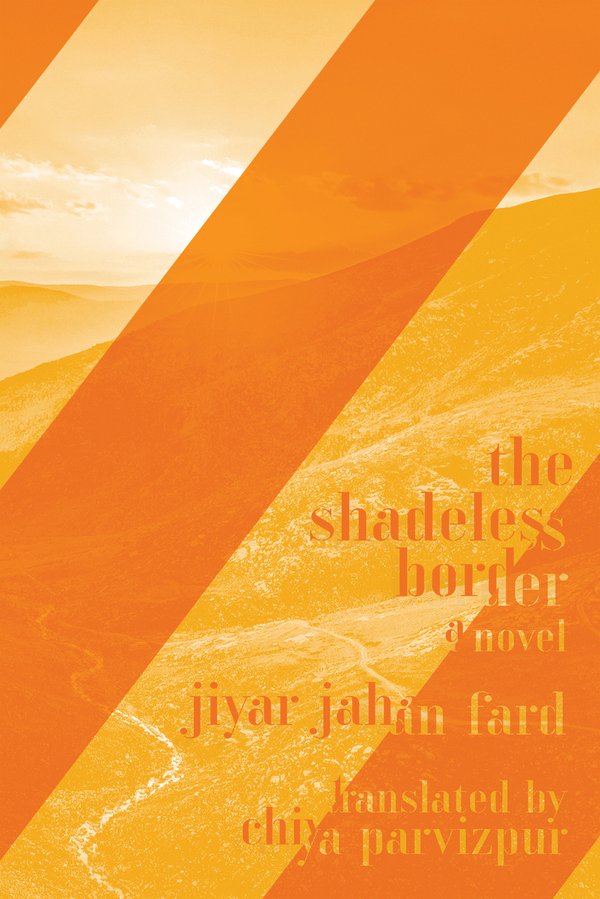
From The Shadeless Border by Jiyar Jahan Fard, translated by Chiya Parvizpur, published by Common Notions. Copyright © 2026 Jiyar Jahan Fard. All rights reserved.