
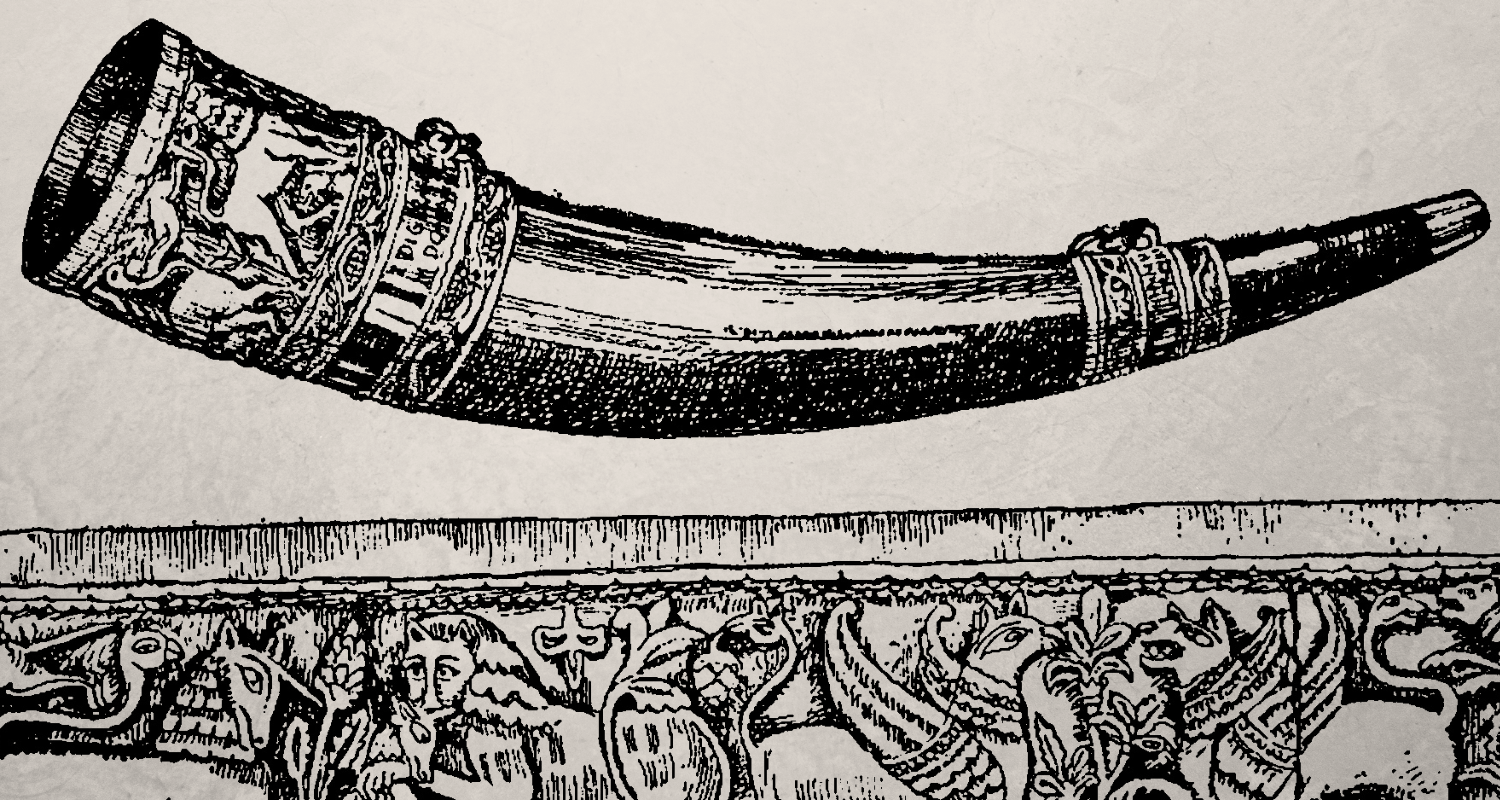
Myth makes plain that alcohol held a ceremonial weight in Norse culture, with mead standing out as a drink reserved for the divine and believed to endow drinkers with the gift of poetic talent.
In the ancient sagas, mead’s origin unfolds through a dramatic sequence of thefts. The beverage was first forged through the spit-backed peace negotiations of two warring divine lineages. From their congealed spit emerged a mystic being named Kvasir, whose very blood was mead, and through this lifeblood flowed poetry itself.
Tragically, Kvasir lacked the cunning to avoid murder by dwarves for his blood-mead, and the precious liquid was then stolen anew by a giant. Odin, ruler of the gods, craved his own share of this potent drink and, disguising himself as an eagle, he seized the mead from the giant—allegedly winning the giant’s daughter’s hand in the process. As Odin escaped the giant’s lair, some of the mead splashed from the eagle’s beak and fell to the earth. It was said that the poets of the great Norse sagas were those fortunate souls who chanced upon droplets of this fallen mead splashing to the ground from Odin’s beak.
Booze was a bind which helped keep Norse society together, with shared drinking a way of professing loyalty.
*
Beyond the wild and winding exploits of the gods in pursuit of blood-mead, much drinking also occurred among mortals in the Norse world. Booze served as a bond that kept communities connected, with communal drinking acting as an expression of loyalty and a means of formalizing agreements, from marriage to inheritance. This drinking, along with most other gatherings (and indeed any activity), would take place in the hall, the central hub of Norse life, especially given harsh winters and scarce fuel for fires. It was within these halls that the crucial business of feasting and drinking in homage to a lord or a warrior unfolded.
The feast, a lavish, sometimes days- or weeks-long showcase of hospitality and power on the part of the host, functioned as a costly but common vehicle for gift-giving and signaling respect among the elite of Norse society. Expansive halls built for such occasions resonated with music produced on bone flutes, bells, stringed instruments and rattles, and with shields beaten like drums. The entertainment would often include performances of the old sagas, and drinking was so integral to these celebrations that later sagas show those who refused to drink being shunned or tolerated with suspicion by the host’s retinue.
This social cohesion among drinkers was reinforced through sumbl, the ritual ceremony sometimes called the “oath cup.” In this rite, a woman—often a relative of the host—would distribute a ceremonial drink among the assembled guests, one sip at a time and from the same cup. It may reflect the perceived magical power of women and their role as brewers as well. The sequence in which guests were served helped define the gathering’s hierarchy, a delicate diplomatic balance masterfully managed by the host family. In the sagas, this drinking ritual is frequently accompanied by an oath or vow.
In Beowulf, the Anglo-Saxon epic recounting a saga, Queen Wealhtheow acts as cupbearer during a sumbl, greeting her husband and king, Horthgar, with the first drink before passing the cup to others in turn. Beowulf the warrior swears an oath through this bragafull-bearing ceremony after being challenged by the queen to purge her hall, Heorot, of the malevolent beast that haunts it. Yet oaths, and the keeping of them, could sometimes be of a lesser weight than defending a hall from dragons; marriages, alliances and other agreements were sealed with oaths, often witnessed by communal drinking.
For those who were neither wealthy nor powerful enough to attend the grand feasts, there were more modest venues where a drink or two could be enjoyed after a hard day along the fjords. This happened in the Skytningar, a informal tavern-like space where patrons paid their own way, rather than the host bearing the cost. Such venues attracted the less affluent—farmers, merchants and townsfolk—who often earned a reputation for a boisterous good time, regardless of the poor light cast upon them by others.
Foreign merchants were frequently blamed for the raucous atmosphere of these drinking houses, with Snorri’s Olaf’s saga noting how, between 1067 and 1093, King Óláfr Haraldsson Kyrri took issue with “drinking bouts in marketplaces about the land as a consequence of the large number of merchants.” Later Norwegian kings likewise condemned common drunkenness, with King Sverrir in 1300 delivering a speech against the intoxication of both his own people and the troublesome Germans, whose robust wine trade could rival local ales in price, fueling widespread inebriation among townsfolk.
From gods stealing blood-mead from their giant enemies, to warrior chieftains feasting, toasting and oath making in their great halls, Norse society was intertwined with alcohol.
From gods stealing blood-mead from their giant enemies to warrior chieftains feasting, toasting and oath making in their great halls, Norse society was deeply interwoven with alcohol, a relationship that carried social significance as well as artistry. Yet this seriousness coexisted with a range of informal and playful drinking traditions that filled the halls with amusement and competition—the Norse version of social games.
Countless sagas recount drinking contests, including ones staged among guests at feasts within the game of mannjafnaor. This game essentially functioned as a boastful contest in which men—and sometimes women—tested their wits against one another to determine who stood highest among peers, often by arguing who was the more formidable fighter, or who held greater prestige in a given district or hall. The exchanges could be boisterous and unruly, and the clash could quickly escalate into another drinking game known as senna, a one‑on‑one exchange of insults before a crowd, frequently delivered in exaggerated poetic couplets, with ale horns drained between verses, turning a verbal duel into a drinking duel as wit and stamina were weighed before the hall. In one saga, three men trade round after round of senna, with the following lines spoken as the crowd listens to the entertainment:
The king’s men listen to the entertainment. And they took Oddr the horns and he quaffed them both. After that Oddr rises up and goes towards them and he realises that they are conquered by the drink and at the same time that they were beyond composing poetry.
Hnùtukast was another drinking game, likely reserved for the late hours when bravado had waned; it demanded none of the bold boasting or cutting retorts of Mannjafnaor or Senna. In this straightforward contest, guests would pick up the leftover bones from the meal and, after agreeing on a set of targets—some of which might involve living participants—took turns launching them. The least successful competitor would face a penalty, often another round of drinking.
Other lighthearted, drink‑related entertainments appear throughout the sagas told by the Norse Skalds, ranging from swimming contests and mock duels to challenges that tested who could keep their head under water the longest while submerged in a barrel. It seems that nearly anything entertaining could become a drinking game within a hall full of ale‑drunk revelers.
______________________________
From History’s Greatest Drinking Games: From the Notorious to the Wisely Forgotten by Elliot Martyn. Copyright © 2026 by Elliot Martyn. Available from St. Martin’s Press, an imprint of St. Martin’s Publishing Group.