
Our lineup of standout reviews this week highlights Becca Rothfeld’s take on Rachel Cusk’s Life of M, Emmet Fraizer’s reading of Jordy Rosenberg’s Night Night Fawn, Charlotte Wood’s thoughts on Dorthe Nors’s Range, Walton Muyumba’s essay-collection perspective on John Edgar Wideman’s Languages of Home, and Elizabeth Harper’s critique of JD Vance’s Communion.
Brought to you by Book Marks, Lit Hub’s home for book reviews.
*
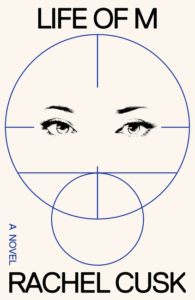
In the end, Rothfeld contends that Cusk’s attempt to fuse the “I,” the “M,” and the “We” never truly harmonizes. The book’s final move is to fragment the novel into unreconciled pieces, and it never makes a convincing case for cohesion. Despite a reputation for rigor, Life of M reads less like a disciplined reconstruction and more like a scattered, imperfect mechanism that breaks down unpredictably. As Cusk has grown more suspicious of fiction and more convinced of the documentary role of art, her writing has tended toward vagueness and abstraction, losing its edge in concrete specificity. The memoir’s tone—described by its narrator as possessing a certain authoritative weight—raises a question: should a book carry the force of an “object,” even though objects derive their authority from impermeability, which can hamstring both writing and action?
Given this impulse to dissolve particular selves into a universal essence, it’s not surprising that Cusk imagines a new kind of novel that defies straightforward labeling. After all, traditional fiction is often concerned with people tethered to social reality, not figures who embody things. In interviews, Cusk has contrasted a social way of “seeing the world” with a more art-centered mode, as if the great novels by Wharton, James, and Woolf existed apart from social observation. The We becomes almost anti-novelistic: to some readers, it might resemble a form of academic theory more than a narrative with characters and plot.
…
If womanhood feels like a fixed fact, Cusk seems to argue that she can retaliate against fiction by slicing away its conventional forms—particularly the marriage plot and the domestic concerns that have long defined the novel. When we cannot live certain experiences, we turn to writing as a way to rehearse them, sometimes by attacking the very medium that makes storytelling possible.
And yet, despite herself, Cusk does not fully purge her work of character. The presence of personhood persists, even in her most ambitious attempts to exile it. Is she attempting a form of kenosis by blending disparate voices that would normally enrich a narrative? Or is she elevating the self-importance of a universal voice that ends up sounding like a single author’s perspective—perhaps your own—presented as a broad, inclusive stance? In Life of M, the blend of voices and the distance between lofty abstractions and the book’s own commitments feels both formidable and frustrating. The prose can come across as grandiose and self-regarding, its cadences measured and solemn, yet it still presses against the messy, unpredictable realities of difference.
Yet, paradoxically, Rothfeld’s assessment suggests a preference for a genuine voice over a voice-less experiment. If someone truly shed their individuality, they would simply exist without intervening in the world, like a rock. Cusk’s continued writing, then, becomes indirect proof that she cannot fully realize the negation of self she seems to desire. In Parade, she writes that “a novel was a voice, and a voice had to belong to someone.” If she ever achieves a state of being no one, she would relinquish novels that yearn to escape their own form. Instead, there would only be a flash of white light, emanating from nowhere in particular, casting the void in a bright, empty glare.”
–Becca Rothfeld on Rachel Cusk’s Life of M (The New Yorker)
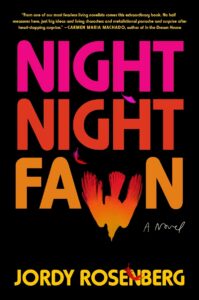
“Jordy Rosenberg’s novel Night Night Fawn tracks the unravelling of Barbara’s hopeful scheme and all the other ambitions she’s unable to realize. Those ambitions, in turn, shift focus onto her only daughter, who proves to be a lesbian, a committed Marxist—a Trotskyist, even—and, ultimately, not quite a daughter at all. The book partly belongs to a lineage of trans literature in which the parent’s perspective is foregrounded, rather than the child’s, though Rosenberg keeps the ethnographic lens typical of such narratives aimed at Barbara, scrutinizing her Zionist and gender beliefs. The Rosenberg family, like many households, is supposed to pass down core values from parent to child, yet Night Night Fawn shows how such transmissions can fracture, and it hints at broader possibilities when a parent’s failures become a chance for change.”
…
“Barbara’s demise, under the care of J., whom she had long since purged from the family orbit, becomes even more eerie as J. begins to resemble a creature—feathers, a beak, hair turning to shadow—an escalation of fear that shifts Rosenberg’s satire into speculative fiction. The goal is to make the reader understand a transphobic viewpoint by showing it embodied as a creature, a tactic that foregrounds the discomfort of the reader’s own complicity. The result is a narrative that demands the reader’s active engagement with a difficult point of view, not to endorse it, but to illuminate how it operates in the realm of intimate relations.”
…
“In a 1998 essay from Mourning Becomes the Law, philosopher Gillian Rose argued for a different kind of Holocaust film—to draw viewers in so that they identify with the Nazi enough to share their moment of decision, forcing them to confront their own potential complicity. Rosenberg cites this idea as a touchstone, underscoring his aim to expose a mother’s Zionist responsibility while making clear that such attitudes aren’t confined to one person’s family. Night Night Fawn is at once a ruthless portrait of Barbara Rosenberg and a broader meditation on the way Zionism can be shaped within households, and how those personal stories can illuminate larger political dynamics.”
–Emmet Fraizer on Jordy Rosenberg’s Night Night Fawn (The Nation)
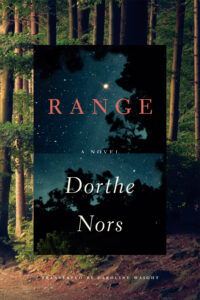
“In her fiction and travel writing—ranging from the Booker International finalist Mirror, Shoulder, Signal to the collection Wild Swims, and the memoir A Line in the World: A Year on the North Sea Coast—Nors stages characters who defy norms and pay a price for it. They observe keenly, wield humor with sharp edge, and endure a dislocation from conventional life; the term ‘misfit’ becomes a marker of complexity rather than deficiency. Yet, for Nors, the label is only a prompt to question why society insists that individuals must fit perfectly, and why the social order should open up rather than press people into a single mold.”
…
“This is a novel whose architecture—deliberately indirect, punctuated by gaps and revelations—invites readers to ‘observe, note, conclude.’ You’ll be rewarded with bursts of intensity or a quiet, luminous afterglow as the narrative discerns painful truths about solitary, self-protective longing. The language, shaped with care and painterly cadence, makes the big questions feel intimate, and the structure mirrors the emotional weather of choosing to stay apart or to connect. In Waight’s rendering, Nors’s prose often glows with clarity, weaving phrases that conjure gentle, arresting images even as they shield the reader from easy answers.”
In this translation, Nors’s voice remains luminous and precise, with passages that unfold like carefully arranged constellations—each step revealing a new truth about distance and belonging. The imagined family dynamics find their way into Gunn’s inner landscape, and the surrounding world becomes a stage for questions about how to nurture someone who may not fit the expected lines.
…
“The central meaning of Range lies in the range itself—the vast space between freedom and constraint, between distance and connection. Yet the freedom Gunn seeks can exact a heavy toll, demanding reckonings not only with the formidable Gable Woman but with Gunn’s own most estranged self. In an era when language is flattened by algorithmic ease and books are rewarded for accessible sentiment, Range stands as a defiant celebration of particularity, mystery, and the human urge to shape a voice that defies easy categorization. We should crave more fiction in this vein. Let the quirky, brilliant outliers come.”
–Charlotte Wood on Dorthe Nors’s Range (The New York Times Book Review)

“Languages of Home opens a new door in John Edgar Wideman’s career: a curated collection of essays, portraits, and nonfiction that, while reinforcing his vast body of work, signals a thoughtful turn toward reflection. Wideman’s reticence about revisiting older writings might seem surprising for someone who has long avoided nostalgia, yet the book positions his past as a wellspring rather than a trap. A writer who has often rejected looking backward, he nonetheless gathers material that clarifies how his past informs the present and where it may lead next.”
…
“This volume reads as both a record of Wideman’s craft and a guide to the African American literary tradition. It collects not only eloquent prose but also a practical handbook for working within the essay form and improvising within Black vernacular practices, demonstrating how a writer can draw on history while still speaking in a contemporary, resonant voice.”
…
“Wideman’s reluctance to dwell on the past seems to spring from a wish to keep his earlier efforts from hindering ongoing creativity. In a 2021 interview, he explained that he doesn’t want to reread stories and regret passing up opportunities to improve a character. Yet his biographical impulses and his engagement with history have always haunted his work, resurfacing in new configurations after the publication of The Lynchers in 1973, when he entered a long period of intense, deliberate practice that reshaped his approach to writing.”
“By engaging with the Black tradition so directly, Wideman transformed Homewood—his Pittsburgh neighborhood—into a crucial site of American literature, a kind of living laboratory for experimentation and memory.”
…
“One could argue that his drive to improvise—akin to a spirited pickup game—shapes the essay’s antiphonal texture and his ongoing dialogue with Black literary legacy. The essays may not be strictly required, but they feel indispensable. Reading them is like stepping onto an outdoor court with Wideman, calling out for the next player to join.”
–Walton Muyumba on John Edgar Wideman’s Languages of Home: Essays on Writing, Hoop, and American Lives 1975-2025 (The Nation)
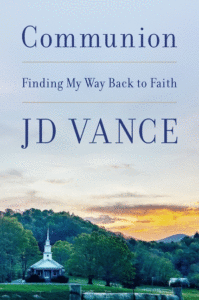
“Something feels off in JD Vance’s latest memoir, Communion: Finding My Way Back to Faith. On the surface, it seems to chart his conversion to Catholicism, yet the dust jacket depicts a Methodist church, which already hints at a more complicated spiritual trajectory. The idea of simply finding a way back is itself unusual for a conversion narrative, which typically frames a forward path. At first, this seems like a careless mismatch, but the pattern reveals itself as a deeper interior conflict that the book cannot fully resolve.
…
“If we follow Vance’s account, Communion presents a gradual, almost incremental realization of faith rather than a single revelation. My impression crystallized while reading his recollections of Yale Law School, where classmates chased coveted clerkships and sought to join a supposedly exclusive circle of elites. He never makes it into that circle, a fact he treats as a kind of odd validation; neither did Peter Thiel. This juxtaposition prompts a troubling question about his use of belonging and legitimacy.”
…
“Vance later ties his introduction to [French philosopher René] Girard to Thiel, but the book withholds details about their real relationship. Thiel’s name appears in the surrounding discussion without a transparent, direct connection to the main narrative—no mention of Vance’s job at his firm, Thiel’s support for his firm, or Thiel’s significant campaign donations, or the political accord Thiel brokered that helped Vance land a spot on the 2024 ticket. Vance’s own telling casts Thiel as a kind of Christian motivator who delivered a talk that shaped his thinking, but another talk—‘The Straussian Moment’—provides the actual framework for the memoir’s puzzling logic. Thiel’s address, first delivered at a self-funded conference and later published, blends Girard, Strauss, and Schmitt into a vision of transforming the United States into an authoritarian Christian nation-state.”