
Our grab bag of gorgeous reviews this week includes Sam Thielman on Lisa Hanawalt’s I Can’t Stop Thinking About Horses and Sex, B. D. McClay on Chad Harbach’s The Brightness, Meghan O’Gieblyn’s on Claire-Louise Bennett’s Kiss Kiss, Bye-Bye, James Wood on Meghan O’Gieblyn’s Will and Attention, and Jac Jemc on K Ming Chang’s Needlemouth.
Brought to you by Book Marks, Lit Hub’s home for book reviews.
*
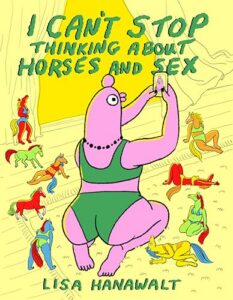
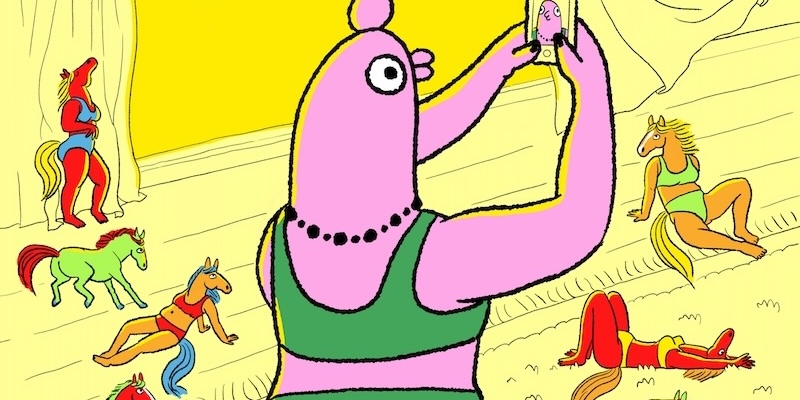
Hanawalt’s fascination with bodies—human, equine and beyond—compels readers to imagine what it would feel like for ever more ridiculous things to become attractive. The reviewer notes a particularly hilarious moment: an eroticized take on the PBS host Mister Rogers (who unveils more than just his loafers and cardigan), among a slew of witty gags.
At times, Hanawalt’s viewpoint edges into the macabre, and the shift from Richard Scarry to something terrifying can jolt the reader. She imagines a scenario where a man removes not her clothes but her skin and muscles; his satisfaction comes only when he cuts through her femur. The author’s self-portrayals swing between a pink bird, a green, Muppety monster and (briefly, literally) a butt hole.
Hanawalt’s playful vignettes and bright animal drawings conceal a precise narrative discipline. Horses and Sex isn’t merely a collection of stories; the term ‘memoir’ feels too narrow to capture its sprawling text sections, quiet sketches, and striking images reminiscent of Hockney. She is telling a story, but not the one her earnest cartoon avatar claims she’s telling; frequently, the author’s depictions contradict her character’s judgments of events.
…
“If these issues aren’t novel, it’s a relief to encounter them in such vivid, contemporary and sometimes gory detail, rather than as a scaffold for a sweeping philosophical treatise. Hanawalt wields her impressive gifts to illuminate aspects of herself she might prefer to conceal or hide. Yet her openness and sincerity feel carefully measured: Lisa openly tells readers that much of her relationship with Adam is ‘none of your business.’”
Whatever lessons Lisa gains about sexual liberation and its discontents are learned from Juniper, who is navigating the same terrain and is just as fragile and emotionally volatile as the author. But while Lisa’s endless introspection—the I Can’t Stop Thinking portion of the title—often brings her to tears, Juni has avoided self-knowledge altogether. She isn’t crying. She’s just a little horse.”
– Sam Thielman on Lisa Hanawalt’s I Can’t Stop Thinking About Horses and Sex (The New York Times Book Review)
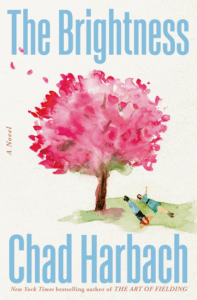
“Across The Brightness, the inhabitants dismiss ambitious realist novels—whether historic or contemporary in focus—as ‘not exactly the news about how we live’ or as dull, ‘mashed-potato realism.’ The middlebrow realist is a skilled technician, superb at mimicking experience, yet nothing more. These lines, spoken within a large, enjoyable novel that could be described as quasi-historical and even accused of carrying a ‘whole boring “plot” ’, begin to hint at a preoccupation with whether such books merit anyone’s time. The book’s own existence says yes; its characters respond with maybe.
…
“The fictional templates Harbach references—whether in-text (like Wharton’s tale ‘The Pelican’) or in interviews (for instance, about Anna Karenina)—attend to social judgments and situations. They explore what constitutes fair and unfair ostracism, the fragility of reputation, who gets away with things and who does not. They recognize that human relationships and inner life exist within a world that shapes not only actions but what people conceive as possible. Harbach is a perceptive observer of undergraduates, their pathos and humor, but his Westish is a gentle, perhaps overly benevolent institution where even the athletes are nerds. This means the broader social dynamics stirred by rape—indeed, the possibility of rape—in tight, insular communities go largely unexamined. There’s no truly malicious figure at Westish, and thus none of the moral compromises typical of a real college: friends choosing sides, usually opting for the less troublesome party; the tacit sense that sexual coercion may be part of freewheeling social life; the surreal moment of being in a class that discusses Tess of the d’Urbervilles with someone known to have harmed others. The distinctive challenge of studying at a small college is the attempt not to know what you know about another person, in the name of learning or at least for classroom calm. These forces, which help explain why students act in self-sabotaging ways, are largely missing here, as is any sense that people are ever governed by something beyond their personal quirks or delusions.
…
“The critique within The Brightness that novels stuck in the past—whether by form or topic—don’t deliver ‘the news’ is countered by the claim that novels don’t deliver the news; the news brings the news. This holds true for art that’s experimental and political as well as for traditional work… An artist is always becoming an artist, just as Pella and Irma will always be becoming Pella and Irma. All works of art speak to people they cannot know, under problems they cannot fully grasp. To prove that a slightly old-fashioned book can still be excellent, it isn’t necessary to argue about form; what you need is prose that cares about people, a sensitivity to society, and a sense of scope. In art as in sport, a strong defense often doubles as an effective offense.”
– B. D. McClay on Chad Harbach’s The Brightness (The New Yorker)
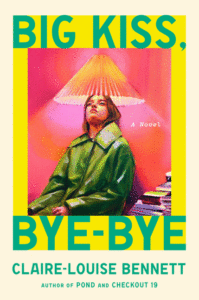
“One senses that any given text in Big Kiss, Bye-Bye (and perhaps the novel’s whole form) matters more structurally and formally than it does on the surface. There’s something compulsive and dreamlike about the book’s language, which often leans into deliberate redundancy. Recurring scenes and anecdotes recur—the memory of a former lover whose coffee spills on the sheets; a later cemetery encounter with Robert Turner, the philosophy teacher—but repetition does not clarify. At times, the prose evokes not Bernhard or Gertrude Stein but a peculiar type of buggy LLM output, a repetition degeneration, where self-reinforcing loops trap the narrative.
…
“In a 2016 interview with The Paris Review, Bennett, whose work captures the texture of consciousness more acutely than almost any other contemporary fiction, expressed skepticism about identifying too closely with one’s mental activity. So much of what happens in the mind is repetitive, she says: ‘Habit creeps into thought and cuts off other more generative possibilities. Patterns, connections, associations, they occur quite naturally, don’t they?’ If the recurring scenes and images occasionally test the reader, it’s because they reproduce, with almost intolerable fidelity, the mind’s familiar circuits. Writing can loosen this circularity: putting something on paper turns the endless mental churn into a narrative that moves forward. But Bennett works within a modernist impulse that shuns neat order and clarity in favor of capturing the endlessly unfinished work of thinking that keeps undermining and undoing its conclusions. She has said she agrees with Samuel Beckett’s claim that the artist’s task is to ‘find a form that accommodates the mess,’ a pursuit that may be self-defeating since writing makes thought’s fluidity seem fixed and final.”
…
“There are moments when the novel seems to register the closing of one’s romance with language, a wistful farewell to a medium that no longer enchants as it once did. We inhabit a world saturated with writing—emails, texts, the vast sea of online language, and machine-generated text that fills the screen faster than we can grasp it. The idea of entering a postliterate era is not unrelated to this abundance. When the written word becomes ubiquitous and cheap, its significance can feel devalued, like a currency inflated beyond usefulness.”
…
“It’s tempting to dismiss Bennett’s novels as language games—clever in form but too theoretical to offer immediate, visceral delight. Yet after a long stay with her books, one grows tired of the steadiness of conventional novels, with their backstory and reflective beats, and yearns to return to the raw consciousness that Bennett’s narrators maintain as they circle their subjects, hoping to stumble upon the unexpected. A signature move in Bennett’s prose is a refrain—often following a remark—‘Yes, that’s right.’ It looks backward to what’s already been said, yet it keeps the text feeling alive, as if the narrator discovers meaning in the act of writing, a state of continual becoming.”
– Meghan O’Gieblyn on Claire-Louise Bennett’s Kiss Kiss, Bye-Bye (The New York Review of Books)
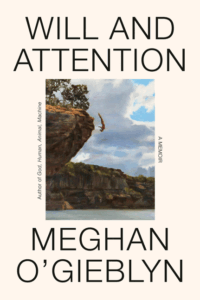
“‘God does not and cannot exist,’ Iris Murdoch once wrote, ‘but what led us to conceive of him does exist, and is constantly’ experienced and pictured.” You could frame that line—epigraph and cautionary blessing—over Meghan O’Gieblyn’s memoir, Will and Attention. In some respects it resembles a conventional addiction memoir: a young alcoholic reshapes her life, earns a decade of success as a critic and essayist, and then relapses during the pandemic. She vividly recounts a year of secrecy and collapse, followed by rescue and renewal. The arc of fall and rise is preserved: the book’s existence testifies to recovery. Yet Will and Attention is richer and more surprising than its outward form suggests. A fraught engagement with philosophical and theological texts—especially the writings of Simone Weil—it resembles an unfinished spiritual diary more than a standard redemption narrative… Perhaps the book is a memoir of an addiction to God. More painful still, to a God who does not and cannot exist.”
…
“If O’Gieblyn’s self-diagnosis is correct, the collapse of will that undermined her faith is strangely close to a possible return to faith. A failure of will is not exactly surrender; a voluntary yielding might be seen as a noble form of willing, a choosing away of will. Still, we seem to inhabit a liminal space where religious success may appear as secular failure.”
…
“One source of boldness in this book—bold in its disclosures, its demands, its spiritual rigor, and its ardent intellect—is watching the articulate sufferer steadily trap herself. I don’t mean the obvious entrapment by alcohol and organized religion. I mean something more elemental and opaque: her theology of alcoholism. The long history of linking intoxication to religious ecstasy becomes fraught here, because O’Gieblyn’s sense that the substance that ruined her life also furnishes the surrender she could not achieve through worship is what gives the book its eerie force.”
…
“A tormenting syllogism seems to grip the author: she longs to encounter God; to achieve that, she must escape her will; to escape her will, she must drink. Therefore she drinks. Or she did: this lucidly sober book recounts her release from that prison. Yet the tradition she inherits seems to have left her with a powerful suspicion of the will. Christianity has reasons to depreciate human will, casting it as the root of disobedience and much of the world’s harm. Salvation, instead, arises through grace, the unearned gift that saves us from ourselves. To blame evil on human will also helps absolve God. Yet understanding this inheritance, as O’Gieblyn so clearly does, offers little assurance that it can be escaped.”
– James Wood on Meghan O’Gieblyn’s Will and Attention (The New Yorker)
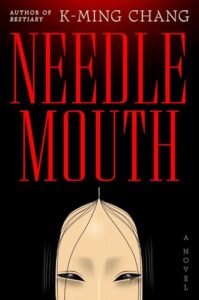
“At once a densely symbolic fairy tale and a harrowing family drama, what follows is a fever dream in which the boundaries between world-building, hallucination and metaphor blur—perhaps intentionally. A philosophical allegory in the spirit of Hermann Hesse’s Siddhartha or Kafka’s The Metamorphosis, Needlemouth asks readers to keep one eye fixed on grand metaphysical questions, making it hard to lose the thread of the story.”
“‘All lineages follow the father,’ Needlemouth tells Cindy in one of many conversations that reveal Chang’s fixation with these themes: ‘But we’ve engineered another line. A line that links me to you, wound to wound.’ Alas, the plot and backstory don’t fully illuminate where those wounds originate.”
“Readers of Chang’s prior works will recognize all of her signatures here: the potent, intricate ties among mother figures and young women; an unflinching use of grotesque imagery and visceral detail; a troubling of the line between animal and human; and a layering of past and future onto the present, implying the cyclical and simultaneous nature of time.”
“The nightmarish realms the cousins navigate on their quest to locate and kill Needlemouth’s father are replete with excrement, viscera and bodily effluvia; yet every sentence remains a joy to read, even—the most disgusting passages perhaps—the most alive. Chang dares readers to look unflinchingly at the filth of living, turning the act of reading into a somatic experience in itself.”
“The novel arrives at multiple breathtaking moments that compel characters to reckon with the traditions they were raised in and the promises they have made—to Needlemouth and to themselves. Bloodlust evolves. Rebellion reorients. And by the end we are invited to ask whether the urges toward destruction and the urges toward care could be one and the same.”
– Jac Jemc on K Ming Chang’s Needlemouth (The New York Times Book Review)
