
Our dazzling lineup of exquisite reviews this week features S. C. Cornell on Don DeLillo’s Amazons, Lauren Oyler on Donald Barthelme’s short fiction, Blair Braverman on Daniel Duane’s Yosemite Falls, Ron Charles on Daisy Johnson’s Long Wave, and Lily Meyer on Sophie Kinsella’s Confessions of a Shopaholic.
Brought to you by Book Marks, Lit Hub’s home for book reviews.
*
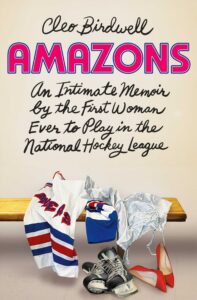
“The cardinal rule of the sports novel is that it isn’t truly about sports at all. More often, it’s about sacrifice or grandeur—the themes that writers themselves chase because they could usually find an easier path to a living. Yet fiction is tricky to stage, and for the bookish observer in a quiet room who spends hours backspacing and muttering while wandering to the fridge just to glimpse the fridge’s pale glow without really perceiving anything, the urge is to transpose career nerves into flashier arenas.
…
“If End Zone makes the point that sports can imperfectly echo war, Amazons argues, as DeLillo underscores repeatedly, that ‘athletes have bodies.’ Cleo’s body is remarkable, described by a lover as possessing ‘big-league boobs’; her face is merely average. Reporters in sports journalism labor to capture Cleo’s essence… The work mostly unfolds as a sequence of sharply etched DeLillian dialogues before Cleo beds a new partner—at one moment, even hauling an unconscious man onto a rug. ‘This is the second consecutive chapter ending with sex and intimate lighting,’ Cleo notes at the close of the second chapter. ‘There’s a long tradition behind this, but I’m not sure I want to be part of it. There must be other ways to end chapters, and I intend to find them soon.’ And yet, she never does.”
…
“If sports fiction typically centers on greatness, erotica tends to orbit power. In Amazons, the dynamic is straightforward: Cleo possesses everything she desires. There’s no real back-and-forth, no genuine confrontation of gender dynamics on the ice or in bed. Her ability to skate with the men never shakes, and that lack of stress is telling. Cleo excels at her craft, and she contemplates her job as little as a store manager facing Black Friday—except, perhaps, for moments when she anticipates impending violence.
…
“We may owe a debt to queer culture for the revival that makes Amazons legible in the first place. The Times reported that DeLillo decided to reissue the novel amid chatter surrounding Heated Rivalry and the surge of hockey erotica. I’d rather not buy into the premise, because the lofty DeLillo I imagine would never adjust his stance for such crass commercial reasons. A central subplot follows Cleo’s refusal to advertise a snack brand she dislikes in real life. We’re meant to deem this principled yet silly. Still, regardless of the motive for the reissue, I’m glad it happened. Amazons is so buoyant, so plainly enjoyable on first read, that it can function as an example of a book with no obvious payoff that nonetheless leaves you fulfilled. It won’t teach you about womanhood or heroism or hockey, and it won’t reveal much about male longing—the topic that’s already been overworked. Yet perhaps that is enough. As this accomplished sports novelist once quipped, ‘Longing on a grand scale is what stirs history.’”
–S. C. Cornell on Don DeLillo’s Amazons (The New Yorker)
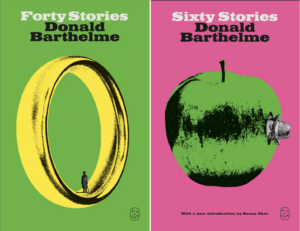
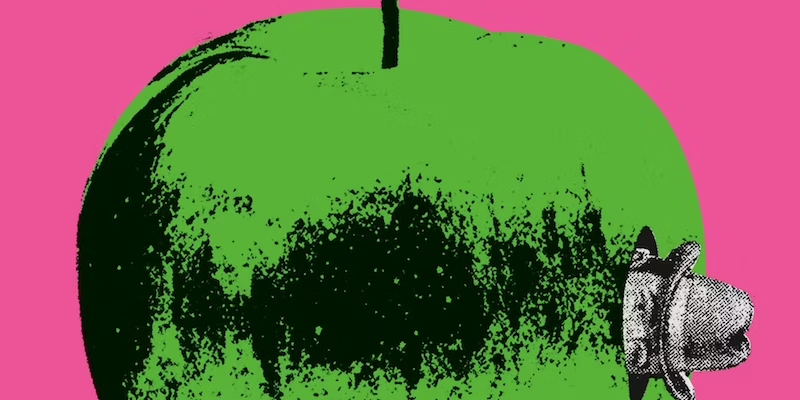
“In May of this year, Picador released newly edited editions of two short-story anthologies that Barthelme himself compiled while he was alive—Sixty Stories and Forty Stories. This review is compelled to spell that out directly, though I’d rather keep it indirect, given the subject, a dedicated postmodernist who thrived on playful complexity. It’s striking that so few critics or literary journalists have covered these reissues. In the recent period, one would expect more attention. Barthelme wrote 129 stories for The New Yorker and contributed many pieces to Comment before his passing in 1989. Because his books are not bulky—the stories are often only a few pages long—he has largely avoided the overt rebranding that many ‘difficult’ male writers of the twentieth century face; appreciating him comes without social stigma. His difficulties drift away in favor of highlighting the most cohesive, teachable moments in his body of work: the sparkling stories that carry a touch of the bizarre but remain utterly lovable, among them ‘The Balloon,’ ‘Game,’ ‘Some of Us Had Been Threatening Our Friend Colby,’ ‘The School,’ and some domestic pieces like ‘Chablis.’ The latter reads as a witty, probing monologue from a husband unsettled by his wife’s desire for a dog for their forthcoming baby. ‘What is that baby going to do with that dog that it can’t do with me?’ the narrator wonders. ‘Romp? I can romp.’
Indeed, he can. Once you read a substantial amount of Barthelme, you’ll realize these famed stories aren’t fully representative. He can be tough, straying perilously close to a cliff’s edge at times. His signature moves include unrelenting irony, rapid formal play, and a bleak view of human nature that erupts in stark ways—moments of violence, a lack of closure, and a refusal to slot the pieces of a story into a clear allegorical key. The question “What is happening?” often lingers. Many pieces don’t necessarily do what readers usually expect to call sense. Fragmentation rules. Characters appear and disappear, their significance unclear. Dialogues with no clearly identified speakers become common. Beyond standard grammar, which he mostly observes though not perfectly, a word or sentence may appear to have no reason to follow the previous one. Questions exist without answers, and answers without questions.”
…
“People gripe about irony so much that you start to wonder if we’re discussing the same thing. They can’t be talking about my irony. You don’t know him like I do! Irony has long been treated as a coolness strategy, in both senses of the term. Its detractors seem to believe every writer should be wildly hot. Anatole Broyard once wrote that reading Barthelme felt “like going to a Chinese restaurant and eating only appetizers,” as if that were a drawback; he wasn’t shy about critiquing that Barthelme didn’t ‘think about’ his tales. (The ironist is accused of thinking too much and not enough.)
…
“When it shines at its best, postmodern literature pushes readers outward, toward something larger. A collage of allusions invites digging, or at least questions; if this also spurs the paranoid mood familiar to DeLillo’s narrators, rapid shifts in form keep you from fixating on a single detail. Detractors may crave short stories that deliver what Barthelme dismissed as ‘a tiny insight usually tied to innocence violated.’ Well, too bad. The distance the postmodern ironist keeps from straightforward ‘events’ lets him actually perceive them… Complaints about irony, recycled as a reflex today, are complaints for simpler, easier literature in which everything ‘adds up.’ Yet any meaning we can glean from life remains fleeting and somewhat pointless; we move on, seeking further puzzles, quickly. Barthelme’s view may have seen something shameful in art that lingers in the familiar—but shame can be productive, just as self-awareness and recursive reflection can lead to a broader understanding of the world. It’s embarrassing to read with a narrow gaze, to deny art its mystery and its limitless possibility in the service of plain understanding, and that embarrassment can propel the effort to go beyond it.”
–Lauren Oyler on Donald Barthelme’s Sixty Stories and Forty Stories (Harper’s)
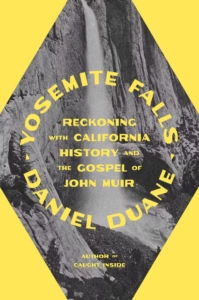
“Awe is cheap; the finest nature writing disconcerts. Yosemite Falls, Daniel Duane’s new fusion of memoir and reportage, follows men—including the author—whose lives circle around Yosemite. It is brilliantly ambivalent. By its end, the park, and perhaps nature itself, feels like a mosaic created from countless human projections layered one atop another like tinted film. Reading this book feels like adjusting your glasses: the mountain in front of you shifts color, and you’ll never see it the same way again.
Weaving a climbing memoir with a history of Indigenous genocide could easily feel unbalanced, but in Yosemite Falls the same themes—ego, solipsism, masculine pride, denial—interweave so thoroughly through every thread that they become one; trying to separate them (or viewing Yosemite through a single lens) would seem impoverished and naive.
…
“Throughout, Duane repeatedly attempts the 200-mile John Muir Trail, a quest he keeps sabotaging—bring along his unreliable father (again), bail out midway for a wedding, haul a literal library in his pack including Moby-Dick and a selection of global scriptures to help him finally understand why life felt the way it did. By the time Duane starts antidepressants for suicidal thoughts, a decision that puts him at odds with his father’s “tough it out” credo, the surrounding context of his childhood and his parents’ disappointment when he tells them makes clear the courage of that choice.”
The book’s layers are layered like sediment; ideas deepen with every page, and the title accrues new meanings as the journey unfolds. Duane trusts the reader’s acuity; weighty asides in a passing reference—’Lafayette Burnell, First White Man’ to glimpse El Cap—feel like a wink between friends, and even the most basic descriptions are phrased with precise delight (‘a fat marmot waggled its plush ass’). The overall effect is intricate, troubling, and unforgettable. One hopes this achievement earns Duane some lasting recognition.”
–Blair Braverman on Daniel Duane’s Yosemite Falls: Reckoning with California History and the Gospel of John Muir (The New York Times Book Review)
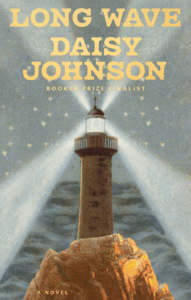
“This is a tale forged in the explosive mix of a mother’s love and fear. Across three deeply wounded generations, Johnson traces how trauma repeats itself, shaped by loneliness, poverty, and depression. I’ve never encountered a document that so powerfully conveys the sense of responsibility of caring for children, and the fear that comes with it. If you’ve ever thought, ‘I was a child once, then I became a parent, and that child harmed the child I used to be,’ you’ll recognize this ache. There’s a stubborn thread of tenderness that never snaps.”
…
“I won’t say more about that evolving mystery, except to note that describing this remarkable novel without cracking its fractured structure would be a disservice. Given its island motif, I initially assumed the “long wave” title referred to the sea, but this book hums with another resonance that keeps surfacing throughout. Later, a young radio host explains to her mother that long radio waves may falter when they encounter obstacles or bounce to different paths, arriving at different times.”
“Replacing lines of narrative with electromagnetic analogies, Johnson builds a related distortion. These moments, stretched across decades, retreat along divergent routes and arrive at varying moments. We may meet an abandoned child long before discovering what shattered her mother; we may wait hundreds of pages to learn the trigger event behind a doomed marriage. As a narrative device, such scrambling could be irritating, but as an expression of how time and trauma fold into one another, it is miraculous.”
…
“Is it too much to claim that reading this novel resembles motherhood itself—its immense demands, its valleys of despair, its unspeakable joys? Ruth’s persistence echoes through the years and across generations: ‘I am here, I am here.’ Some will never be heard. But others will.”
–Ron Charles on Daisy Johnson’s Long Wave (Ron Charles Substack)
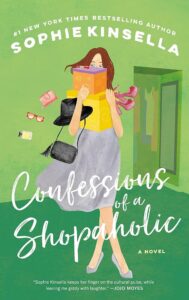
“Confessions of a Shopaholic first appeared in the United States twenty-five years ago, and some aspects of it still hold up. Becky’s lively warmth remains entertaining, and the debt she accumulates will likely feel familiar to readers today just as it did at the start of the century. Yet the texture and textures of her shopping—the swipes of physical credit cards, the wandering through department stores—date so much with today’s reality of consumer life that the novel reads like a time capsule.”
…
“Still, unlike many of its peers, Confessions of a Shopaholic is fundamentally a solitary, even lonely work. Becky’s obsession with shopping overshadows other relationships. This may explain why the film adaptation hasn’t endured as a classic; it sits apart from the enduring fame of Bridget Jones’s Diary or The Devil Wears Prada, which thrive on friendship, romance, or careers built around collaboration. Those stories translate more readily to the screen. Yet the central bond in Confessions of a Shopaholic is Becky’s link to, and longing for, material things. Her most intense feelings appear when she shops, an activity she mostly performs alone. Consequently, the most engaging passages are interior monologues directed at objects unwilling to return her feelings. The movie adaptation, featuring Isla Fisher, makes valiant attempts to recreate these moments—one scene even has a mannequin addressing Becky—but it cannot recapture the novel’s core drama, which resides inside Becky’s mind.”
If Confessions of a Shopaholic had been written in 2026, Becky would likely be even more solitary—perhaps to a degree that the narrative could falter. Kinsella, who passed away late last year, possessed a remarkable gift for carrying readers along through the sheer force of voice, yet she might not have succeeded in fashioning a compelling, relatable read from a protagonist scrolling endlessly through purchasable goods on a phone. In truth, reading the book now serves as both a reminder of how much shopping has transformed and a sobering glimpse of what lies ahead: as consumers, we are all as isolated as Becky Bloomwood.”
–Lily Meyer on Sophie Kinsella’s Confessions of a Shopaholic (The Atlantic)