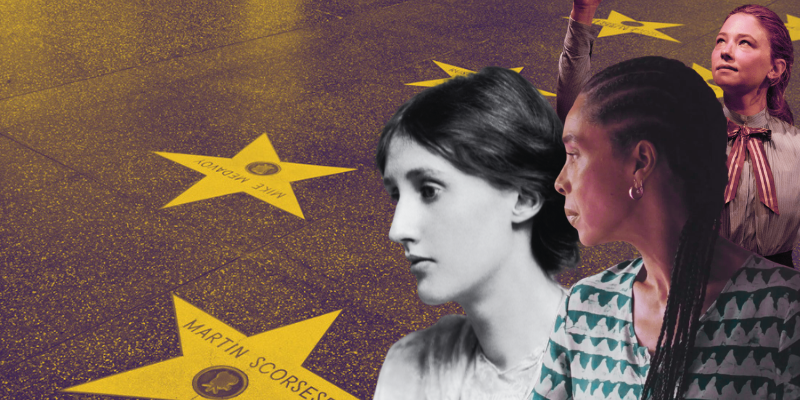
Virginia Woolf, long seen as the supreme oracle for melancholic bibliophiles, dominates the cinema landscape this summer thanks to a striking trio of fresh adaptations.
Though her writing is renowned for its cerebral heft—and, frankly, its literary pedigree—Woolf has already trodden the film path before. In 1992, feminist director Sally Potter tackled Orlando, delivering a feverish, exuberant showcase anchored by Tilda Swinton.
In 1997, Marleen Gorris, together with screenwriter Eileen Atkins, undertook an interpretation of Mrs. Dalloway, with Vanessa Redgrave at the helm—another esteemed English matriarch guiding the project. And by 2003, The Hours brought three leading ladies to inhabit different Woolfian personae within Stephen Daldry and Michael Cunningham’s collaboration.
To everything, there is a season. Yet this summer’s lineup appears to be blooming toward themes of memory and burial once more. As David Hudson noted in Criterion, “by some odd coincidence, two new re-imaginings of Mrs. Dalloway have appeared this year within weeks of each other.” And there’s even more Virginia to encounter this autumn, when Tina Gharavi’s lighthearted take on Woolf’s Night & Day arrives in theaters.
So, what’s in the water?
Like their most formidable predecessors, the new adaptations all hinge on reworking the source material. Arie and Chuko Esiri’s Clarissa relocates Woolf’s famous heroine to Lagos. The Nigerian rendition, featuring Sophie Okonedo in the title role, earned praise at this year’s Cannes Film Festival and was described by Variety as “radiant with melancholy.”
Devika Girish, writing for Film Comment, observed that the film’s class-aware and critical content within this post-colonial adaptation works particularly well in its updated setting. “Woolf’s fragmented, time- and perspective-hopping novel—about a high-society lady hosting a party and ruminating on lost, youthful loves and life choices, while elsewhere in the same city, a World War I veteran suffers from severe PTSD—is transposed nearly seamlessly to present-day Nigeria,” she wrote.
The Last Day takes similar liberties with time and place, even as it honors a Woolfian liminality. The brainchild of visual artist Rachel Rose, this textured new spin on Dalloway follows two women around present-day New York on the Fourth of July. Rose is described by Variety as renowned for “her sensorially-led video installations examining the human condition and its relationship to the natural world.” Critics have praised this Dalloway riff for its entrancing, uncanny visuals. Angie Han in The Hollywood Reporter called the film “an experience whose impact is more easily felt than explained.”
Which all speaks to Virginia’s vibes. I have my obvious guesses as to why melancholy, post-colonial concerns, and Wagner Moura are drawing the indoor crowd this summer. But what about Night & Day?
This adaptation could mark the broadest tonal shift in this bouquet. In a warm review for The Guardian, Peter Bradshaw lauded its charming leads and the whimsical touch evident in the filmmaking. He also appreciated how Gharavi’s interpretation of an early moment in the book has “creatively gone against the grain of the novel, amplifying Woolf’s single glancing reference to astronomy and making that the centre of the heroine’s yearning.”
If not vibes, then perhaps the common thread across these adaptations is simply yearning. Woolf possessed remarkable insight into much of the human condition, but it is her gift for rendering aching need that transcends time and place.
As Blair McClendon, editor of Clarissa, told Film Comment, wherever these Woolfian women travel, they confront the same problem—“which is making love work.” And then class, sex, gender, and colonialism intrude as organizing forces in their lives.
Timeless concerns.