

Who says TV rots your brain? These days, it delivers its fair share of great storytelling, whether original or adapted. But this is Literary Hub, after all, and so as the weather gets cooler, we’ll be hunkering down with some long form literary adaptations. The only question is: which ones?
Earlier this year, we asked for your help determining the best modern literary film adaptation, and now we’re back to consider the best literary adaptations* ever to grace the small screen, using what is obviously the most scientific and objective method of selection: a bracket.
We separated our favorite TV adaptations into four loose quadrants, as the format requires: Carnage, where you’ll find shows that trade in violence, brutality, and horror; Carnal, where we put the shows that foreground sensual, sumptuous pleasures of the body (like sex, but also food, and also gossip, and also sports); Cerebral, where you’ll find the shows you have to actually watch instead of looking at your phone; and Cozy, which is just what it says on the tin. (There is some overlap, as you might imagine; we’ve made judgement calls as necessary.)
As always, we offer a disclaimer: These initial draft picks are based on the tastes and interests of the Lit Hub staff. We’re very sorry if your favorite show isn’t here, but not really, because you’re probably wrong.
So what are you waiting for? Voting is open now, and will continue throughout the week as the field narrows. Yes, we’ll be here a while; might as well pop something in the microwave. But first, pick your favorites below.
*Anything adapted from a book, graphic novel, or short story counts here; the original text doesn’t have to be fiction, or “literary” in the generic sense.
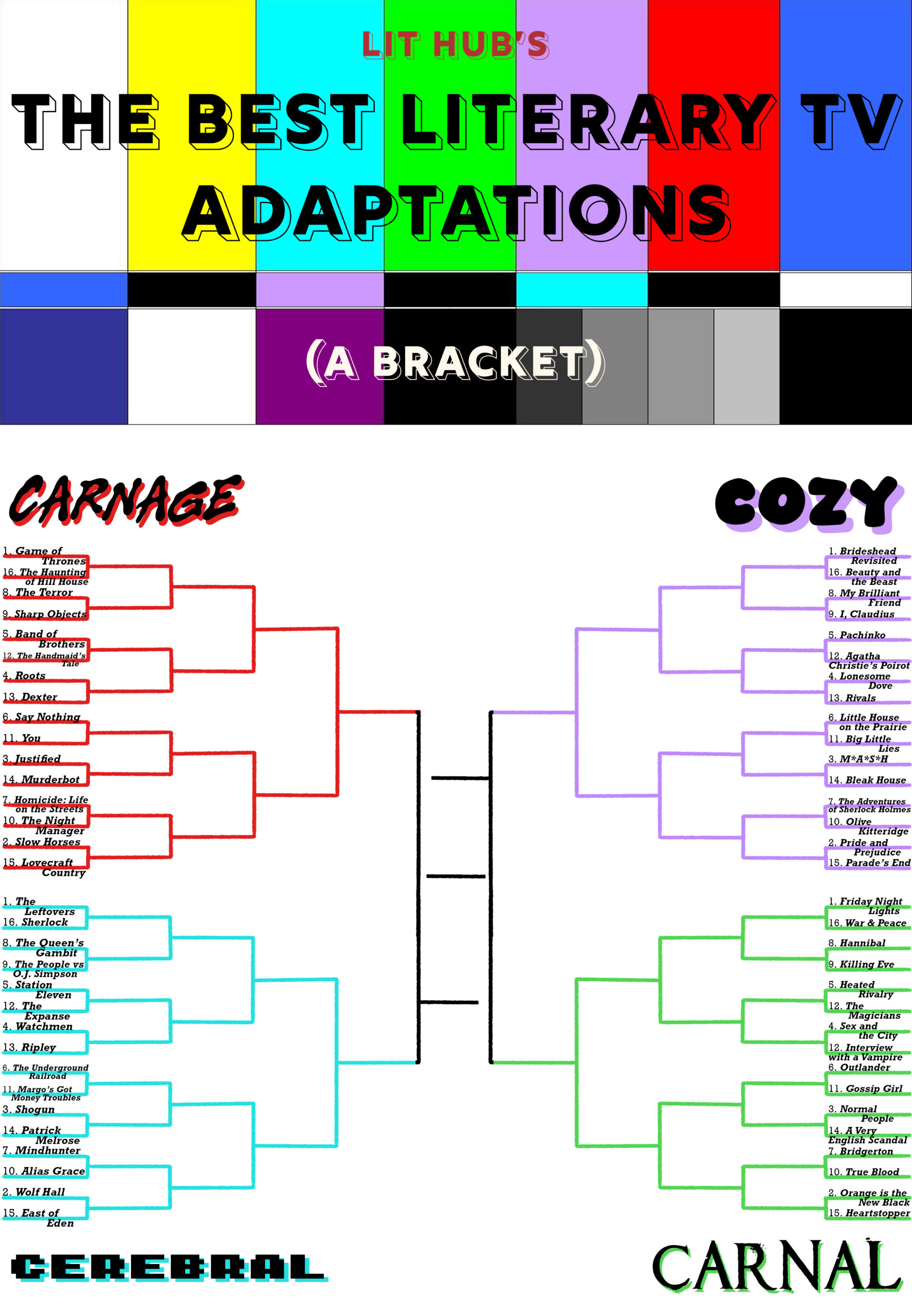 [Click image to enlarge and zoom]
*
INSTRUCTIONS:
Here’s the setup: for each pairing, pick your preferred show. We aren’t required to judge fidelity to the source above all else—though that may color your reasoning. Or not. In short, trust your instincts. We’ll tally the votes with our own artsy, liberal-arts-style math and unveil the results tomorrow.
*
VOTING SCHEDULE:
→ Round of 64: Voting is live now through tonight at 7:00 PM EST
Round of 32: Voting opens Tuesday, November 10th from 10:00 AM – 7:00 PM EST
Round of 16: Voting opens Wednesday, November 11th from 10:00 AM – 7:00 PM EST
Round of 8: Voting opens Thursday, November 12th from 10:00 AM – 7:00 PM EST
The Quarter Finals: Voting opens Friday, November 13th from 10:00 AM, and closes Sunday November 15th at 7:00 PM EST
The Finals: Voting opens Monday, November 16th from 10:00 AM – 7:00 PM EST
And the champion will be proclaimed on Tuesday, November 17th!
*
HOW TO VOTE:
At the bottom of each pairing, you’ll see a simple voting form. Click your choice and move along, as if you were flipping channels on a TV.
*
*
MATCHUP:
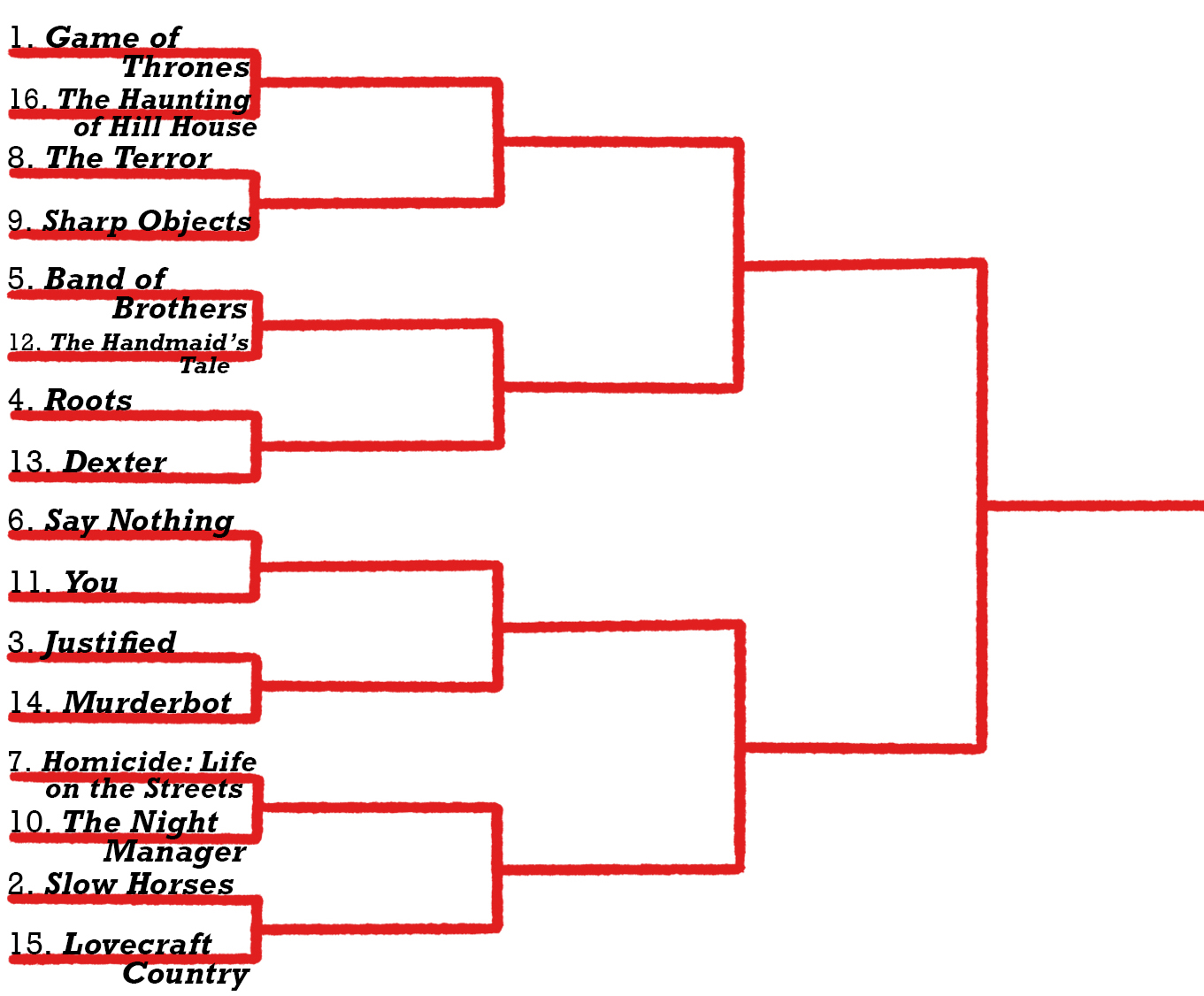
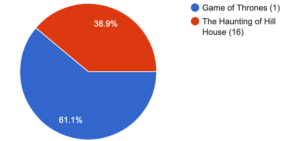
Game of Thrones (1) vs. The Haunting of Hill House(16)
******************************************
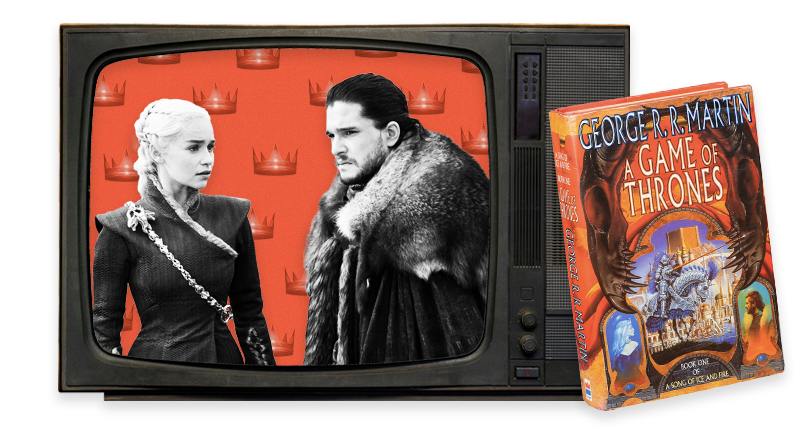 Game of Thrones (2011)
Emotional manipulation, with dragons
Based on: George R. R. Martin’s A Song of Ice and Fire books (1996–…)
Subgenres: Fatalities Galore • The Death Toll as Plot Engine • Water-Cooler Worthiness
David Benioff and D. B. Weiss reshaped a popular fantasy epic into a drama with enormous spectacle, delivering swords, dragons, morally gray characters, and unflinching violence through lavish visuals and standout performances. The books’ soap‑opera level political intrigue and the “kill‑em‑all” approach felt refreshingly new in 2011—you never quite knew who would go next, or even who would have sex!—and its popularity was astronomical: Sundays became watch‑party rituals for many. Some luster faded when the storyline ran ahead of the source text and the ending didn’t land perfectly, but the show’s influence remains undeniable. –JF
Put it on when you want a reminder that political games can feel like a battlefield.
See also:
How I Built My Own Game of Thrones Iron Throne • The 50 Best Fictional Dragons, Ranked • In Praise of Remixing Shakespeare
••••••••••vs••••••••••
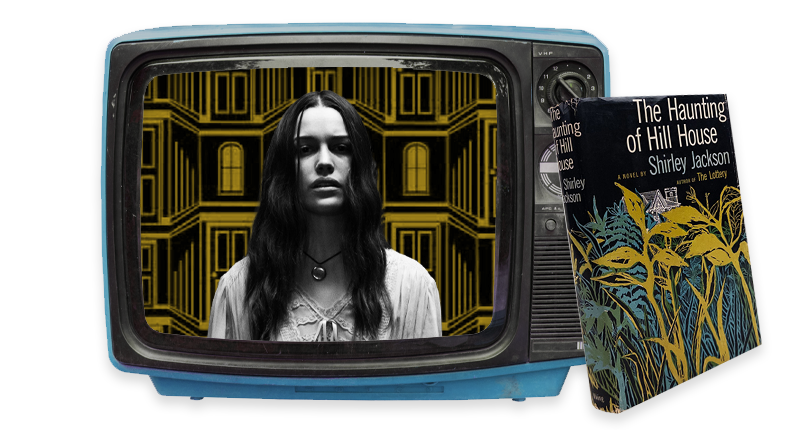 The Haunting of Hill House (2018)
How to exist sanely under conditions of absolute reality (or not!)
Based on: Shirley Jackson’s The Haunting of Hill House (1959)
Subgenres: A Family Affair • Spooky Places • Get Me Out Of Here
This Mike Flanagan–led miniseries reimagines Shirley Jackson’s horror classic by toggling between the past and present as five grown siblings keep being haunted by their Hill House memories. The ten episodes, cloaked in shadows and mist with a restrained palette of blues and greys, feature a standout cast led by Victoria Pedretti—the horror world’s new icon—along with Stephen King’s praise and broad appeal to fans of the uncanny. The series even inspired a later entry, The Haunting of Bly Manor, which quietly adapts The Turn of the Screw. –OS
Put it on when you start wondering whether the corner’s movement is light, or something otherworldly.
See also:
On Shirley Jackson’s The Haunting of Hill House Through the Lens of Childrearing • How Shirley Jackson Revealed the Darker Side of Everyday Life • Rusted Vestiges and Overgrown Eyesores: 6 Novels Set in Abandoned Places
*
MATCHUP:
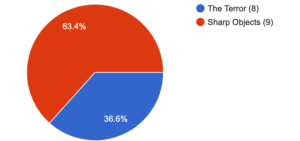
The Terror (8) vs. Sharp Objects(9)
******************************************
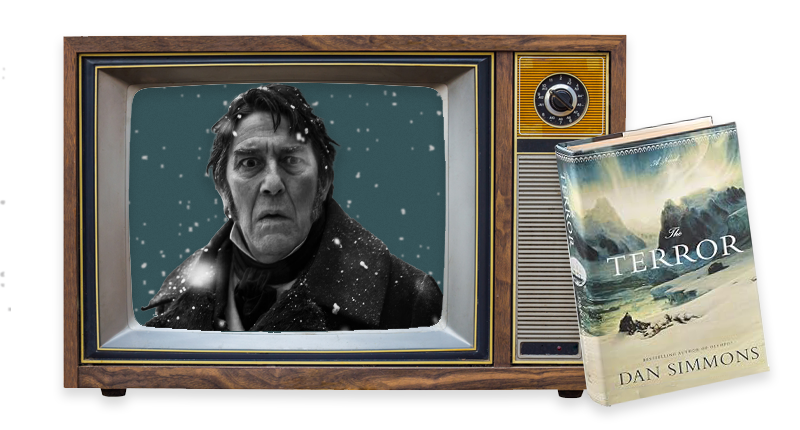 The Terror (2018)
When being stuck in ice is the least of your concerns
Based on: Dan Simmons’ The Terror (2007) and Victor LaValle’s The Devil In Silver (2012)
Subgenres: Stay On Dry Land • Monster Mode • Supernatural Chill
This anthology series makes a strong showing across its three seasons, though the inaugural season stands tall. Each season places a compact, atmospheric stage (a Royal Navy ship trapped in ice, a WWII-era Japanese internment camp, and a Manhattan psychiatric hospital) where an ominous force lurks (a sea creature, a ghost, and a possession). The ship tale is claustrophobic and taut, with fear and fatigue driving the crew toward breaking points. It’s a hybrid of creature feature and survival drama, buoyed by fine acting and makeup that makes distress palpable.
The second season retreats a touch, though the FDR era interment context adds real-world dread to the ghost story. The third season leans into a brisk, eerie adaptation of a Victor LaValle work. –JF
Put it on when you want to celebrate choosing not to go out.
See also:
On Dan Simmons’ Sci‑Fi Adaptation Pathways • Reading Dan Simmons’ Works and Their Screenings
••••••••••vs••••••••••
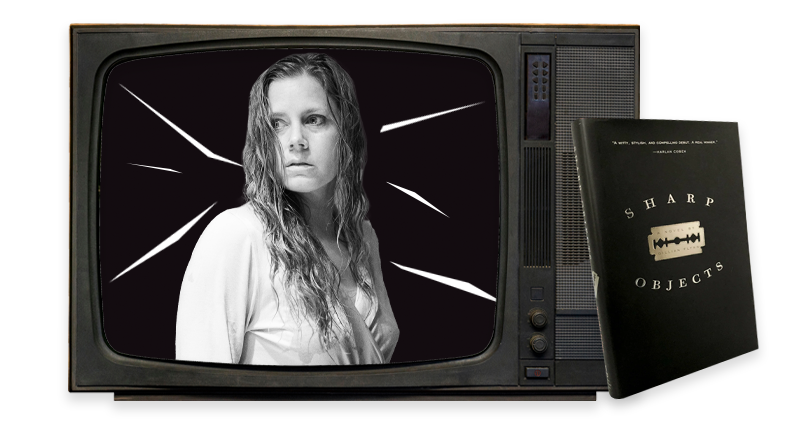 Sharp Objects (2018)
A crime saga about how messed up it is that Amy Adams and Patricia Clarkson haven’t won Oscars yet
Based on: Gillian Flynn’s Sharp Objects (2006)
Subgenres: Southern Gothic • Roller-Disco Gothic • Amy Adams Whispering Gothic • Mommy Issues Gothic
I devoured Sharp Objects in a single day, and its atmosphere is the defining mood. On the surface, it follows a reporter (Adams) drawn back to her hometown to investigate a murder, only to be pulled into a suffocating family storm. In truth, this is a show about wallpaper, dark corners, and oppressive Southern heat—a fractured mother-daughter tale told with a cracked mirror. The series itself cuts like a precise blade. –MC
Put it on when you’re in the mood for a jump scare courtesy of Sydney Sweeney.
See also:
On the Feminine Urge to Murder • Ethical Dilemmas and Moral Quandaries: Women Finding Their Power in Literature
*
MATCHUP:
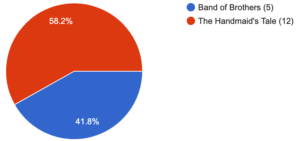
Band of Brothers (5) vs. The Handmaid’s Tale(12)
******************************************
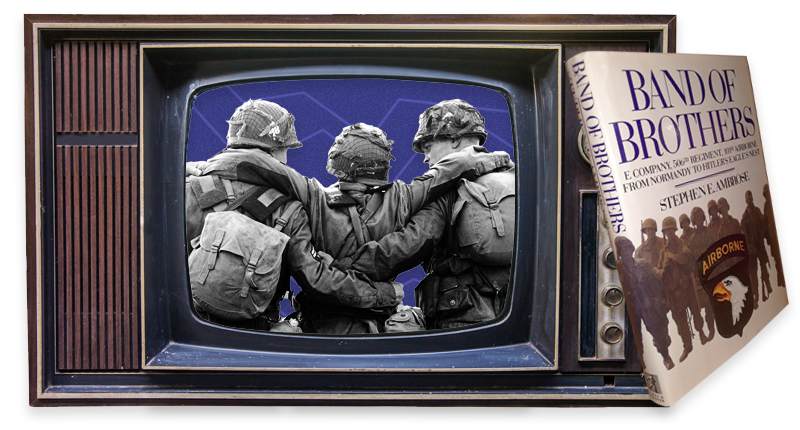 Band of Brothers (2001)
The quintessential dad series
Based on: Stephen E. Ambrose’s Band of Brothers (1992)
Subgenres: BoomerCore • Antifascism Rocks • The Jump Scare of Seeing Jimmy Fallon in a Serious Role
Tom Hanks and Steven Spielberg recognized something special after Saving Private Ryan. They joined forces again to adapt Ambrose’s nonfiction chronicle about Easy Company, an airborne unit that fought in many of Europe’s iconic confrontations. While the battle sequences and performances stand out, the series resists simplistic triumphalism: over time the war’s grind exacts a heavy toll on the men, and the finale—recounting their fates through a quiet baseball game in post‑war Germany—offers a poignant farewell. –JF
Put it on when you want your dad to tear up while saluting at the screen.
See also:
How Ross McCall Prepared for His Role in Band of Brothers
••••••••••vs••••••••••
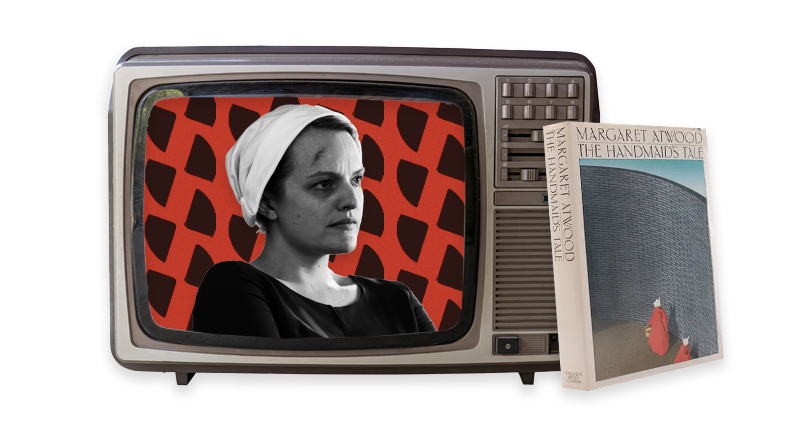 The Handmaid’s Tale (2017)
Systemic oppression with cute little hats
Based on: Margaret Atwood’s The Handmaid’s Tale (1985)
Subgenres: Color Coding • It Could Happen Here • The Discourse
The first season landed punchily, arriving less than four months into Trump’s presidency, and its bleak portrait of a totalitarian America where women are subordinated made a devastating, moving impression. An excellent ensemble—Elisabeth Moss, Samira Wiley, Alexis Bledel, Ann Dowd, Joseph Fiennes—carried the adaptation with grace and intensity.
Subsequent seasons lost a bit of ground after departing from the source, slipping into a harsher, more punitive vibe. Yet the show still offers iconic visuals and moments that linger. –ET
Put it on when you’ve just cast a vote against fascism.
See also:
The Handmaid’s Tale Adapts More Than the Novel: Here is America • Margaret Atwood on How She Came to Write The Handmaid’s Tale • Watching The Handmaid’s Tale While Transitioning • What Makes Somebody a Mother? On the New Season of The Handmaid’s Tale
*
MATCHUP:
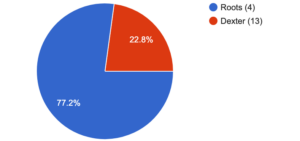
Roots (4) vs. Dexter (13)
******************************************
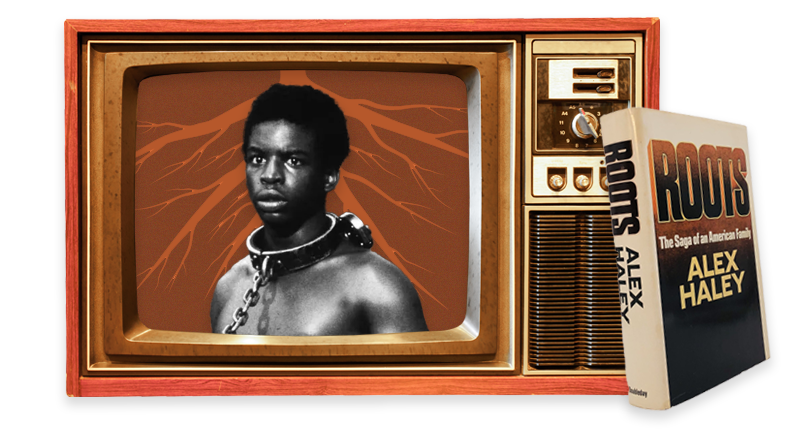 Roots (1977)
A very American family saga
Based on: Alex Haley’s Roots (1976)
Subgenres: Classroom Classics • It Did Happen Here • Generational Stories
One of the most widely watched miniseries in American television history and a foundational dramatic look at the country’s history—from slavery through the Civil War. The program almost got canceled when executives balked at its unflinching portrayal of slave brutality, including appearances by familiar white actors in incongruous roles. Haley’s book broke new ground by narrating the Middle Passage’s horrors for a mainstream audience, and the adaptation preserves that nerve, even if some nuance is sharpened for television. Anchored by strong performances, including an early showcase for LeVar Burton, it remains a landmark. –JF
Put it on when you want to remember a time when networks treated serious material with weight.
See also:
How the TV Adaptation of Alex Haley’s Roots Sparked a Cultural Awakening • Nikki Giovanni on Race, Hope, Fatherhood, and Roots
••••••••••vs••••••••••
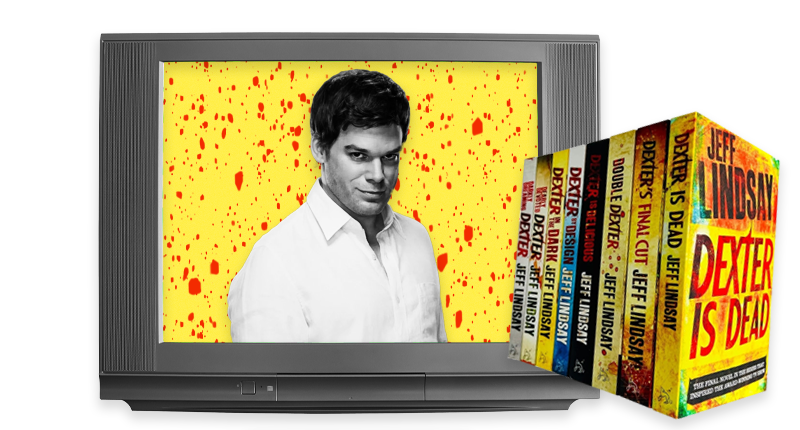 Dexter (2006)
Who kills the killers?
Based on: Jeff Lindsay’s Dexter series (2004-2015)
Subgenres: Sunny Bloody Neon Miami • Aging Actors with Wigs • Bad Police • Deeply Uncomfortable Sexual Tension
Occasionally, TV thrives on a single brisk premise. Dexter—a vigilante who also functions as a meticulous forensics analyst—offers a perennial hook: a modern antihero who targets other, worse killers. The show is remembered for its protagonist’s controlled, almost clinical workspace and for the way it mixes procedural twists with a dangerous personal dimension. The arc spans eight seasons, with sequels and a prequel, and while some supporting characters and arcs vary in quality, the core chase—one clever killer pursuing another—remains exhilarating. –JF
Put it on when you’re tempted by the wrong kind of thoughts.
See also:
Diagnosing Murder: How Addiction Became a Central Motif in Crime Fiction
*
MATCHUP:
Say Nothing (6) vs. You (11)
******************************************
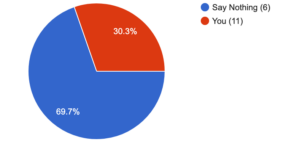
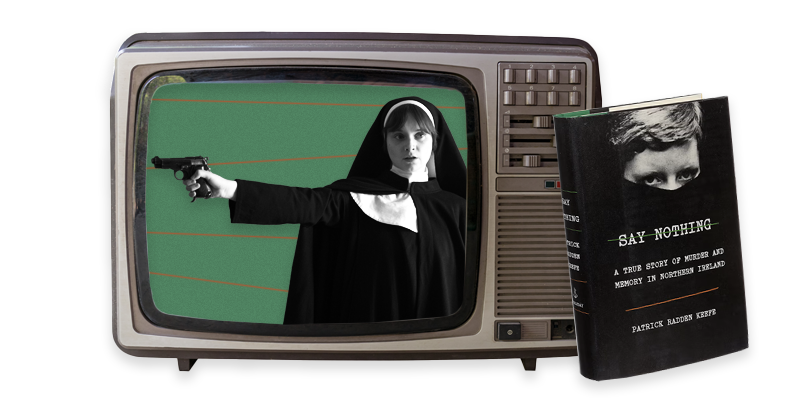 Say Nothing
A retelling of a revolutionary era
Based on: Patrick Radden Keefe’s Say Nothing (2018)
Subgenres: Based on a True Story • Fight for Your Rights • The Politics of Public Life
Patrick Radden Keefe’s gripping book introduced me to both the Troubles and a cast of determined revolutionaries. Keefe’s project centers on the mysterious disappearance of civilian Jean McConville in 1972, offering a wide lens on a long-running struggle through a handful of central figures. Josh Zetumer’s adaptation manages to render the political as intimate, and this viewer admired how the series’ structure creates space for broad questions.
Drifting from the tight focus on Dolours Price, the show allows larger debates about strategy, legitimacy, and political accountability to unfold. On the one hand, Lola Petticrew shines as a fearless, forceful presence, while on the other, you get substantial discussions about statecraft, paramilitary moves, and collective forgiveness.
I also felt, while watching, how vividly the conflict lingers. And how unsettled it remains. Say Nothing frames every single episode with a note about Gerry Adams’s denial of IRA membership—suggesting the past isn’t merely past. –BKA
Put it on when you want to topple the system in a cool sweater.
See also:
Patrick Radden Keefe on Secrets, Lies, and the Murky Line Between Licit and Illicit
••••••••••vs••••••••••
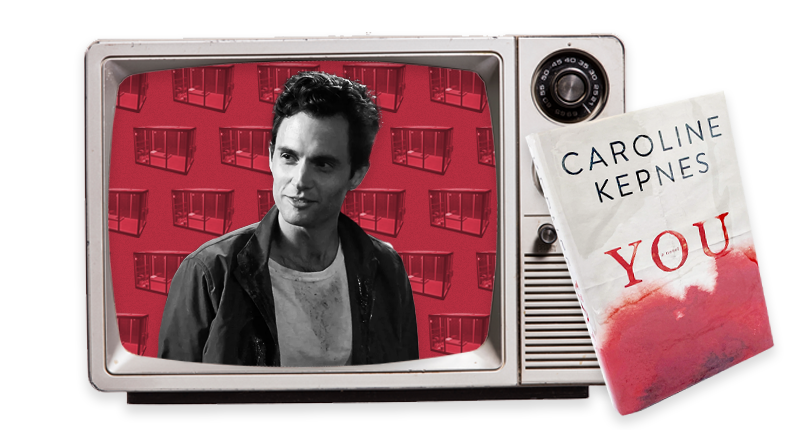 You
Gossip Girl redux, but the sociopathy is textual
Based on: Caroline Kepnes’s You series (2014-2026)
Subgenres: Everyone Dies • Stalking • Romcoms Go Wrong • Lifetime Goes Meta
Caroline Kepnes’s debut novel—about a stalker who also narrates the story—found new life on television via a streaming home that changed its tone. Under showrunning by Sera Gamble, You morphed into a deranged romantic comedy—as the hero’s devotion to love becomes increasingly chilling. Penn Badgley’s history on Gossip Girl adds a sly metafictional layer. Across five seasons, the plotting swung from refined to pulpy to ridiculous to rote, but the irresistible spark of that initial season never fully vanished. –CG
Put it on when a bookstore meet‑cute feels too good to be true.
See also:
The Fine Grim Line Between Love and Stalking • No Tense Like the Present: Novels That Embrace the Immediate • Sera Gamble on Rejection, Writing, and the Surreality of Having 50 Million People Hear Her College Poetry
*
MATCHUP:
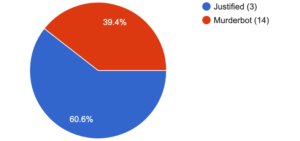
Justified (3) vs. Murderbot (14)
******************************************
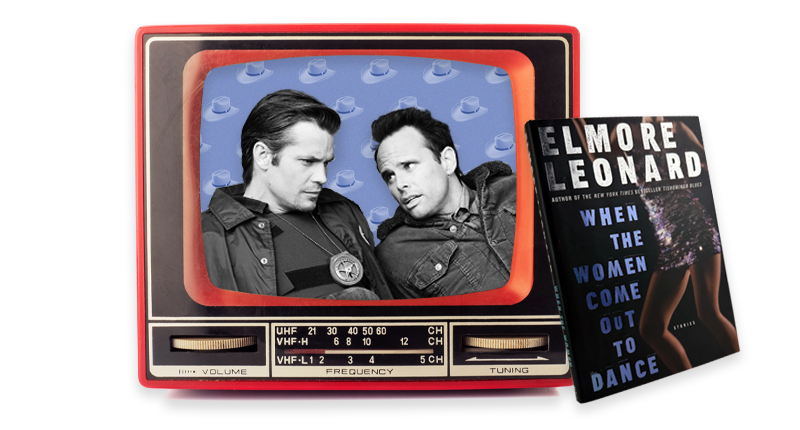 Justified
A years‑long argument for practicing one’s quick draw
Based on: Elmore Leonard’s short story “Fire in the Hole” (2001)
Subgenres: Digging Together • Big Hats • Shooty Show
You might wonder how a single short story could sustain a six‑season television run. And yet, the show demonstrates that it can be done—Graham Yost furnished the writers with a philosophy: What Would Elmore Do? You can hear it in the writing, the acting, and the vibe that fuses Southern Gothic, Western, and contemporary crime drama into a kinetic, endlessly entertaining mix. The ensemble and tone are electric, and it remains a showcase for taut storytelling from start to finish. –ET
Put it on when you wish you could act on impulse.
See also:
The Funniest Crime Novel Ever Written • 43 of the Most Iconic Short Stories in the English Language • 40 Writer’s Writers Whomst Readers Should Read
••••••••••vs••••••••••
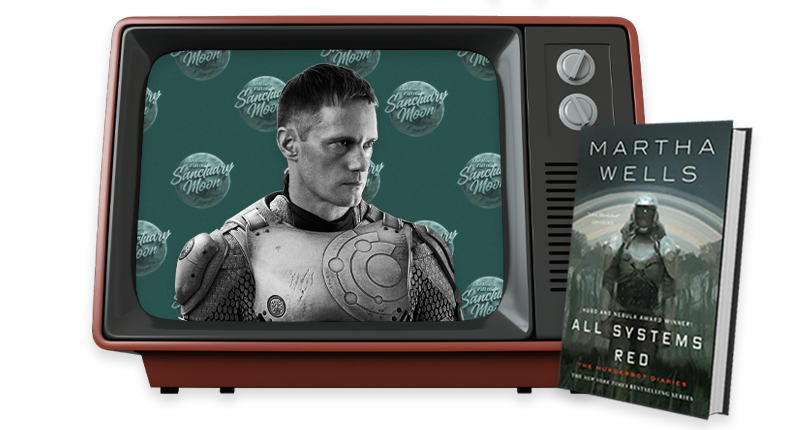 Murderbot (2025)
Antisocial software
Based on: Martha Wells’ The Murderbot Diaries (2017–2025)
Subgenres: Stealing From the Company • Even Robots Just Want to Watch TV • Humans are Weird
Alexander Skarsgård is the internet’s chaotic boyfriend this season, but Murderbot—half‑organic, half‑machine—moves with a cooler, more clandestine presence. The character has awakened to autonomy and, naturally, chooses to shirk work to binge hours of a soap opera called The Rise and Fall of Sanctuary Moon. Relatable, right? Then human complications intrude, and the show discovers how easily a witty, stylish, watchable sci‑fi premise can pull you in. The first book is a slim 160 pages, and future seasons will likely expand the universe. –ET
Put it on when you wish your phone lacked the power to listen to you.
See also:
Nine Memorable Depictions of AI in Fiction
*
MATCHUP:
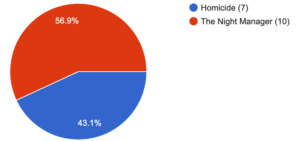
Homicide: Life on the Street (7) vs. The Night Manager (10)
******************************************
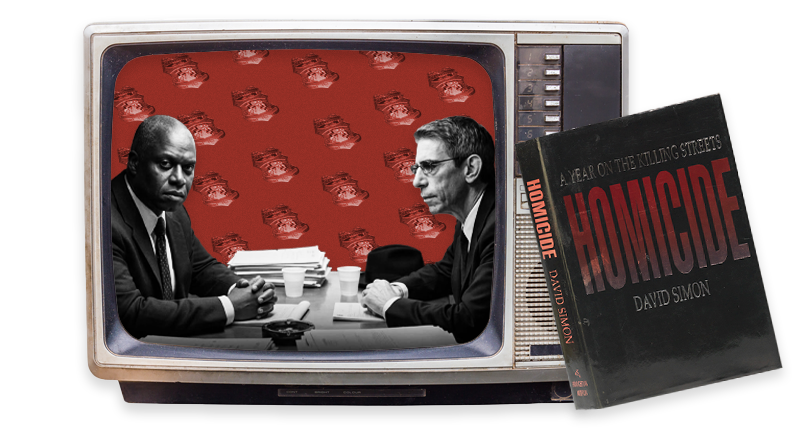 Homicide: Life on the Street
A police procedural with copaganda barely watered down
Based on: David Simon’s Homicide: A Year on the Killing Streets (1991)
Subgenres: Copaganda Lite • Baltimore as a Character • Shot on 16mm
Before becoming the godfather of prestige TV with The Wire, David Simon cut his teeth as a crime reporter. His book, a raw portrait of policing and crime, became a television project that pushed the form toward grittier realism. The show’s willingness to depict flawed cops and imperfect justice helped seed a broader trend toward harder‑edged, more morally complicated storytelling. –EF
Put it on when you want to ponder the meta‑universe of a Law & Order crossover.
See also:
The Night Kate Crane Watched the Story of her Father’s Murder Unfold as an Episode of Homicide • The Wire and Other Baltimore Shows Are Great TV, But There Are Reasons to be Wary • 5 Reasons a Writer Should Move to Baltimore
••••••••••vs••••••••••
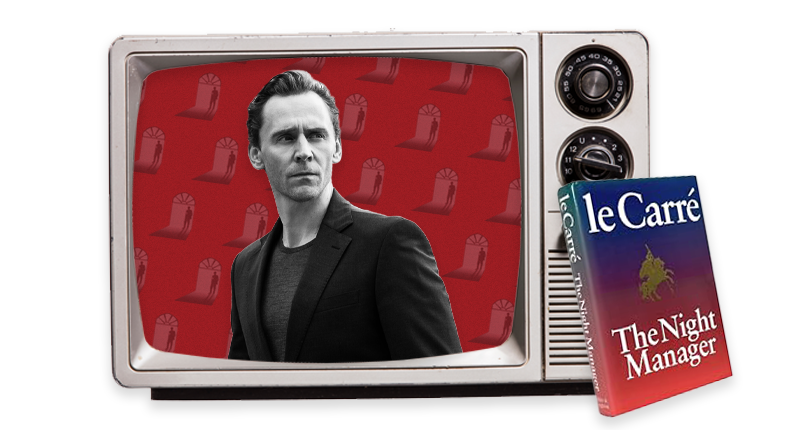 The Night Manager (2016)
Falling for the arms dealer’s wife is never a good idea
Based on: John Le Carré’s The Night Manager (1993)
Subgenres: Hidden Identities • Doomed But Sexy Relationships Between Spies • Globe‑Trotting • Secret-Channel Communications
Le Carré’s taut source text becomes a kinetic BBC thriller, translating post‑9/11 geopolitics into a lean, urgent tale. The clash between a frayed security apparatus and ruthless profiteers remains surprisingly timely. Strip away a dash of charm from the villain, and you basically have Elon Musk in a sharply tailored suit. The cast is excellent, with Tom Hiddleston, Olivia Colman, and Tom Hollander delivering nuanced performances. The second season veers into a more ornate, melodramatic reunion that some find excessive, but the first season remains a lean, propulsive run that more than justifies its existence. –JF
Put it on when you’re nostalgic for a childhood dream of becoming a spy.
See also:
A Writer For Our Time: Why John le Carré’s Work Remains More Essential Than Ever • Spying is Lying: How David Cornwell Became John Le Carré
*
MATCHUP:
Slow Horses (2) vs. Lovecraft Country (15)
******************************************
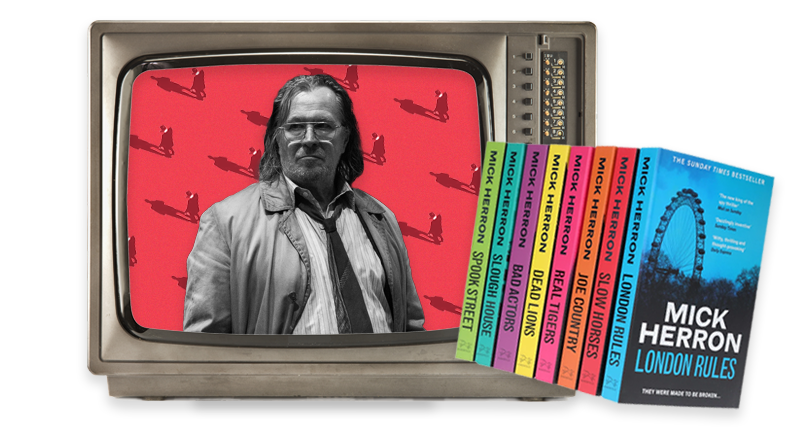 Slow Horses
Gary Oldman’s zinger vehicle
Based on: Mick Herron’s Slough House novels (2010–2025)
Subgenres: Losers • Our Peerless Leader • Highbrow Fart Jokes • Elevated Espionage
Here’s a brilliant concept: a handful of MI5 agents, all of them having bungled a crucial assignment, are relegated to Slough House to do dreary tasks so they don’t vanish from the system. Their fearless leader is Jackson Lamb (Gary Oldman), a revoltingly blunt but brilliant boss who chivies his reluctant team into heroic feats. It’s a spy drama that delights in wit and irony, balancing the deadpan with sharp satire. Kristin Scott Thomas remains a standout, and the show’s tone—partly grim, partly mischievous—lands with a distinct, satisfying sting. –ET
Put it on when your own record of failure feels heroic enough to cheer for.
See also:
Slow Horses, Starring Gary Oldman, is Worth the Slow Burn
••••••••••vs••••••••••
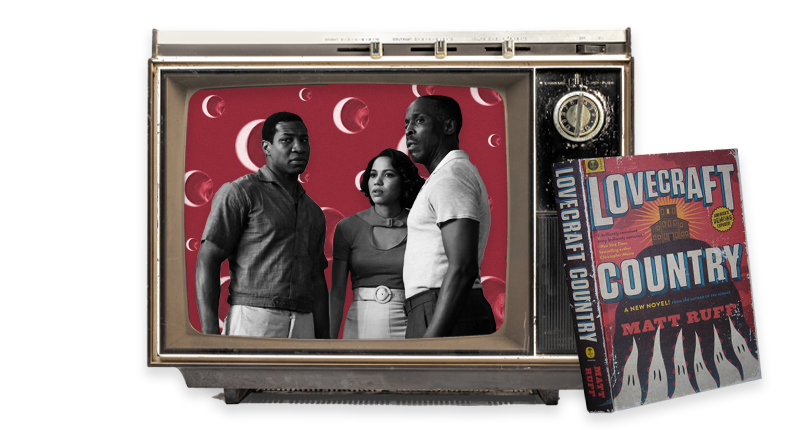 Lovecraft Country
The Elder Gods aren’t the worst thing you’ll encounter at night
Based on: Matt Ruff’s Lovecraft Country (2016)
Subgenres: Creepy Crawlies • Allegory Anthology • Before Jonathan Majors Lost It And Started Doing Ben Shapiro Movies
The show blends Jim Crow history with Lovecraftian nightmares, creating an anthology that leans into both historical horror and the uncanny. Ruff’s novel and Misha Green’s adaptation use Lovecraft’s premise of hidden horrors to illuminate real past evils. It isn’t a pure historical treatise, but a lively, effects‑driven drama anchored by strong performances and unsettling visuals. Critical responses varied, but the premise—unearthing horror that lurks beneath history—lands solidly. –JF
Put it on when you want your history served with tentacles.
See also:
What Lovecraft Country Gave to Black Audiences • In the Resurgence of Folk Horror, We Are the Villains • The Great American Road Trip Novel Isn’t Just For White People
*
MATCHUP:
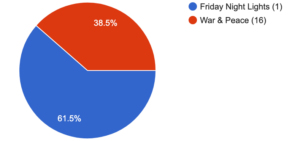
Friday Night Lights (1) vs. War & Peace (16)
******************************************
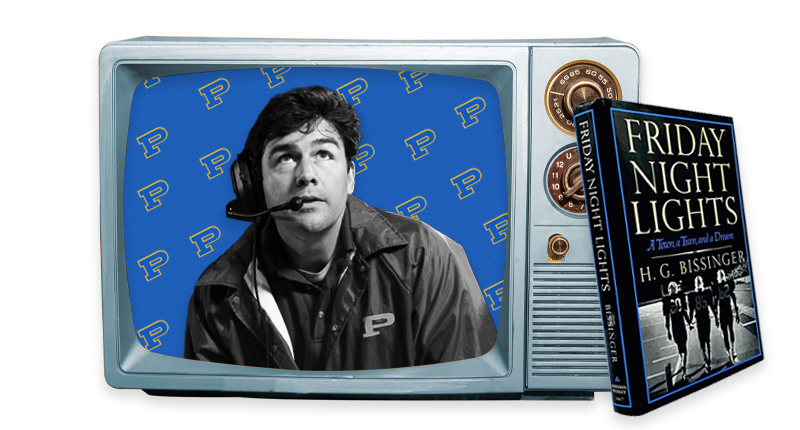 Friday Night Lights
Football is really that serious
Based on: H.G. Bissinger’s Friday Night Lights: A Town, a Team, and a Dream (1990)
Subgenres: Real Eyes Realize Clear Eyes • Multiple Adaptations • Pep Talks That Make You Tear Up • Hunks Crying
Friday Night Lights has a loyal following among folks who don’t care about football, a testament to the show’s quality and reach. The series uses the sport as a backdrop for intimate character studies and relationships. Some plots drift toward soap opera, and one season faced disruption because of the 2007 writers’ strike, but the performances remain unforgettable and the show’s cinematic approach—music choices, camera work, and spontaneous improvisation—gives it a kinetic, immediate feel. –JF
Put it on when you need a halftime speech to lift a bad day.
See also:
On the Truth and Lies of Friday Night Football
••••••••••vs••••••••••
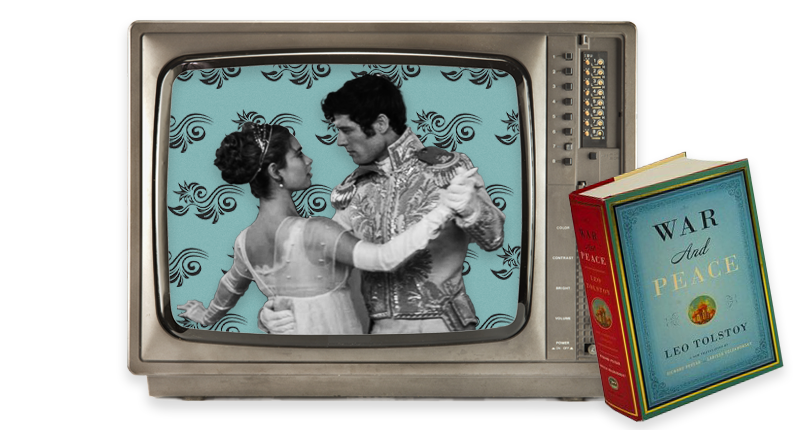 War & Peace (2016)
American (actors) in Russia (’s most celebrated novel)
Based on: Leo Tolstoy’s War and Peace (1869)
Subgenres: Napoleon’s Coming To Town • The Classics But Gorgeous • Cold In Gowns
War and Peace belongs to the canon of must‑read books, and, to no one’s surprise, there exist many screen versions. This BBC miniseries doubles down on location and costuming, presenting a polished, grandiose look that matches the scale of the original. Its cast is a mix of American leads and a host of British stage stars, with Paul Dano leading as Pierre Bezukhov and Gillian Anderson making a memorable appearance. Lily James’s Rostova, however, may feel a touch uncertain, and some reviewers labeled the adaptation overly soap operatic. Still, it remains a visually striking take on Tolstoy’s sprawling epic. –JF
Put it on when you’re curious how Emily in Paris might fare in Tsarist Russia.
See also:
How the Kremlin’s Truly Epic Adaptation of War and Peace Helped Me Write a Novel • Yiyun Li on Taking Writing Lessons from War and Peace • “I Would Not Take Prisoners.” Tolstoy’s Case Against Making War Humane
*
MATCHUP:
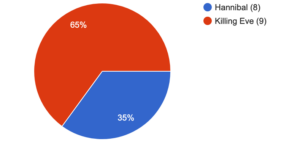
Hannibal (8) vs. Killing Eve (9)
******************************************
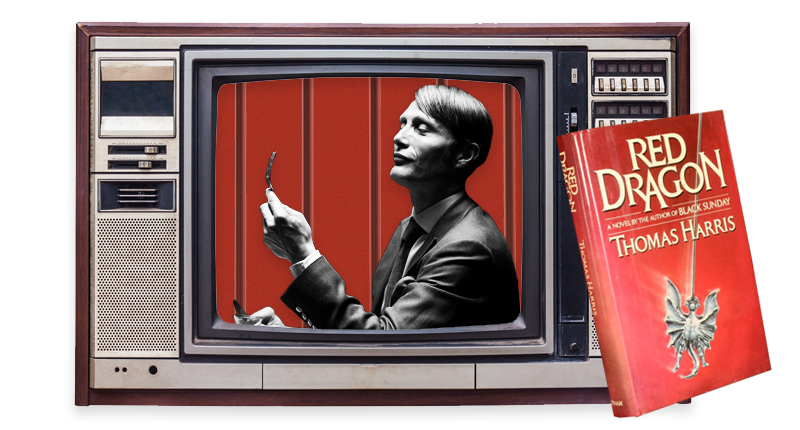 Hannibal
Cat and mouse, in love (maybe?! )
Based on: Thomas Harris’s Hannibal Lector series (1981-2006)
Subgenres: Let the Boys Kiss • Baroque Murders In A Pretty Building • Food Porn
Hannibal Lector’s screen image is often the result of two performances caught in a delicious, venomous tango. This version reimagines Harris as a weekly, case‑of‑the‑week police procedure, with the twist that the investigators are unwittingly collaborating with a charmingly cultured cannibal who pulls strings behind the scenes. Mads Mikkelsen’s Lector strides through as a classy, almost serene presence, while Will Graham, brought to life by Hugh Dancy, matches him in intensity. The show is a sumptuous feast—visually arresting kitchens, meticulously staged meals, and a dynamic tension between the pair that elevates the material. –JF
Put it on when you want to imagine yourself simmered into a delicious dish.
See also:
40 of the Best Villains in Literature • Make Our Villains Gayer, Please: Reclaiming the Trope of Queer-Coded Antagonists • Lecter’s Fangs: Why the Ending of Hannibal is a Secret Masterpiece
••••••••••vs••••••••••
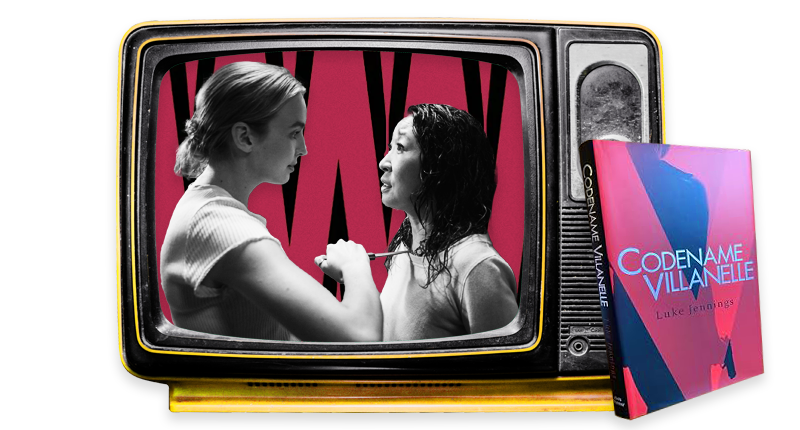 Killing Eve
What’s a little assassination between two consenting adults?
Based on: Luke Jennings’s Codename Villanelle (2017)
Subgenres: The Thrill of the Chase • Recreational Murder • Tension
The core of Killing Eve is the mutual fixation between assassin Villanelle and her hunter, Eve. The portrayal of Villanelle by Jodie Comer is volatile and fearsome, while Eve, played by Sandra Oh, reads as steady but secretly unglued. The show’s early seasons were razor‑sharp, with Phoebe Waller‑Bridge shaping the voice in season one and Emerald Fennell steering season two; opinions diverged on later seasons, especially the finale, but the memorable kitchen scene remains. –OS
Put it on when you want to live vicariously through fiction instead of dealing with your real life.
See also:
Serial Killer As Instagram Influencer? On Killing Eve’s Cool Girl Assassin • The Visible and Invisible Women of Killing Eve • Subverting the Male Gaze in Killing Eve
*
MATCHUP:
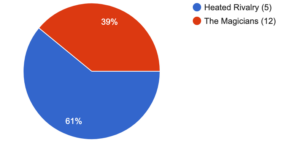
Heated Rivalry (5) vs. The Magicians (12)
******************************************
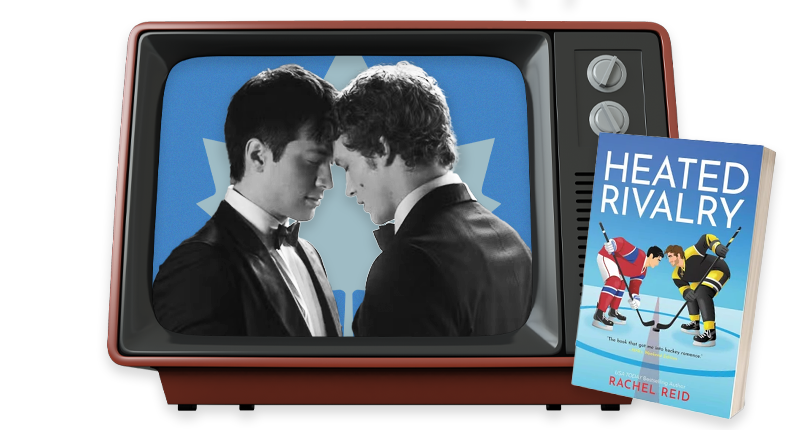 Heated Rivalry
The saucy hockey romance that sparked a thousand fanfics
Based on: Rachel Reid’s Game Changers series (2018–present)
Subgenres: Canada‑is‑awesome • Erotica on Ice • SPORTS • Yearning, Heat, and Hockey
No one anticipated a sizzling hockey series, but it happened. Originally created for Crave and dropped simultaneously on streaming platforms, the show quickly found a devoted audience. The premise follows two rival players who fall for each other over many seasons, and the chemistry between the leads—bolstered by solid writing and an underlining thread of hopeful energy—gives the series a buoyant, queer‑positive vibe. It’s a bright, romantic fantasy that’s genuinely funny and noticeably sexy. –ET
Put it on when you’re alone and looking for a fantasy that’s both affectionate and fierce.
See also:
How Heated Rivalry Imagines a More Inclusive NHL • Why Heated Rivalry is the Perfect Adaptation of the Romance Novel’s Strict Conventions
••••••••••vs••••••••••
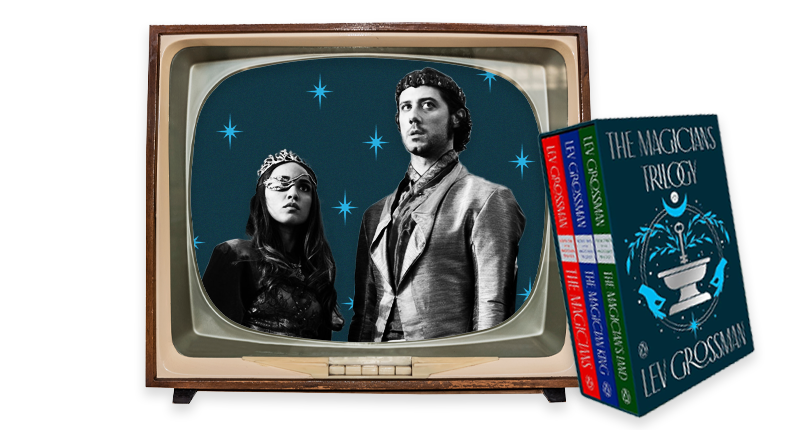 The Magicians
For fantasy nerds, by fantasy nerds, about fantasy nerds
Based on: Lev Grossman’s Magicians trilogy (2009–2014)
Subgenres: Inside Jokes for Dorks • Magic is Bad, Actually • Good Musical Episodes
After a rough start, Sera Gamble’s adaptation leans hard into Grossman’s bruising urban‑fantasy world, and the results are superb. The premise remains familiar—young heroes find themselves at a magical academy—but the tone is markedly cynical and the stakes more brutal than typical genre fare. The third season marks a peak, featuring a musical episode and a standout bottle episode, “A Life in the Day.” A core element of the franchise is myth‑making itself—these shows honor the stories we tell about ourselves, and they remind us that stories can be as consequential as reality. –ET
Put it on when you’ve exhausted your rewatch of Buffy the Vampire Slayer and still crave reality‑bending fiction.
See also:
Fantasy is About Power: An Interview with Lev Grossman
*
MATCHUP:
Sex and the City (4) vs. Interview with the Vampire (13)
******************************************
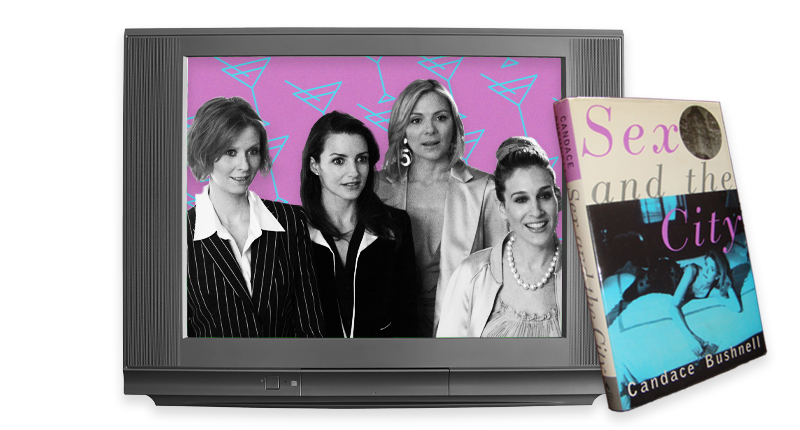 Sex and the City
The show that launched a thousand online quizzes
Based on: Candace Bushnell’s Sex and the City (1996)
Subgenres: Dating Dramas • Parade of Guest Stars • Iconic Post‑It Moments
There’s a lot to discuss about Darren Star and Michael Patrick King’s take on Candace Bushnell’s column, but a crucial piece often overlooked is how the show’s tone reshaped its source material’s edge. The magic of this series lies in its mood—the blend of glamorous New York fantasy with the rougher, more grounded reality of city life. The styling and cityscape become a character in themselves, and the show’s balance between fizzing wit and real longing is part of its lasting charm. The social world it captured remains provocative and, in many ways, predictive of later fashioning of TV tone. –BKA
Put it on when you want to recall your younger, bolder fashion choices.
See also:
How Sex and the City Exemplifies Late 20th-Century Feminist Despair • Learning About Sex from Samantha Jones • Berger from Sex and the City is the most realistic writer in television history.
••••••••••vs••••••••••
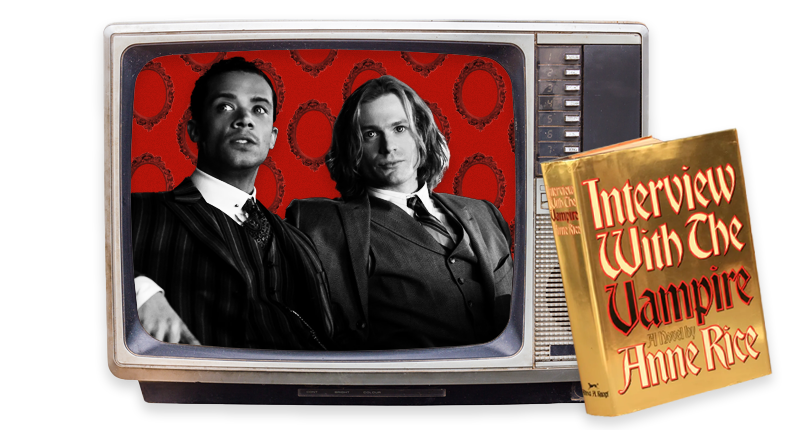 Interview with the Vampire
Even Anne Rice can’t sue from beyond the grave
Based on: Anne Rice’s Interview with the Vampire (1991)
Subgenres: Toxic Yaoi • Tom Cruise Wishes • Does This Count As Romantasy?
All of my most flamboyantly queer friends are obsessed with Interview with the Vampire, which signals to me its sheer radiance. The show traces the story from the novel, but with Anne Rice no longer able to object, the two central vampires—Louis and Lestat—live openly as lovers and manipulators. This is what gives the series its extra spark: the chance to push the characters toward even more intense, boundary‑puzzling dynamics. It’s a bold take on adaptation that asks: could these figures be more unhinged if we let them? –MC
Put it on when you want to admire hot men in high‑waisted pants.
See also:
Leigh Bardugo on 50 Years of Interview with the Vampire and the Immortality of Anne Rice’s Lestat
*
MATCHUP:
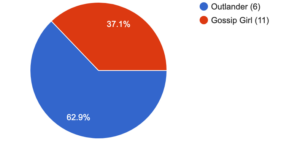
Outlander (6) vs. Gossip Girl (11)
******************************************
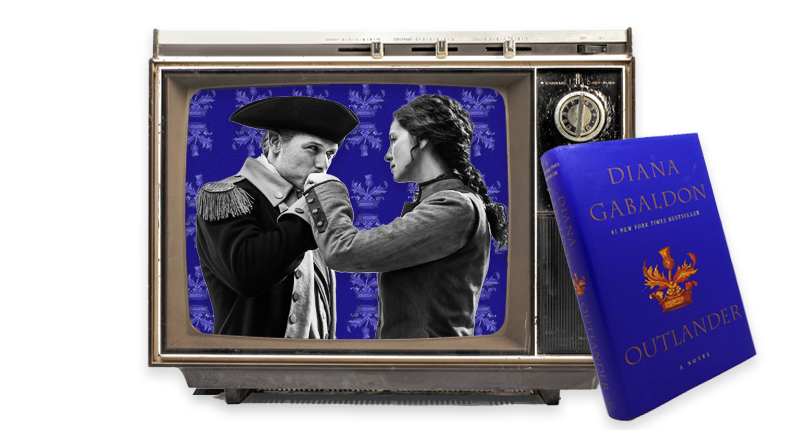 Outlander
Horny across time
Based on: Diana Gabaldon’s Outlander series (1991-2021)
Subgenres: Anachronistic Hygiene • Gorgeous Settings • Don’t Mess With Stone Circle Magic
This is a polished, elevated soap opera with real depth—the politics, the romance, and the personal friction are robust, and the visuals are lush. The central narrative travels through time, relationships, and history, yet never loses focus on what viewers actually crave. The show’s creator has a background in science fiction and prestige TV, which shows in the blend of high concept and intimate drama. We debated whether to place it in Cozy for its warmth, but its complexity and ambition push it into a more expansive category. –JF
Put it on when you feel you were born in the wrong era and want to be swept away on the moors.
See also:
A Love Letter to Lovers of Outlander • This is the supernatural, time-traveling romance series YOU SHOULD be watching.
••••••••••vs••••••••••
 Gossip Girl
XOXO
Based on: Cecily von Ziegesar’s Gossip Girl series (2002–2011)
Subgenres: Attention to Upper East Siders • TV About Blogging • Seminal Teen Dramas • In the Books Chuck Has a Pet Monkey
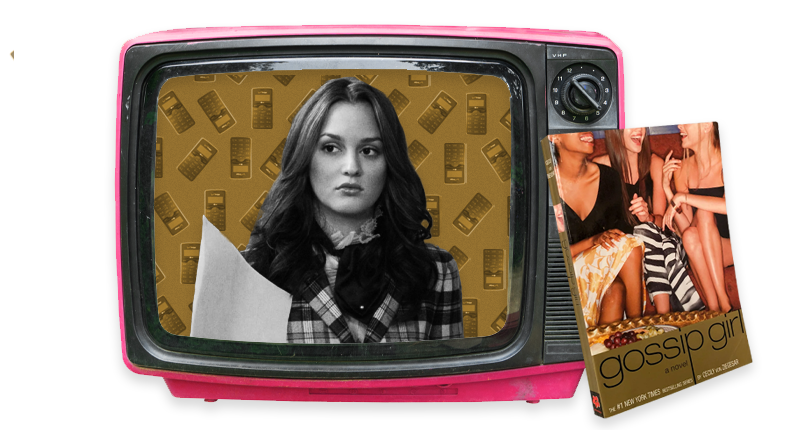
For a certain crowd, Gossip Girl represents the ultimate throwback—nostalgia for youth in New York City and for the era when mobile phones were just becoming addictive but not all‑consuming. The anonymous blogger at the center framed a world of privilege, ambition, and friendship, and the show’s mood was flirty, dangerous, and playful. The casting of Blake Lively and Leighton Meester captured the core dynamic: frenemies who were equally compelling. It may not be perfect, but it stood as a cultural juggernaut and a vivid snapshot of its moment. –ET
Put it on when you miss old New York or your own youth.
See also:
It’s Time for TV to Eat the Rich
••••••••••vs••••••••••
 Outlander & Gossip Girl
******************************************
Outlander
Horny across time
Based on: Diana Gabaldon’s Outlander series (1991–2021)
Subgenres: Anachronistic Hygiene • Gorgeous Settings • Don’t Mess With Stone Circle Magic
This one is a refined soap opera, with substantial depth—political and personal drama braided with romance. It travels across more than a hundred episodes without losing track of what viewers want most: vivid setting, strong chemistry, and high‑stakes storytelling. The show’s creator, with a background in major prestige franchises, knows how to balance big ideas with intimate moments, making the series feel surprising and expansive. We debated whether to categorize it as cozy, given its warmth, but its complexity and ambition push it to a broader tier. –JF
Put it on when you wish you were born in a different era and want to be welcomed onto the moors.
See also:
A Love Letter to Lovers of Outlander • This is the supernatural, time-traveling romance series YOU SHOULD be watching.
••••••••••vs••••••••••
Gossip Girl
XOXO
Based on: Cecily von Ziegesar’s Gossip Girl series (2002–2011)
Subgenres: Attention Upper East Siders • TV About Blogging • Seminal Teenage Dramas • In the Books Chuck Has a Pet Monkey
For a certain crowd, Gossip Girl stands as the ultimate nostalgic hit—not merely for the New York of youth, but for a period when phones weren’t always listening in on every moment, yet were still a direct line to DRAMA. The anonymous blogger at the center ran a sharp lens on class, privilege, ambition, and friendship, and the mood was all flirtation and danger. The show’s two leads—Lively and Meester—made a perfect pair, while the series’ cultural resonance was undeniable. Is it perfect? No. Is it a cultural touchstone? Absolutely. –ET
Put it on when you long for old New York or your own youth.
See also:
It’s Time for TV to Eat the Rich
••••••••••vs••••••••••
MATCHUP:
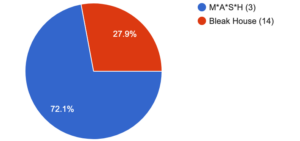
M*A*S*H (3) vs. Bleak House (14)
******************************************
 M*A*S*H
Antics among atrocities
Based on: Richard Hooker’s MASH: A Novel About Three Army Doctors (1968)
Subgenres: War is Bad • Wisecracking is Fun
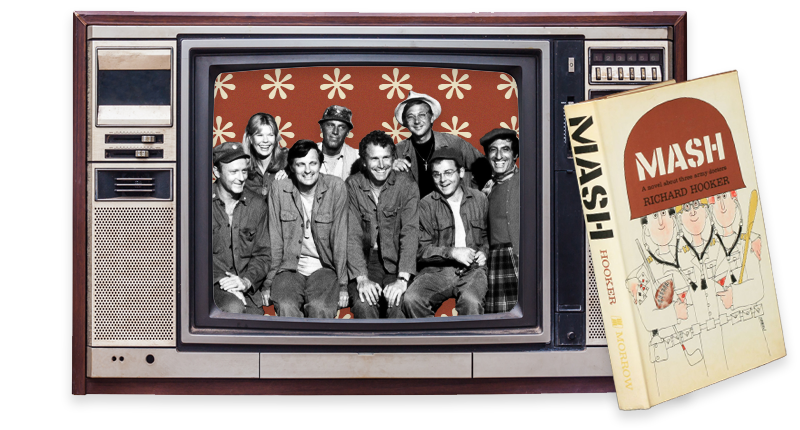
Iconic anti‑war comedy M*A*S*H challenged conventional TV by weaving drama and sharp commentary into a funny, sometimes maudlin package. A spinoff of the 1970 film, adapted from Hooker’s novel, the show ran for 11 seasons and culminated in a finale that was, at the time, the most‑watched broadcast episode in American history. Set during the Korean War, it also drew clear parallels to Vietnam. Today it’s a cherished TV relic whose influence can still be felt. –OS
Put it on when you need a history lesson with personality.
••••••••••vs••••••••••
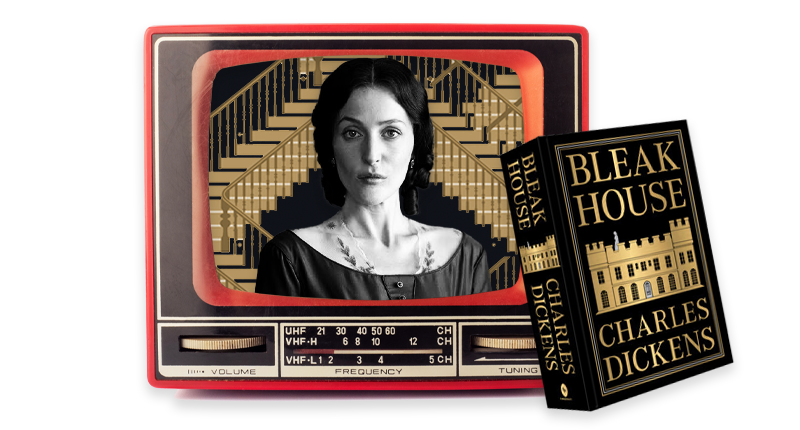 Bleak House
A mini series with big Dickens energy
Based on: Charles Dickens’s Bleak House (1852–53)
Subgenres: Dickensian Sensibility • The Law as Drama • The Royal‑Courtly Mood
Bleak House unfolds as a sprawling, twisty adaptation that remains relentlessly engaging for all its many threads. The adaptation preserves the novel’s wealth of characters, plots, and signature details, delivering a well‑composed ensemble piece with glittering turns. Esther, played by Anna Maxwell Martin, anchors the story, while Gillian Anderson steals the show in a few scintillating scenes. The format of half‑hour installments echoes Dickens’s serialized publishing, which helps the pacing feel faithful to the source’s cadence, even as the narrative moves toward a satisfying culmination. It’s a wonderfully attentive rendition of a monumental work. –JF
Put it on when you want to keep track of a labyrinth of secrets.
See also:
The Many Bad Moms of Charles Dickens • On Charles Dickens’s Devious, Hypocritical “Nice Guy” Cop
••••••••••vs••••••••••
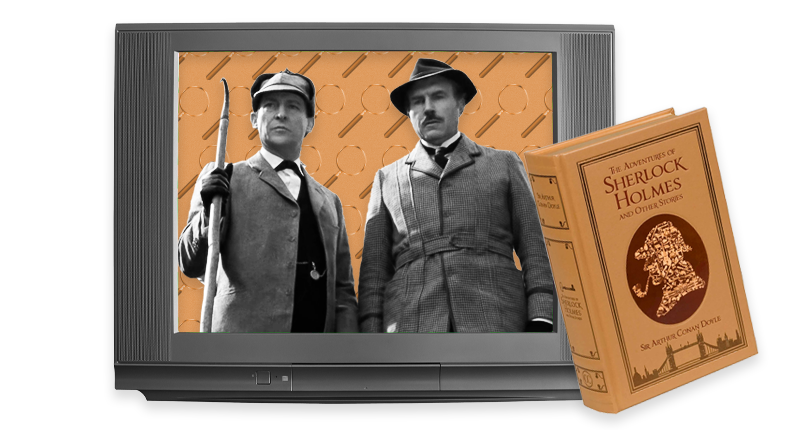 The Adventures of Sherlock Holmes
The definitive adaptation of the original detective
Based on: Sir Arthur Conan Doyle’s Sherlock Holmes stories (1887–1927)
Subgenres: A Clue! • You Might Not Like It, But This is What Peak Male Friendship Looks Like • Workaholics on Screen
Among Doyle aficionados, this version stands as the best on screen, and fans tend to regard it as the truest translation of the source. The show remains largely faithful, though some cases are combined, and Holmes’s famous recovery from drug use is depicted as part of the ongoing arc. Derek Jacobi and a rotating cast bring the world to life with precise performance and a sense of period detail that feels almost tactile. It’s a benchmark for classic detective fiction on television. –JF
Put it on when you want to crack a case from the couch.
See also:
How Sherlock Holmes Got His Name • The 12 Best Sherlock Holmes Stories, According to Arthur Conan Doyle
••••••••••vs••••••••••
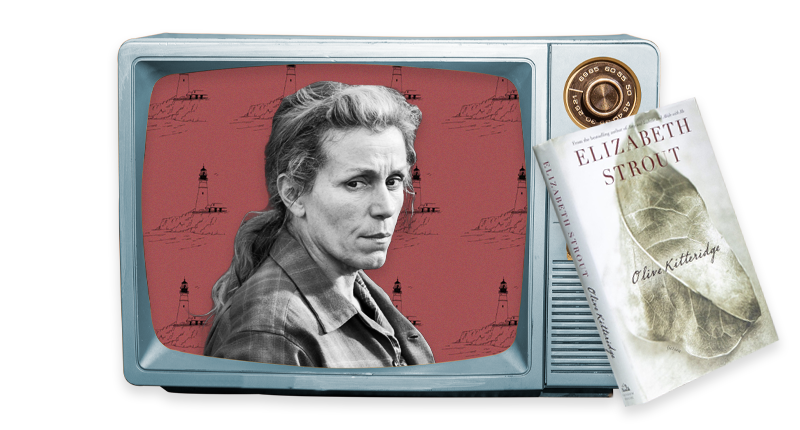 Olive Kitteridge
A family saga told with care and patience
Based on: Elizabeth Strout’s Olive Kitteridge (2008)
Subgenres: Fictional Maine • Family Sagas • Ann Dowd Can Do Anything
Olive Kitteridge honors its Pulitzer Prize–winning source by threading interconnected stories into a cohesive, patient miniseries. Although Olive isn’t the primary protagonist, she remains the most persistent presence in Crosby, Maine. Frances McDormand embodies Olive with a blend of prickly warmth and subtle tenderness, letting glimpses of love and hope peek through her crustiness. The work balances humor with tragedy, and one memorable scene has Olive and her husband contending with a hostage situation in a way that only strong actors can pull off. The result feels like a novel brought to life on screen. –JF
Put it on when you crave a faithful, novelistic experience.
See also:
Six of the Best Bad Women in Fiction • Writing “Women of a Certain Age.” A Roundtable on Crafting Older Female Characters in Fiction
*
MATCHUP:
Pride and Prejudice (2) vs. Parade’s End (15)
******************************************
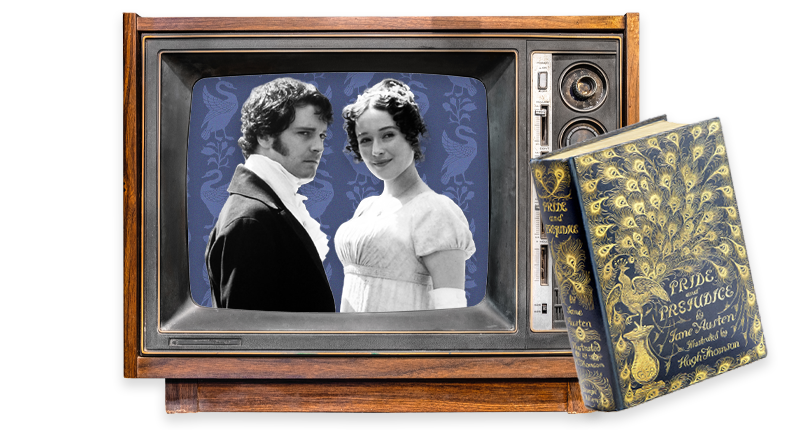 Pride and Prejudice
Thee Pride and Prejudice
Based on: Jane Austen’s Pride and Prejudice (1813)
Subgenres: Bonnets • Yearning • Water Cooler Fodder When There Were Still Water Coolers • Every Scene of the Novel
Is there any TV miniseries more beloved than this BBC gem? Faithfully adapting one of Austen’s most cherished texts, Pride and Prejudice became an instant sensation across the Atlantic. Jennifer Ehle’s Elizabeth Bennet and Colin Firth’s Mr. Darcy became defining performances that vaulted them into stardom. Since then, there have been multiple adaptations, but devotees insist nothing surpasses this classic. The fidelity, the spark, and the timeless romance continue to resonate. –CG
Put it on when you crave charged flirting in a drawing room.
See also:
Martin Amis on the Genius of Jane Austen (and What the Adaptations Get Wrong) • Every Mr. Darcy* Ranked • Why We Still Love Mr. Darcy, 200 Years Later
••••••••••vs••••••••••
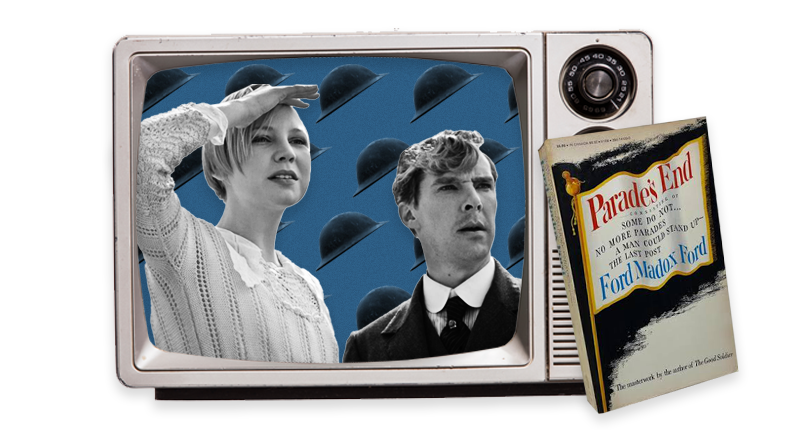 Parade’s End
War is hell, and the home front’s no picnic
Based on: Ford Madox Ford’s Parade’s End tetralogy (1924–1928)
Subgenres: Yearning • Tom Stoppard on Screen • Stiff Upper Lip • Socialites in Disarray
A study in obligation, infidelity, and social shifts at a moment when old norms wobble—this British prestige tale is the kind of intimate epic that relies on precision. The screen adaptation trims the novels down into a tight arc while preserving the core emotional charge. Stoppard’s arrangements highlight dramatic scenes that actors can live in, and the leads—Rebecca Hall and Benedict Cumberbatch—use the material to reveal the tension beneath polite surfaces. The result is a measured, restrained, deeply affecting drama that captures the novels’ modernist mood. –JF
Put it on when you want to wallow in someone else’s misfortune with decorum.
See also:
On Saintliness and Despair in Ford Madox Ford’s Parade’s End
*
******************************************
Thanks for voting! We’ll see you tomorrow with the results!
M*A*S*HBleak HouseThe Adventures of Sherlock HolmesOlive KitteridgePride and PrejudiceParade’s End
Isabela Reyes