
This first appeared in Lit Hub’s Craft of Writing newsletter—sign up here.
There exists an artist of note named Bobby Fingers whose YouTube channel follows him as he sculpts incredibly intricate celebrity busts, guiding viewers through the twists and turns of his creative workflow as he goes. In one clip—where he commits to building a colossal fiberglass rowing boat modeled on Jeff Bezos’s face, for reasons—the man remarks: “This took a long time, but I won’t complain, because nobody asked me to do any of this.”
That sentiment struck a chord with me.
Every bit of value or meaning your creative endeavor will ever carry begins with your resolve to actually begin. Nobody desires it, nobody asks for it, and along the road you’ll have to keep convincing yourself that what you’re doing matters, because that is the crucial first step toward it truly existing and mattering out there, in the brutally unforgiving arena we call reality.
This dynamic—being tasked, by yourself, with conjuring into existence something no one desires, yet something that must matter to other people, and which you’ll only know matters once you finish it, while you haven’t started because it lacks significance or because it doesn’t exist—is both an intolerable burden and an inescapable phase of the process.
Not surprisingly, writers have devised a myriad of methods and tricks to push through this awkward stage.
My own approach is uncomplicated. When I embark on a new writing project, I fetch a fresh, pristine notebook and tell myself that this is the place where the book will take shape.
And then I proceed to mess it up.
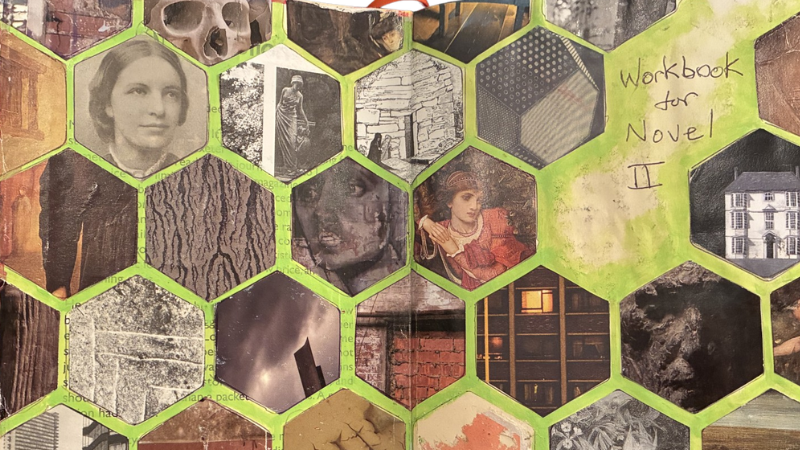
The act of marring the notebook, I’ve found, is absolutely vital. To compose a book, it helps me maintain a parallel, floating psychic space—a Dr. Jekyll–like chamber of the subconscious—where the only misstep is to leave a page blank. This pact then frees me, within the pages, to do anything—write or draw, paint, vent, scheme, plot—to fail or succeed without fear.
To do whatever I want, essentially.
Within days I begin to recognize what works and what doesn’t. At some stage, a restrained, more polished version of these raw scribbles will migrate into a finished novel, but this bubbling cauldron of ideas is where they are born and where they must fight for survival or fade away.
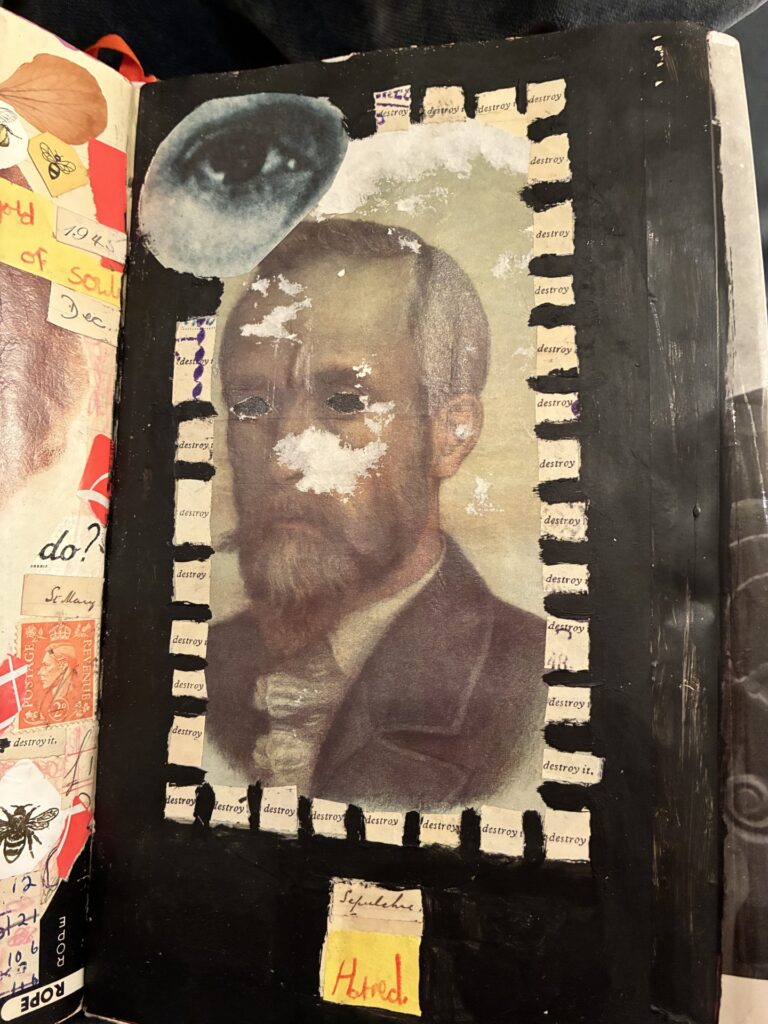
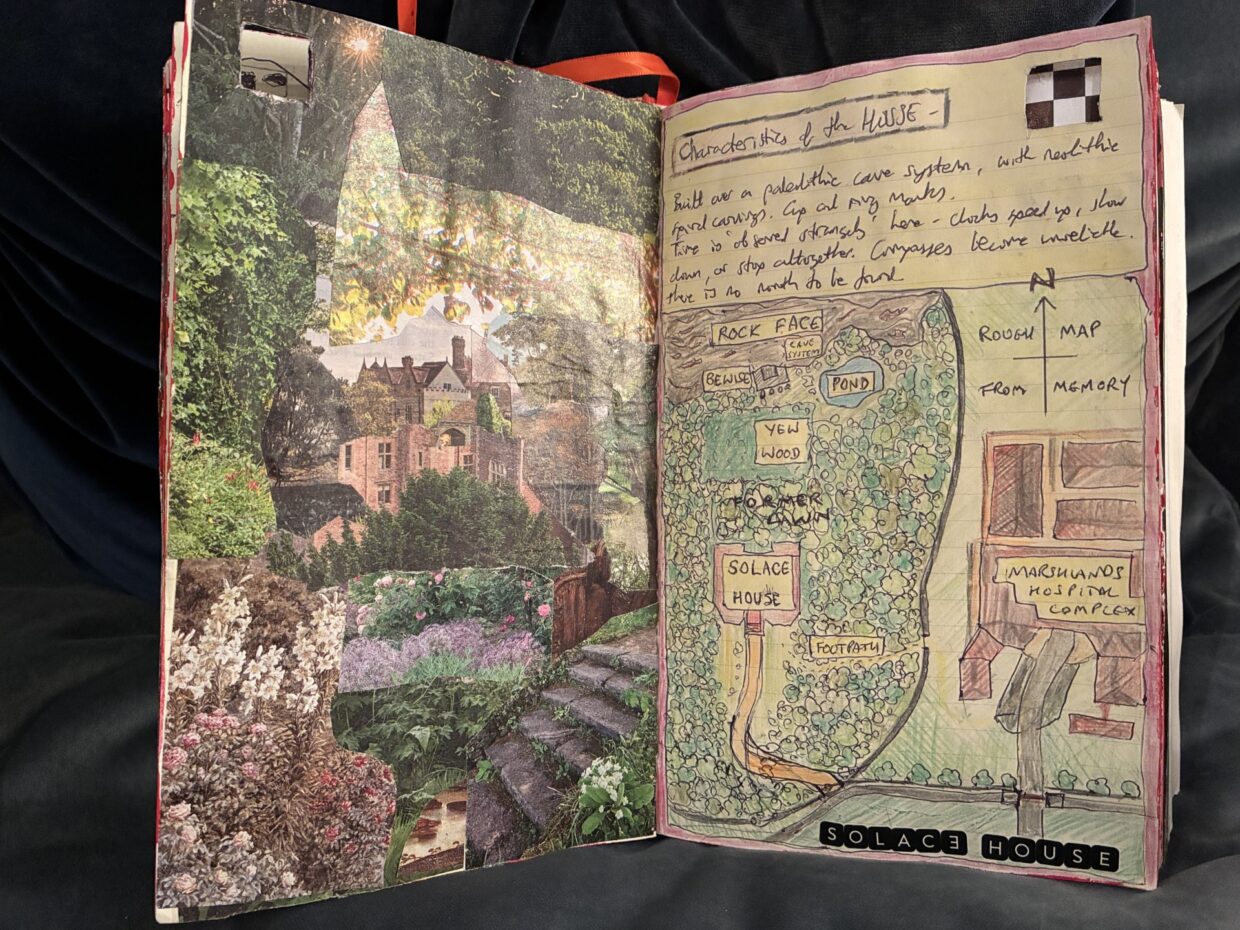
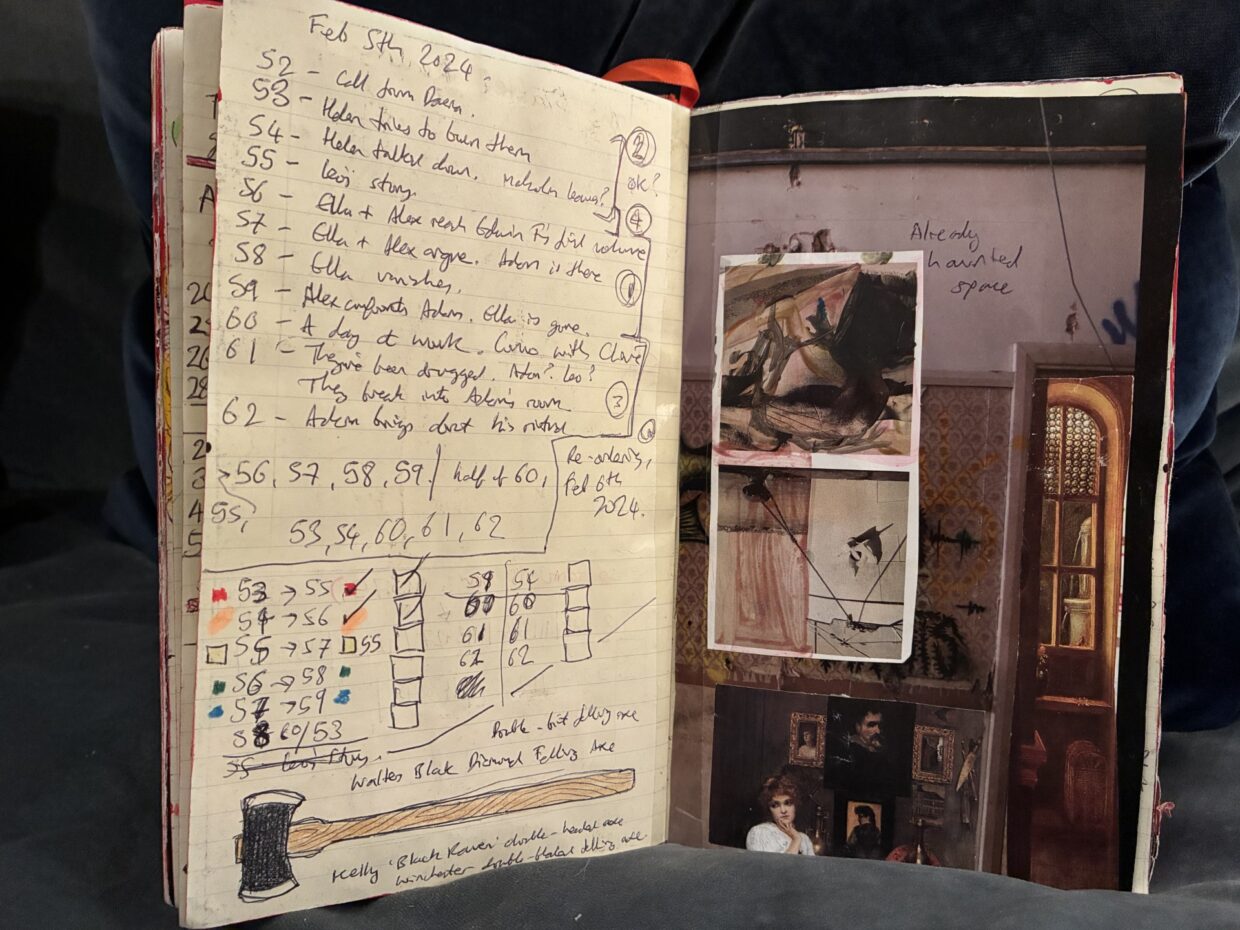
What appeals to me about this method is the tendency it has to invite happenstance, spontaneity, and the possibility that the material will surprise me. As I push forward, the notebooks seem to absorb everything—every thread of thought I’m entertaining, every relevant thing that crosses my path—and this is where it all is distilled. The notebook’s appetite grows with the process, and soon it asks for more than mere words: articles, images, stray snips, and even my own painting and drawing end up filling their pages, often clashing with and complementing one another. It’s also here that I flesh out character specifics, maps, and timelines—anything that helps the novel exist in the first place.
By this stage, of course, the notebook will look utterly, utterly insane—but only if I’m doing it correctly.
The significance of the notebook’s physical form cannot be underestimated either. When I began writing, I held a daytime office job, and once I returned home after eight hours of sitting, my body rebelled at the thought of sitting at another desk. Likewise, the idea of plotting a novel on yet another app or Word document, on another screen, fills me with dread.
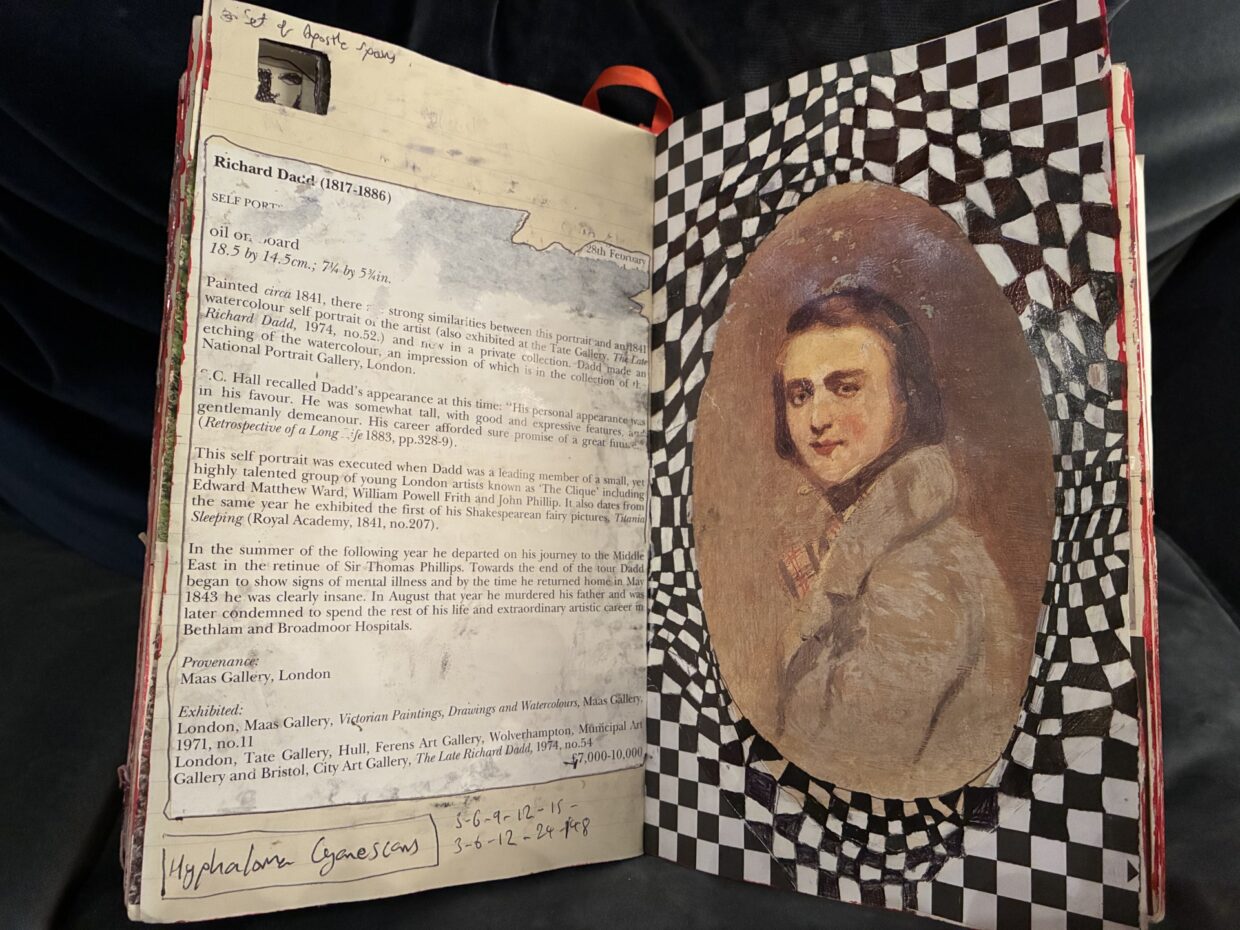
The notebook serves as a shelter from the digital world. I adore how it can be tugged, torn, glued, repaired, burned, gnawed, left out in the rain, or bleached by the sun. I’ve covered pages with paint, print, collage, scrawl, mud, and even blood. The notebook for Solace House contains—among many other things—torn fragments of Clue cards, a handwritten housekeeping ledger from 1901, sepia-tinted photographs from the 1890s, handwritten notes, old wallpaper, Edwardian stamps, and most joyfully, three pressed petals that drifted like confetti from a dusty old book from 1807 I discovered rotting in a bookstore basement, a memento of a sunlit day more than two centuries ago. The moment my focus narrowed to the elements I truly cared about, these items seemed to come to me more readily. For example, many of the images in the Solace House notebook—and thus in the novel itself—arrived from a rain-sodden auction catalogue of Victorian art that a neighbor had left on their garden wall, intending to throw it away.
In addition to all the scribbles, certain ritual habits have emerged and recur in every notebook I keep. For instance, two pages are always reserved for DOUBTS, clearly labeled, where I record the inner voices whose job is to undermine me. I like to create a small paddock for these voices. Sometimes their concerns are legitimate. More often, they’re just noise, but capturing them in writing helps to seal them away, and ideally to forget them altogether, if that’s possible.
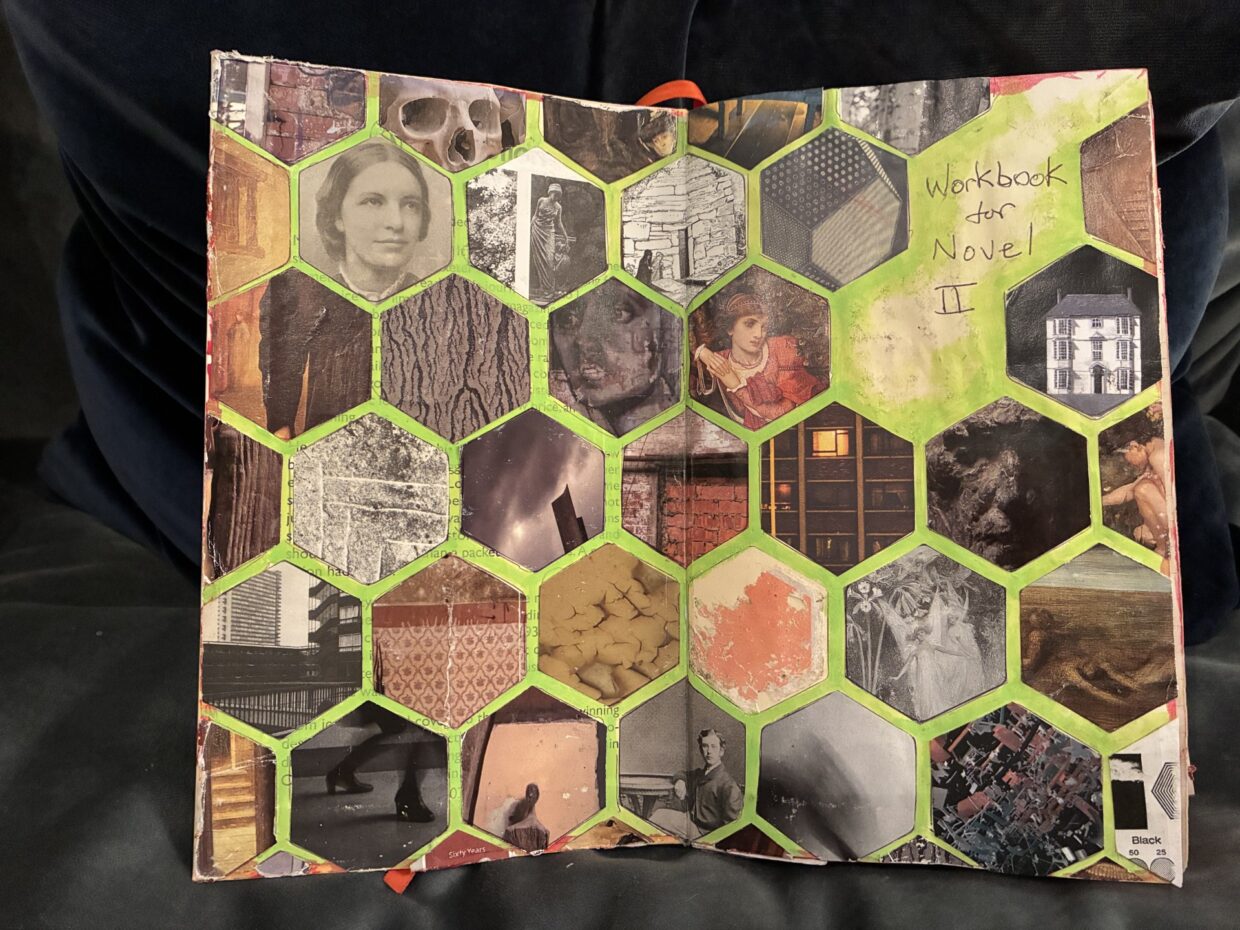
I also enjoy sketching or painting a tentative cover for the book, as this feels like a magical act—the act of making my hopes tangible, putting my money where my mouth is. What if it turns out to be real? What if all this effort pays off? What if all this nonsense could be held in my hands, seen in a bookstore? What if?
All of which underscores that these notebooks, at least for me, serve as a counterweight to the odd sort of conformity that settles in when everyone uses the same software, the same resources, the same social networks, and makes the same connections. They embody a different way of thinking, where fresh ideas and solutions do not have to emerge from the dry, almost masochistic discipline of keyboard and screen. The notebook recalls our most primal impulses to create: simply making a mark on a surface. I also love how naive—almost childlike—they can appear. This feels entirely fitting for spaces where everything is allowed.
It’s worth remembering that this is the mechanism by which all art—regardless of its grandeur or acclaim—comes into being. Not every writer needs a notebook that renders this process so visibly tangible and preserved, but I can assure you that this engine operates in some form or another for all creators, as we repeatedly undertake this act of self-deception, shaping something anew every time that nobody asked for.
___________________________________
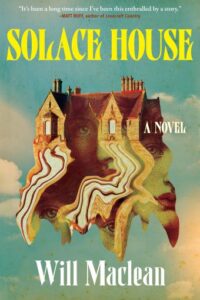
Solace House by Will Maclean is available via Grove Atlantic.
