
This first appeared in Lit Hub’s Craft of Writing newsletter—sign up here.
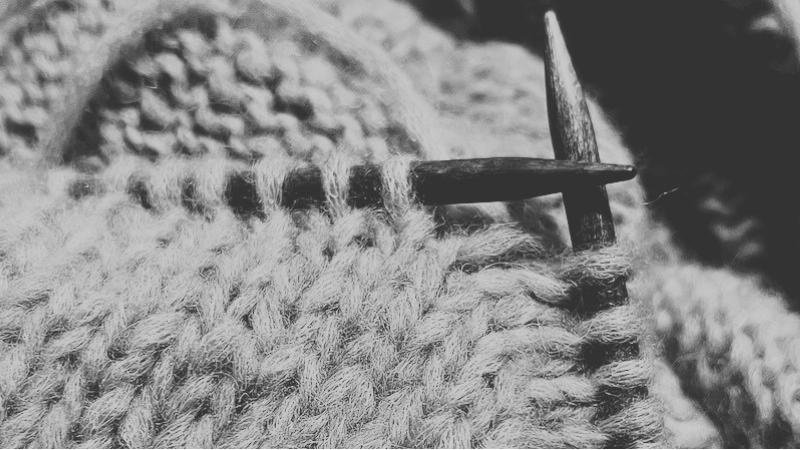
Your first novel is like the imperfect scarf you tangle together with bargain-bin acrylic yarn that refuses to lay flat. It feels more like a winding river than a sturdy bridge. That’s fine; you’re proud of it, you wear it once or twice, and eventually it slips into a drawer to gather dust.
You knit a second scarf, and this one looks a touch steadier, mainly because you’ve learned to unravel the faulty sections and redo them, even though the process is painful, you detest it, and you mourn the wasted hours it cost you.
The next handful of scarves improve on that initial effort. Perhaps you attempt a shawl or a more intricate stitch. You come to understand how much the quality of the yarn matters, and you switch to nicer fibers. But when you get home to start another project, you discover that the nicer material is not the right weight for what you want to make.
You’ve absorbed so much from knitting those scarves that you decide to tackle a sweater. It represents the most ambitious pattern you’ve ever tried, but you feel capable of handling it. You take careful measurements so it might actually fit when finished. You adore the yarn, yet as you advance you worry that the color looks richer in the shop than it does when turned into a full garment. Or maybe the people around you don’t react with the awe you expected when you share progress.
You finish the sweater. You snap a photo, post it on Instagram, and it becomes your most popular post to date. Everyone loves it! It looks fantastic! You could turn this into a career—sell them on Etsy! People would pay handsomely for your sweater! You start comparing it to others who’ve knitted the same pattern, and theirs seems to turn out more impressive. That tinge of envy dims your joy a bit. You decide to step back from knitting for a while.
Then you discover another design you want to tackle, one that will push your abilities a little further. You know that if you can master this one, subsequent projects will feel easier. It involves a lot of counting, and there’s some frustration over unclear directions until you watch a handful of YouTube tutorials. You rip the sleeve out a dozen times. But you finish it, you adore it, you post it, and you get almost the same number of Likes as the first, though this time you’ve sprinkled in some hashtags and strangers give you praise. You wear it with pride. When someone asks where you got it, you tell them you made it. You create more sweaters, some work, some don’t, and that’s okay because knitting is a lifelong craft, and you’re always learning.
This isn’t just about knitting. It’s about writing books, a craft in its own right, though many people assume they should be flawless from the start and that every book should sell. When they don’t, they blame agents, editors, or readers instead of themselves. After all, we were taught to assemble sentences in elementary school, so we assume we should be able to stitch together a complete book that’s worth paying for.
The act of finishing a book, a sweater, doesn’t make it perfect.
But why? Why don’t we treat writing as a craft in the same way we treat knitting? If you ask any writer, they’ll insist that writing is indeed a craft, and they’ll point to the literature that treats it as such. Yet if you ask them quietly, off the record, they’ll probably admit they’re surprised when a manuscript they finish doesn’t work, isn’t published, or isn’t lauded. They completed the entire book. Isn’t that enough?
I am a writer. I have authored five picture books, two novels, and two nonfiction titles, most of which my agent sent out to editors at major publishing houses. Only two of those projects have secured book deals so far. Nine sweaters later, only two of them fit. Is that bad? Is it good? Am I a capable or a flawed writer? Those numbers alone don’t reveal the truth.
I am also a literary agent with more than two decades in the publishing industry. You might expect that such a role would grant me shortcuts, an instinctive knack that spares me from dropped stitches and would accelerate a deal for my own writing. It did not. It took seven years and many submissions before one of my sweaters finally fit. I’ve already knitted another that doesn’t fit since my first book came out. Opportunity isn’t suddenly wide open simply because I know people or because I’ve already sold a book.
The act of finishing a book, a sweater, doesn’t guarantee perfection. When you start viewing each word as a stitch in a garment—one that may need to be ripped out and redone, one that might be out of place yet still be beautiful, one that might not amount to a stunning, useful, celebrated piece—you become a writer capable of standing the test of time. I’ve watched writers wither away when their early attempts fail to meet expectations. I’ve seen authors grit their teeth when the book they complete isn’t the one that lands the big deal, makes the list, or earns an award. I’ve witnessed exceptionally talented people chase guaranteed successes, hoping the sweater will fit, only to discover it never will. Those who endure are the ones who can redo their stitches. Step back and evaluate the project as a whole, not merely the yarn, the pattern, or the intention, and consider how this particular piece will function on its own. The earlier sweaters mean little beyond the lessons learned; the next attempt is never guaranteed to succeed either.
Understanding that writing is a craft is not merely an MFA cliché. It signifies work, it demands practice, it is demanding and time-consuming. If you expect to never drop a stitch again after finishing one excellent scarf, you’re setting yourself up for disappointment. Completing one book does not make you a master craftsman. And that’s precisely the wisdom that true craftmasters carry.
_________________________________________
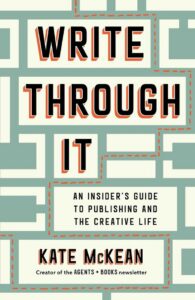
Write Through It: An Insider’s Guide to Publishing and the Creative Life, by Kate McKean, is available from Simon Element.
