
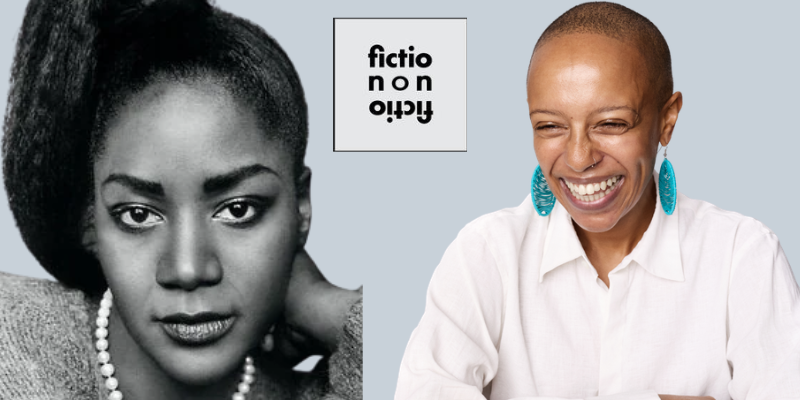
American authors ZZ Packer and Nafkote Tamirat join co-hosts V.V. Ganeshananthan and Whitney Terrell, broadcasting from Paris, to explore the latest wave of mass protests sweeping France. They trace the spark back to the opening days of the school year, when younger students challenged the condition of schooling, and note how the dissent broadened, drawing in labor unions and others angered by worsening socioeconomic realities. The pair delve into the structure and history of France’s education system, outlining how students have faced deteriorating school facilities and aging textbooks. They consider the tension between property destruction and harm to people, and recount episodes of tear gas, confusion, and fear they witnessed during the demonstrations. Packer, who spent a brief period at the American University of Paris, and Tamirat, who is also connected with the university and resides in France year-round, discuss how police activity has helped escalate violence. They address questions about how the protests might influence upcoming spring elections and whether real changes might emerge.
To hear the full episode, subscribe through iTunes, Google Play, Stitcher, Spotify, or your favorite podcast app (include the forward slashes when searching). You can also listen by streaming from the player below. Check out video versions of our interviews on the Fiction/Non/Fiction Instagram account, the Fiction/Non/Fiction YouTube Channel, and our show website: https://www.fnfpodcast.net/ This podcast is produced by V.V. Ganeshananthan, Whitney Terrell, Eric Thong, Archer Walsh, and Elizabeth Willis.
ZZ Packer
Drinking Coffee Elsewhere
Nafkote Tamirat
The Parking Lot Attendant • Teret Teret (forthcoming)
Others
Fiction/Non/Fiction Season 7, Episode 29: Jen Silverman on Generational Divides in American Politics • Fiction/Non/Fiction Season 9, Episode 45: Aruni Kashyap on India’s Cockroach Youth Movement • Hundreds of Thousands Join Another Round of Protests in France | The New York Times • The American University of Paris
EXCERPT FROM A CONVERSATION WITH ZZ PACKER AND NAFKOTE TAMIRAT
Whitney Terrell: There’s one facet of the French system I’m not sure I grasp completely, and perhaps you can set me straight. My impression is that France does not operate with a split between private and public schools in the way America does. Is that accurate? And is that part of why people say it’s cheaper, because you can send kids to public schools without paying tuition? I have a child in a private Kansas City school, which is quite costly, and I’d rather not shoulder that expense.
ZZ Packer: I’d like Nafkote to weigh in, but I’ll start by noting my first encounter with the French setup: the outskirts of France, what Americans often picture as “the suburbs” with pricey homes, are, in Paris, almost the opposite. And you’ll need to help me with the exact term, because I’ve been mispronouncing it for years.
Nafkote Tamirat: Banlieue.
ZZP: The infrastructure is deteriorating even more severely than you’d expect in Paris, and there’s a sizable immigrant population. Paris itself is one of the most diverse, cosmopolitan cities you could imagine, but in the banlieue you find a larger immigrant presence — some from North Africa, and others who would have been labeled as Middle Eastern, among many from across the globe. Those communities face greater economic hardship than residents within the city proper, which means the schools in these suburbs often suffer from more neglect than those in central Paris, such as the 20th arrondissement.
NT: Building on that point, there are wealthier, predominantly white suburbs around Paris as well, but the term banlieue has become shorthand for the areas you’re describing, ZZ, which are quite distinct from the American context. And to revisit your question, Whitney: the public/private schooling dichotomy as we know it in the U.S. doesn’t map neatly onto France, but there are public schools that carry immense prestige, which you must apply to access, and there are hidden costs involved.
So, for instance, one of the complaints—or requests—raised by students concerns the reform of higher-education admissions that was introduced in 2018. A new web portal has replaced the old system, and that shift has sparked much disagreement, though the older method was not functioning well.
ZZP: How should one pronounce it, “Parcoursup?”
NT: I’m not sure of the pronunciation; I’ve only seen it in writing, but yes, that’s the term. Previously, admissions relied on lengthy exams for entry into top schools, but families had to fund preparatory programs, and some prep schools were deemed superior to others. Consequently, there were always hidden costs to gain entry, even if the schools themselves were not private; they were effectively comparable in terms of educational quality.
What France does have are some schools that operate outside the national education framework, allowing them to set their own curricula. Some are regarded as excellent, others as quite unconventional. In practice, it’s less about measuring education quality and more about the tone and values that these schools promote. There’s one such institution—its exact name escapes me—that emphasizes practical skills, and it’s notably religious; it operates outside the national system, so it designs its own courses.
V.V. Ganeshananthan: That’s incredibly intricate. I do want to add, based on what I’ve read, that poor education and weak economic conditions contribute to high youth unemployment, which fuels frustration among protesters. I was also struck to learn that France allocates around 14% of GDP to pensions, and that as much as 32% of the Education Ministry’s budget goes to pensions. It helps explain the strong pushback against shifting funds toward schooling and for reforming the funding model overall.
I recalled a conversation with ZZ during my time as her student, about the value of presenting an irreconcilable dilemma in storytelling. I thought, “Yes—the impossible choice!” In any case, these protests are expanding beyond critiques of the education system to encompass broader socioeconomic concerns. Students are aligning with labor unions and with participants from the gilets jaunes.
Transcribed by Otter.ai. Condensed and edited by Eric Thong, Archer Walsh, and Elizabeth Willis. Photograph of Nafkote Tamirat by Rachelle Simoneau.
